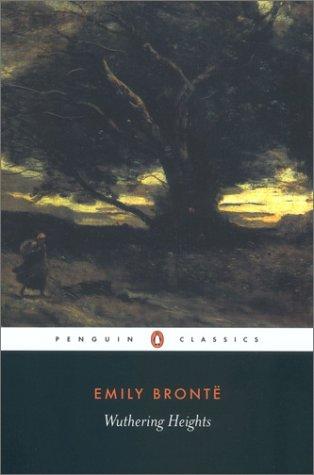
Wuthering Heights by Emily Brontë is a 1847 classics book about obsessive love and destruction, class and revenge, nature and civilization. Wuthering Heights refuses to romanticize what it depicts. The Heathcliff-Catherine dynamic, read carefully, is not beautiful love thwarted — it is mutual destruction that damages everyone in proximity.
Summary
Wuthering Heights is not a love story. Or rather, it is a love story the way that a storm is a weather event — technically accurate and almost entirely beside the point. The novel is the account of Heathcliff, a foundling brought to the Yorkshire moors, and Catherine Earnshaw, the family's daughter, and the destruction their attachment sets in motion. It moves across two generations, two households, and several decades, and by the end almost everyone has been damaged or killed.
The novel is structurally strange: we receive the story through multiple narrators at several removes, including the housekeeper Nelly Dean, who is both witness and unreliable filter. Lockwood, a hapless tenant who opens and closes the novel, frames Nelly's account from the outside. This layering is not ornamental — Brontë seems genuinely uncertain that we can access what happened directly, as though the events are too raw to be told straight. Heathcliff is constructed from others' impressions, never from his own interiority, which makes him genuinely uncanny in a way that simple villainy wouldn't.
What makes the novel unlike anything else in the period is its refusal of the usual Victorian consolations. There is no moral improvement arc. The passionate-souls-who-love-too-much framing is there, but the novel keeps undermining it: Heathcliff's love, to the extent it's love at all, is indistinguishable from domination; Catherine is not tragic but reckless, self-dramatizing, and careless of others' wellbeing. The second half, which follows the next generation through Heathcliff's revenge, is colder and more relentless than the first. Emily Brontë was twenty-eight when she published it. She died the following year.
First-time readers are often surprised that the novel isn't romantic in the way its reputation suggests. The Heathcliff of the cultural imagination — brooding, passionate, devoted — is partly an invention of adaptation. The novel's Heathcliff is violent, calculating, and cruel to people who have done nothing to him. Whether that changes its meaning, or deepens it, depends on what you're looking for. For readers who want a novel that takes the logic of obsession to its end without flinching, there's nothing quite like this.
What is Wuthering Heights about?
Wuthering Heights is about what happens when love is treated as possession rather than care. Emily Brontë’s only novel, published in 1847, follows two families across two generations on the Yorkshire moors, and traces how one man’s thwarted attachment to one woman curdles into a decades-long campaign of revenge that ruins almost everyone who comes near it. It is usually shelved as a romance. It is closer to a horror story about the damage people justify in love’s name.
The plot of Wuthering Heights, explained
The frame: who is actually telling this story
Nothing in the novel is narrated directly. In 1801, a city gentleman named Lockwood rents Thrushcross Grange and pays a call on his landlord, Heathcliff, at the neighbouring farmhouse of Wuthering Heights. He finds a household full of open hostility he cannot decode, and after an unsettling night there he asks his housekeeper, Nelly Dean, to explain it. Nelly grew up alongside the family and tells him almost the entire story in retrospect.
So the book is a story inside a story, told by a servant with her own loyalties, to an outsider who misreads nearly everything. Both narrators are unreliable, and Brontë never steps in to correct them. That structure is the first thing that confuses new readers, and the first thing worth holding on to.
The first generation: Catherine and Heathcliff
Years earlier, Mr Earnshaw returns from Liverpool with an orphaned boy he names Heathcliff. His daughter Catherine becomes inseparable from him; his son Hindley hates him as a rival for their father’s affection. When Earnshaw dies, Hindley inherits the house and reduces Heathcliff from a family member to a farm labourer.
Catherine, meanwhile, spends time at Thrushcross Grange with the wealthy, mannered Linton family and comes back changed by it. She is pulled between two versions of a life: the wildness she shares with Heathcliff, and the comfort and standing the Lintons offer.
The turn: Catherine’s choice
Catherine agrees to marry Edgar Linton. Confiding in Nelly, she says marrying Heathcliff would degrade her now, while insisting in the same breath that she and Heathcliff are essentially the same person. Heathcliff overhears the first half and leaves before the second. He disappears for three years.
He returns wealthy, educated, and entirely focused on revenge. Catherine, unable to hold both her marriage and her attachment to him, collapses under the strain and dies giving birth to a daughter, Cathy. Heathcliff’s grief is real, and it makes him worse rather than better.
The second generation: revenge, methodically
What follows is a long, patient campaign. Heathcliff marries Edgar’s sister Isabella purely to wound the Lintons and treats her so badly she flees, bearing a sickly son named Linton. He encourages Hindley’s drinking until Hindley dies in debt, taking ownership of Wuthering Heights and raising Hindley’s son Hareton in exactly the ignorance and degradation he was raised in himself.
Then he forces a marriage between his dying son and young Cathy, so that when both Edgar and Linton die, he legally controls both houses. It works. He wins completely.
The ending, explained
And winning turns out to be nothing. With both estates his and both families broken, Heathcliff finds his appetite for revenge simply gone. He becomes consumed by the sense that Catherine is near him, stops eating, and dies. He is buried beside her.
The last movement belongs to the survivors. Cathy, trapped at the Heights with Hareton, first mocks him for being unlettered and then begins teaching him to read. What was cruelty in the first generation becomes tenderness in the second. They plan to marry, the two houses come back together, and the cycle that Heathcliff spent his life feeding finally stops. Lockwood, visiting the three graves at the end, wonders how anyone could imagine restless sleep for the people buried in that quiet earth. The reader, having watched the locals swear they still see the pair walking the moors, is left to decide whether he is right.
Who’s who, including the two-Catherine problem
The single biggest source of confusion is that names repeat across generations on purpose.
| Character | Who they are |
|---|---|
| Catherine Earnshaw | The first Catherine. Grows up with Heathcliff, marries Edgar Linton, dies in childbirth partway through the book. |
| Cathy Linton | Her daughter, born as she dies. The second half is largely hers. |
| Heathcliff | The orphan Mr Earnshaw brings home. Never given a surname, which matters legally and socially. |
| Hindley Earnshaw | Catherine’s brother. Degrades Heathcliff after their father’s death, then drinks himself into ruin. |
| Hareton Earnshaw | Hindley’s son, raised deliberately ignorant by Heathcliff as revenge on the father. |
| Edgar Linton | The gentle, wealthy neighbour Catherine marries. |
| Isabella Linton | Edgar’s sister, whom Heathcliff marries to injure the family. |
| Linton Heathcliff | Isabella and Heathcliff’s frail son, used as an instrument to seize Thrushcross Grange. |
| Nelly Dean | The housekeeper who narrates most of the novel. |
| Lockwood | The tenant she narrates it to. |
Watch the name carousel at the end: the daughter is born a Linton, is forced into becoming a Heathcliff, and by marrying Hareton would become Catherine Earnshaw, which is exactly what her mother was at the start. Brontë closes the loop deliberately.
The themes that actually run the book
Love as possession. Heathcliff and Catherine do not want to care for one another; they want to be one another, and they damage everyone in reach in pursuit of it. The novel takes that seriously as a force, and refuses to make it admirable.
Revenge and its emptiness. Heathcliff succeeds completely and gains nothing. The book is unusually clear-eyed that vengeance is not undone by winning it.
Class, property, and inheritance. Almost every cruel act in the plot moves through law and money: who inherits, who signs, who owns which house. Heathcliff’s lack of a surname is the wound the whole machine turns on.
Cycles of abuse. Heathcliff recreates his own childhood in Hareton with terrible precision. The ending matters because someone finally interrupts the pattern.
The moors. The wild landscape and the two houses map the book’s central tension: Wuthering Heights is exposure, storm, and appetite; Thrushcross Grange is warmth, order, and confinement.
Is Wuthering Heights worth reading?
Yes, with your expectations set correctly. Go in expecting a sweeping romance and the second half will bewilder you, because the story stops being about Catherine and Heathcliff and becomes about the wreckage they leave behind. Go in expecting a study of obsession, cruelty, and the long half-life of family damage, and it is extraordinary, and unlike anything else written in 1847.
The real obstacles are practical: the nested narration takes a chapter or two to settle into, the servant Joseph’s Yorkshire dialect is genuinely hard to parse and can be skimmed without loss, and the two generations of repeated names reward keeping the table above nearby. None of it is beyond a patient reader, and the strangeness is the point rather than a flaw.
Talk to Wuthering Heights like its author wrote you back.
Get the ideas that fit your life — not generic summaries.
- Chat with the book
- Audiobook-style main ideas
- Adapts to your life and goals
- Helps you take action
Key takeaways
- 1.
Wuthering Heights refuses to romanticize what it depicts. The Heathcliff-Catherine dynamic, read carefully, is not beautiful love thwarted — it is mutual destruction that damages everyone in proximity.
- 2.
The frame narrative (Lockwood, then Nelly) means we never hear Heathcliff's own account. His interiority is permanently inaccessible, which makes him more menacing than a straightforward villain.
- 3.
Class is central: Heathcliff's humiliation after Hindley takes power over the household is the engine of everything that follows. His revenge is economic and social before it is personal.
- 4.
The Yorkshire moors function as a psychological externalization — not merely as backdrop but as an active correlative for the novel's emotional weather.
- 5.
The second generation's story (young Cathy and Linton Heathcliff) is often overlooked. It is grimmer than the first and shows Heathcliff's cruelty at its most purely calculated.
- 6.
Emily Brontë's prose is notably different from her sister Charlotte's — rawer, less self-conscious, more violent in its imagery. The novel reads like something written under compulsion.
- 7.
The novel has almost no unambiguously good characters. Nelly Dean, who often presents herself as the voice of common sense, makes choices that enable catastrophe.
- 8.
Generational trauma is the novel's structural logic: what is done to Heathcliff is passed forward to the next generation, who have done nothing to deserve it.
Discussion questions
Use these on your own, with a book club, or as chat starters in Superbook. Book club version, ready to copy or print →
- 1.
Is Heathcliff a romantic hero, a villain, or something the novel refuses to categorize? Where does the cultural image of Heathcliff as romantic ideal come from, and how does the novel support or undermine it?
- 2.
Catherine chooses Edgar Linton over Heathcliff for reasons she explains at length — and still insists she loves Heathcliff more. Is that explanation coherent? Is Catherine self-aware?
- 3.
Nelly Dean is our primary narrator. She also makes several decisions that worsen outcomes for almost everyone. How reliable is she, and does the novel know she's unreliable?
- 4.
Heathcliff's racial and class status is deliberately ambiguous. He's described with language that signaled ethnic otherness to Victorian readers. Does the novel's treatment of him as dangerous outsider ask us to critique that or reinforce it?
- 5.
The second half of the novel follows the next generation through Heathcliff's methodical revenge. Is that section less interesting than the first, or does it make a different kind of argument?
- 6.
The novel ends with Heathcliff abandoning his revenge and dying, apparently at peace, seeing Catherine everywhere. Is that a resolution, or does it refuse resolution?
- 7.
Hindley Earnshaw's cruelty to Heathcliff after Mr. Earnshaw's death is the proximate cause of everything. Does the novel give Hindley enough weight, or is he just a mechanism?
- 8.
Young Catherine and Hareton end the novel working toward recovery and connection. Does their story feel like genuine hope, or does it feel like the novel isn't sure how to end?
- 9.
Would you describe Heathcliff as traumatized, evil, or both? Does that distinction matter for how you read the novel?
- 10.
The moors are not just setting — they're the emotional weather of the book. Do you find that technique powerful, or does it feel like pathetic fallacy taken too far?
- 11.
Emily Brontë died at thirty. This is her only novel. Does knowing that change how you read the extremity of its emotional vision?
- 12.
How does Wuthering Heights compare to what you expected, based on its cultural reputation? What surprised you most?
Themes
Frequently asked questions
-
What is Wuthering Heights about?
Wuthering Heights follows two families on the Yorkshire moors across two generations, tracing how Heathcliff's thwarted attachment to Catherine Earnshaw hardens into a decades-long revenge that ruins both households. It is usually called a romance, but it is closer to a study of obsession and inherited damage.
-
What happens at the end of Wuthering Heights?
Heathcliff wins completely, owning both houses, and finds the victory meaningless. Convinced Catherine is near him, he stops eating and dies, and is buried beside her. Meanwhile young Cathy teaches Hareton to read, the two grow close and plan to marry, and the cycle of revenge finally breaks.
-
Is Wuthering Heights worth reading?
Yes, if you expect a study of obsession rather than a love story. Readers hoping for romance are usually lost in the second half, which follows the wreckage rather than the couple. The nested narration and Joseph's thick dialect are real obstacles, but neither is fatal.
-
Is Wuthering Heights a love story?
Technically yes — there is love in it. But calling it a love story in the romantic sense misrepresents what the novel actually does. The relationship between Heathcliff and Catherine is obsessive, mutually destructive, and careless of everyone around them. It is more accurately described as a story about the violence that passes for love.
-
Is Wuthering Heights hard to read?
Moderately. The nested narration requires you to track who is telling what to whom and when. The Yorkshire dialect of Joseph, one of the servants, is nearly impenetrable. The chronology, which jumps between generations, can be confusing on a first read. None of these are fatal obstacles, but they're real.
-
Why is Wuthering Heights considered a classic?
Because it did something no English novel had done before: took the logic of obsessive love and followed it to its end without softening it into tragedy or redemption. The novel is not safe, and in 1847 it was genuinely shocking. Its influence on later Gothic fiction, and on the pop-cultural idea of the brooding romantic hero, has been enormous.
-
Who shouldn't read Wuthering Heights?
Readers expecting a romance will be misled by the first hundred pages and then increasingly bewildered. Readers who need sympathetic characters to stay engaged will struggle — no one in this novel is easy to like for long.
-
Is there a good film adaptation of Wuthering Heights?
Several, none fully satisfying. The 1939 film with Laurence Olivier covers only the first half and leans heavily into romance. The 1992 version with Ralph Fiennes is more complete but uneven. Andrea Arnold's 2011 adaptation is the most faithful to the novel's rawness and is worth watching for its visual approach.