Classics · Book club
Wuthering Heights book club questions
Here are 12 book club questions for Wuthering Heights by Emily Brontë, ordered to open easily and end somewhere worth arguing about. Copy them, print them, or bring them up one at a time.
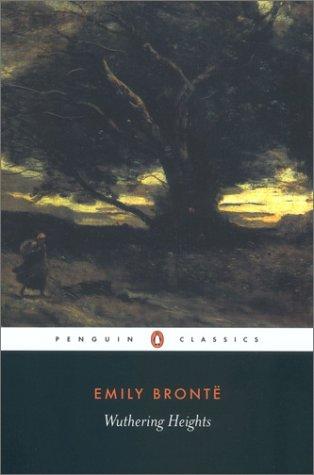
Wuthering Heights is not a love story.
Emily Brontë · 1847 · 7h 15m
Full summary and key takeaways →The 12 questions
- 1.
Is Heathcliff a romantic hero, a villain, or something the novel refuses to categorize? Where does the cultural image of Heathcliff as romantic ideal come from, and how does the novel support or undermine it?
- 2.
Catherine chooses Edgar Linton over Heathcliff for reasons she explains at length — and still insists she loves Heathcliff more. Is that explanation coherent? Is Catherine self-aware?
- 3.
Nelly Dean is our primary narrator. She also makes several decisions that worsen outcomes for almost everyone. How reliable is she, and does the novel know she's unreliable?
- 4.
Heathcliff's racial and class status is deliberately ambiguous. He's described with language that signaled ethnic otherness to Victorian readers. Does the novel's treatment of him as dangerous outsider ask us to critique that or reinforce it?
- 5.
The second half of the novel follows the next generation through Heathcliff's methodical revenge. Is that section less interesting than the first, or does it make a different kind of argument?
- 6.
The novel ends with Heathcliff abandoning his revenge and dying, apparently at peace, seeing Catherine everywhere. Is that a resolution, or does it refuse resolution?
- 7.
Hindley Earnshaw's cruelty to Heathcliff after Mr. Earnshaw's death is the proximate cause of everything. Does the novel give Hindley enough weight, or is he just a mechanism?
- 8.
Young Catherine and Hareton end the novel working toward recovery and connection. Does their story feel like genuine hope, or does it feel like the novel isn't sure how to end?
- 9.
Would you describe Heathcliff as traumatized, evil, or both? Does that distinction matter for how you read the novel?
- 10.
The moors are not just setting — they're the emotional weather of the book. Do you find that technique powerful, or does it feel like pathetic fallacy taken too far?
- 11.
Emily Brontë died at thirty. This is her only novel. Does knowing that change how you read the extremity of its emotional vision?
- 12.
How does Wuthering Heights compare to what you expected, based on its cultural reputation? What surprised you most?
How to run the discussion
- Pick six to eight, not all of them. An hour of real discussion covers fewer questions than anyone expects, and racing the list is what makes a book club feel like homework.
- Open with what people noticed, not what they concluded. Asking for a verdict first hardens opinions before anyone has heard each other.
- Let the disagreement run. The questions below that split a room are the ones worth the time; the ones everyone answers the same way can be skipped.
- Ask the quiet person a specific question. A direct, narrow question is far easier to answer than an open invitation to contribute.
Themes worth steering toward
If the conversation stalls, these are the threads that usually restart it.
Common questions
What are good book club questions for Wuthering Heights?
Here are 12 book club questions for Wuthering Heights by Emily Brontë, ordered to open easily and end somewhere worth arguing about. The strongest openers ask what each reader noticed rather than what they concluded, and the discussion usually turns on obsessive love and destruction, class and revenge, nature and civilization.
How long should a book club discussion of Wuthering Heights last?
Most groups run 60 to 90 minutes of actual discussion. That is roughly six to eight questions, not all of them, so pick the ones that suit your group rather than working down the list in order.
What are the main themes in Wuthering Heights?
Obsessive love and destruction, Class and revenge, Nature and civilization, Generational trauma, Boundaries and transgression. Those are the threads most likely to divide a room, which makes them the useful places to steer a discussion that has gone quiet.
Picking the next one? See books like Wuthering Heights or questions for other book club picks.
