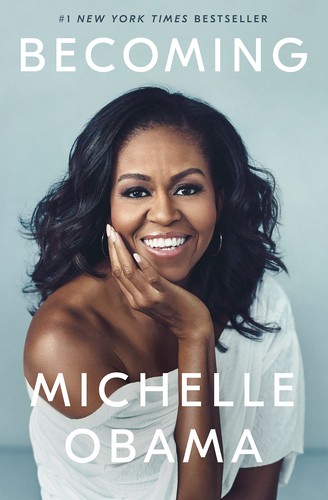
Becoming by Michelle Obama is a 2018 memoir book about identity, race and class, resilience. Identity is not fixed. Obama argues throughout that becoming is an active, ongoing process rather than a destination you arrive at.
Summary
Becoming is Michelle Obama's account of how a girl from a modest house on Chicago's South Side became one of the most recognized people in the world — and what that journey cost and revealed. The book moves in three parts: her childhood in a tight, working-class Black family; her years building a career and a marriage; and her time in the White House. Obama is a careful and deliberate writer, and the memoir is less interested in policy or political drama than in the question of who she was, who she was expected to be, and who she decided to become.
The Chicago sections are the strongest. Obama's father worked a pump at the city water filtration plant despite advancing multiple sclerosis; her mother stayed home until both children were in school, then returned to work. The family lived on one floor of a divided two-flat, with a great-aunt upstairs. Obama draws these years with enough specificity — the upright piano, the South Shore neighborhood tipping racially, the gifted program at school and the friends left behind in it — that the class and racial geography of mid-century Black Chicago becomes the actual subject. She is honest about the anxiety of being smart in a world that keeps asking whether you belong. The college counselor who told her Princeton was a reach and the internal voice that asked, louder at certain moments than others, whether she was good enough, both run through the early chapters without melodrama.
The middle section follows her through Princeton, Harvard Law, a corporate law firm, and a growing discomfort with work that didn't feel meaningful. Her meeting and marriage to Barack Obama is narrated with the warmth but also the friction of two ambitious people trying to build a life together while one of them was increasingly pulled elsewhere. She is direct about the strain on their marriage during his political ascent and unflinching about miscarriage, IVF, and the loneliness of being the one whose career repeatedly yielded. These passages work because she refuses to smooth them into inspiration.
The White House years are the most complicated to write, and Obama seems to know it. She focuses on building a life for her daughters inside a fishbowl, on the Let's Move campaign and the garden on the South Lawn, and on what it meant to be the first Black First Lady in a country that was not always sure what to make of her. She ends not with arrival but with ongoing process — becoming is not a destination, she argues, but a continuous act of choosing who to be next. The book's limitation is the same as its strength: it stays close to the personal and keeps the political at arm's length.
Talk to Becoming like its author wrote you back.
Get the ideas that fit your life — not generic summaries.
- Chat with the book
- Audiobook-style main ideas
- Adapts to your life and goals
- Helps you take action
Key takeaways
- 1.
Identity is not fixed. Obama argues throughout that becoming is an active, ongoing process rather than a destination you arrive at.
- 2.
Class and place shape ambition in ways that take years to see clearly. Her South Side upbringing was both a constraint and a foundation she returned to repeatedly.
- 3.
The anxiety of whether you belong in spaces you worked hard to enter is not a flaw to overcome — it's something many high achievers carry without acknowledging it.
- 4.
Marriage between two driven people requires renegotiating terms constantly. Obama is candid about resentment and repair in a way that most political memoirs are not.
- 5.
Children need stable, small-scale normalcy even when the parents' lives are anything but. The White House years are largely organized around protecting Malia and Sasha's routines.
- 6.
Public image and private self diverge sharply in high-visibility roles. She documents the gap between who she was characterized as and who she knew herself to be.
- 7.
Proximity to power is not the same as power. As First Lady, Obama held enormous visibility with limited formal authority — a tension she navigates honestly.
- 8.
Resilience is often built in small, ordinary moments before the big ones arrive. Her parents' discipline and emotional steadiness gave her the tools she needed long before she needed them.
Discussion questions
Use these on your own, with a book club, or as chat starters in Superbook. Book club version, ready to copy or print →
- 1.
Obama describes a counselor who told her Princeton was a reach. When has someone's low expectation of you shaped your decisions, positively or negatively?
- 2.
The book argues that 'becoming' is continuous rather than a destination. What are you still in the process of becoming right now?
- 3.
Obama writes about her father's refusal to show weakness despite his illness. What model of stoicism did the adults around you project, and how has it influenced how you handle difficulty?
- 4.
She is frank about resenting Barack's political career and then working to understand that resentment. Have you ever had to disentangle your own ambitions from someone else's?
- 5.
Obama left a high-paying legal career because it didn't feel meaningful. How do you think about the tradeoff between security and purpose in your own work?
- 6.
The 'Am I good enough?' voice runs through her early chapters even after she has objectively demonstrated she is. Does that voice ever quiet down, or does it just change shape?
- 7.
She describes the South Side neighborhood she grew up in as it was changing racially and economically. How has the neighborhood or community you grew up in shaped who you became?
- 8.
Obama keeps political analysis largely offstage in favor of the personal. Do you think that was the right choice for the book, or did it leave something important unsaid?
- 9.
What does it mean to hold enormous public visibility with limited formal authority? Can you think of roles in your own life where you've been in that position?
- 10.
Obama describes protecting her daughters' childhood from the pressures of public life. What did your parents shield you from, and was it the right call?
- 11.
She ends the book emphasizing ongoing process over arrival. What story are you telling yourself about when you'll feel like you've finally 'made it'?
- 12.
Between the world and the person inside it, Obama finds a persistent gap. Where in your life do you perform a version of yourself that doesn't quite match who you are privately?
Themes
Frequently asked questions
-
Is Becoming worth reading?
Yes, particularly for readers interested in memoir rather than politics. Obama writes with more honesty about ambition, marriage, and self-doubt than most public figures allow themselves. The White House chapters are less revelatory than the Chicago ones, but the book earns its reputation.
-
How long does it take to read Becoming?
Around seven to eight hours at an average reading pace for the 426-page book. The memoir moves at a comfortable pace and the chapters are accessible, but it rewards slowing down in the early sections where she writes most carefully about her family and neighborhood.
-
What is Becoming mainly about?
It's a memoir about identity and self-definition as much as it is about Barack Obama's political career. Obama traces how her upbringing, education, career choices, and role as First Lady each asked her to answer the question of who she was, and how she answered it differently over time.
-
Who should read Becoming?
Readers who enjoy character-driven memoir, particularly those interested in race, class, and ambition in America. It's also a useful book for anyone thinking about how marriage, parenthood, and public roles change a person's sense of self.
-
What part of Becoming is most surprising?
Her candor about her marriage. Obama writes directly about miscarriage, IVF, and resentment during Barack's political rise in a way that most books by political spouses avoid entirely. Those passages are the most unguarded in the book.