Your Money and Your Brain by Jason Zweig is a 2007 psychology book about behavioral finance, investing psychology, cognitive biases. The brain's limbic system — the emotional center — activates in response to financial gains and losses at roughly the same intensity as it does to physical pleasure and pain. Investing is not a purely rational activity.
Summary
Jason Zweig, a longtime Wall Street Journal columnist and the editor of Benjamin Graham's annotated edition of The Intelligent Investor, wrote Your Money and Your Brain as a practical guide to the neuroscience and behavioral economics of investing. The book's premise is that the human brain evolved for a different environment than modern financial markets, and the resulting mismatches produce predictable, costly mistakes. Zweig draws on both experimental research and neuroscience to show how these mistakes actually work in the brain, not just in theory.
The book covers roughly a dozen cognitive and emotional biases in depth. Among the most important: prediction bias (we are overconfident in our ability to forecast the market's direction), the hot-hand fallacy (recent performance feels like evidence of future performance even when it isn't), loss aversion (the pain of a loss is roughly twice the pleasure of an equivalent gain), and the familiarity bias (we favor what we recognize, which is why employees concentrate stock in their employer). Each chapter explains the neurological and psychological mechanisms behind the bias before translating that into practical investing behavior.
What distinguishes Zweig's treatment is his willingness to acknowledge that knowing about a bias rarely eliminates it. The research consistently shows that financial professionals who know the academic literature still fall prey to the same errors. Zweig's response to this is not to recommend willpower but to recommend structural changes: default rules, pre-commitment devices, and systems that remove the discretionary decision in the moment of maximum emotional activation.
The book was published in 2007, just before the financial crisis, and its analysis of panic-driven selling and euphoria-driven buying looks prescient in retrospect. Zweig's voice is dry and skeptical — he has little patience for either market pundits or self-help frameworks — and the book benefits from his deep familiarity with the value investing tradition while going beyond it to explain why value investing is so behaviorally difficult to execute.
Talk to Your Money and Your Brain like its author wrote you back.
Get the ideas that fit your life — not generic summaries.
- Chat with the book
- Audiobook-style main ideas
- Adapts to your life and goals
- Helps you take action
Key takeaways
- 1.
The brain's limbic system — the emotional center — activates in response to financial gains and losses at roughly the same intensity as it does to physical pleasure and pain. Investing is not a purely rational activity.
- 2.
Loss aversion means that losses feel approximately twice as bad as equivalent gains feel good. This asymmetry explains why investors hold losers and sell winners, exactly backwards from optimal behavior.
- 3.
Recent performance systematically distorts expectations. After markets rise, investors expect more gains; after they fall, more declines. Both expectations are reliably wrong.
- 4.
The familiarity bias causes investors to overweight what they know — their employer's stock, domestic equities, companies they've heard of — regardless of the actual risk-reward profile.
- 5.
Overconfidence in prediction is near-universal among investors. Most people believe they have better market timing ability than they actually do, which produces costly turnover.
- 6.
Knowing about a cognitive bias does not reliably protect you from it. The solution is not better thinking in the moment but better systems before the moment of decision.
- 7.
Pre-commitment devices — automatic rebalancing, target allocations written in advance, sell rules set when you buy — remove the discretionary decision at the worst possible time.
- 8.
The pain of regret activates the same brain regions as physical pain. Anticipating regret changes investment decisions in ways that are often suboptimal, including both excessive caution and excessive risk-taking.
Discussion questions
Use these on your own, with a book club, or as chat starters in Superbook. Book club version, ready to copy or print →
- 1.
Zweig argues that knowing about a bias rarely protects you from it. Has reading about cognitive biases changed your actual behavior, or mainly just your ability to recognize the behavior after the fact?
- 2.
Loss aversion produces holding losers and selling winners. Think of a recent investment or financial decision — can you identify the moment when loss aversion influenced your choice?
- 3.
The familiarity bias leads investors to overweight domestic stocks, employer stock, and recognizable companies. Where in your portfolio do you see familiarity rather than analysis driving your allocations?
- 4.
Zweig recommends pre-commitment devices rather than willpower. What pre-commitment structures do you currently have in place for your finances? Are they working?
- 5.
The book was published in 2007. Which of the biases it describes felt most relevant during the 2020 pandemic crash and recovery?
- 6.
Zweig draws on neuroscience research showing that the brain's reward circuitry fires on the anticipation of gains before the gain actually occurs. How does that insight change how you think about the appeal of speculative investments?
- 7.
He argues that financial professionals fall prey to the same biases as retail investors. Does that reassure you about your own behavior, or concern you about the professionals you might use?
- 8.
What's the difference between genuine pattern recognition and the hot-hand fallacy in investing? How would you tell them apart in practice?
- 9.
The book covers more than a dozen biases. Which one do you think costs investors the most money on average, and why?
- 10.
Regret aversion causes people to avoid decisions that might lead to regret, not just decisions that might lead to bad outcomes. Where in your financial life are you avoiding a decision because of potential regret?
- 11.
Zweig recommends structural solutions over behavioral ones. What would a well-designed financial structure look like for someone who knows they're an emotional investor?
- 12.
The book is from 2007. How has the proliferation of financial social media, trading apps, and real-time market information changed the biases Zweig describes?
Themes
Frequently asked questions
-
Is Your Money and Your Brain worth reading if you've already read Thinking, Fast and Slow?
Yes, because Zweig focuses specifically on financial markets and practical investing applications. Kahneman covers the science more thoroughly; Zweig covers the investing implications more practically. The books complement rather than duplicate each other, and Zweig's examples are drawn directly from market behavior rather than laboratory experiments.
-
How long does it take to read?
Around four to five hours. The chapters are organized by bias rather than narrative, so it can be read in sections without losing the thread. Zweig's prose is efficient and his examples are often drawn from real market events, which helps the abstractions land.
-
What is the single most costly bias Zweig identifies?
Loss aversion, though Zweig would probably argue they compound each other in ways that make ranking them misleading. Loss aversion combined with overconfidence produces the worst outcomes: investors hold losing positions because cutting them feels like admitting defeat, while simultaneously being confident they know when the recovery will come.
-
Who should read this book?
Anyone who manages their own investments or makes significant financial decisions. The target audience isn't sophisticated traders but ordinary investors who make 401(k) choices, react to market news, and occasionally make large financial decisions under uncertainty. The insights are most useful for people who recognize some self-defeating patterns in their financial behavior but don't understand why they persist.
-
Does the book recommend a specific investment strategy?
Not a specific one, but the implicit recommendation is toward low-cost, diversified, automatically rebalanced portfolios that minimize discretionary decisions. Zweig is clearly sympathetic to index fund investing, though he doesn't advocate for it explicitly. His main argument is that most people should design systems to protect them from their own decision-making in volatile markets.
Similar books
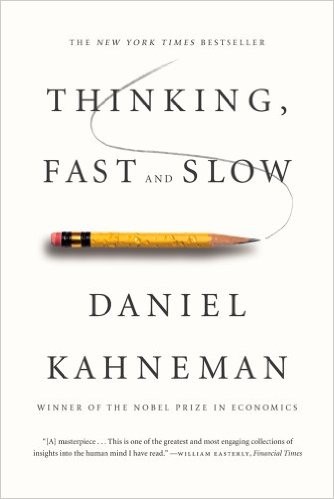
Thinking, Fast and Slow
Daniel Kahneman
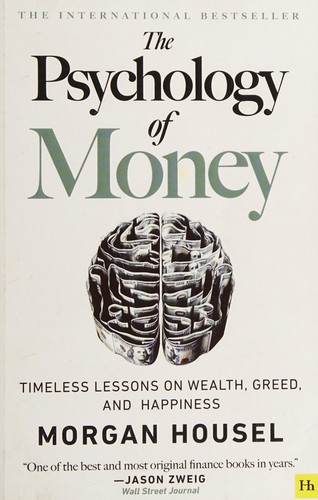
The Psychology of Money
Morgan Housel
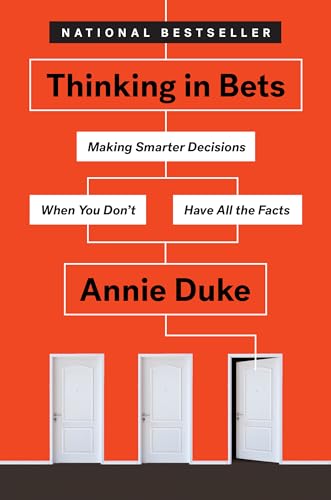
Thinking in Bets: Making Smarter Decisions When You Don't Have All the Facts
Annie Duke

What I Learned Losing a Million Dollars
Jim Paul
