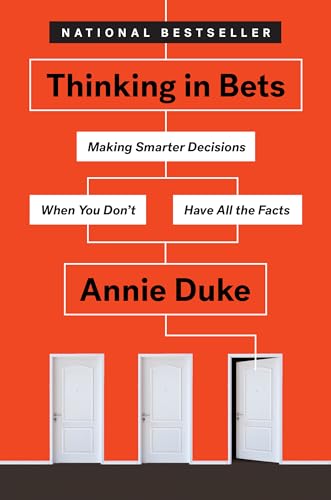
Thinking in Bets: Making Smarter Decisions When You Don't Have All the Facts by Annie Duke is a 2018 psychology book about decision-making, probability, cognitive bias. Resulting is the error of judging a decision by its outcome rather than the quality of the reasoning behind it. Good decisions can lead to bad outcomes and bad decisions can get lucky.
Summary
Thinking in Bets is Annie Duke's argument that most decisions in life share a fundamental feature with poker hands: you're choosing under uncertainty, with incomplete information, and luck will affect the outcome regardless of how well you reasoned. Duke spent two decades as one of the highest-earning professional poker players before becoming a decision-making consultant, and the book draws directly on that experience. The central claim is that we evaluate decisions by their outcomes — a habit she calls "resulting" — and that this conflates luck with skill in ways that make us worse at learning from experience.
Duke introduces the concept of "thinking in bets," which means assigning explicit probabilities to beliefs rather than treating them as either true or false. When you say "I believe X," you're making a claim that should have a confidence level attached to it. Updating those confidence levels when evidence arrives is rational; holding them firm because admitting uncertainty feels like weakness is not. The book also dissects how we process wins and losses differently — we take personal credit for good outcomes and blame circumstances for bad ones — and how peer groups either reinforce this pattern or help us break it.
A substantial portion of the book is devoted to the value of deliberate accountability structures. Duke describes a concept she calls a "buddy system" or truth-seeking pod: a small group that commits to evaluating decisions based on the quality of the reasoning at the time, not the eventual outcome. This is harder than it sounds because social norms push toward validation rather than honest critique. She also examines how time horizons shape decision quality: short-term thinking is the enemy of good bets, and mental time travel — vividly imagining how a decision looks from a future vantage point — is a reliable corrective.
The book's weakness is that some of its poker metaphors don't translate cleanly to situations where relationships, ethics, or irreversible consequences are involved. Duke is aware of this but doesn't always fully account for it. That said, Thinking in Bets is most useful not as a complete theory of decision-making but as a corrective to the specific failure modes — resulting, hindsight bias, and motivated reasoning — that reliably cause intelligent people to learn the wrong lessons from their own experience. Anyone who makes decisions with uncertain outcomes and wants a more honest post-mortem process will find it practical.
Talk to Thinking in Bets: Making Smarter Decisions When You Don't Have All the Facts like its author wrote you back.
Get the ideas that fit your life — not generic summaries.
- Chat with the book
- Audiobook-style main ideas
- Adapts to your life and goals
- Helps you take action
Key takeaways
- 1.
Resulting is the error of judging a decision by its outcome rather than the quality of the reasoning behind it. Good decisions can lead to bad outcomes and bad decisions can get lucky.
- 2.
All decisions are bets. Treating beliefs as having a probability — "I'm about 70% confident" — is more honest and more useful than the binary "I know" or "I don't know."
- 3.
Hindsight bias rewrites memory. After an outcome, we unconsciously update our recollection of what we expected, which makes it nearly impossible to learn accurately from experience.
- 4.
We are motivated reasoners: we tend to accept evidence that confirms what we want to believe and demand higher standards of proof from evidence that challenges it.
- 5.
Accountability groups (Duke calls them truth-seeking pods) are more useful than solo reflection because social pressure is the most effective force for honest thinking we have access to.
- 6.
The 10-10-10 rule: ask how you'll feel about a decision ten minutes, ten months, and ten years from now. The longer frames often reveal that the short-term anxiety is the least important signal.
- 7.
Luck and skill are both real and often indistinguishable in a single outcome. The way to separate them is to evaluate the same decision across many repetitions, not one result.
- 8.
Mental time travel — picturing your future self looking back on a decision — is a practical tool for escaping the emotional pull of the present moment when stakes are high.
Discussion questions
Use these on your own, with a book club, or as chat starters in Superbook. Book club version, ready to copy or print →
- 1.
Duke argues that resulting is almost universal. Can you recall a decision you made recently where you judged it mainly by how it turned out rather than how well you reasoned at the time?
- 2.
What belief do you hold with high confidence that you've never tried to assign an actual probability to? What would happen if you did?
- 3.
Duke describes motivated reasoning as the brain working backward from a desired conclusion. Where in your own life do you notice this happening most often?
- 4.
Think of a time when a peer group reinforced a bad decision rather than challenged it. What would a truth-seeking pod have looked like in that situation?
- 5.
If you applied the 10-10-10 frame to a difficult decision you're currently facing, how does the picture change when you move from ten minutes to ten years?
- 6.
Duke draws a distinction between process and outcome. What professional or personal domain in your life most rewards outcome over process, and what does that do to decision-making in that domain?
- 7.
How do you currently handle post-mortems on decisions that went badly? Are you evaluating the reasoning or just the result?
- 8.
Poker players at the table can read each other's tells. What are the tells in your own behavior that signal you're in a motivated-reasoning spiral?
- 9.
Duke says we should say "I'm not sure" more often and "I know" less often. Where in your social or professional life would that shift in language be most useful — and most uncomfortable?
- 10.
The book argues that luck matters more than we admit in most outcomes. Does accepting a larger role for luck make you more or less willing to take on risk? Why?
- 11.
Think of someone in your life who is unusually good at separating a bad outcome from a bad decision. What habits or attitudes seem to explain their ability to do that?
- 12.
Duke recommends recruiting a small group committed to honest feedback over validation. What would you need to change — in yourself or in the relationships — to make that kind of group possible?
Themes
Frequently asked questions
-
Is Thinking in Bets worth reading?
Yes, particularly if you tend to evaluate past decisions by how they turned out rather than how well you reasoned at the time. Duke's framework for separating luck from skill is genuinely useful and not widely covered elsewhere. Some poker metaphors wear thin, but the core ideas on resulting, hindsight bias, and motivated reasoning are practical and specific.
-
How long does it take to read Thinking in Bets?
Roughly four to five hours at an average reading pace for the 288-page book. The chapters are short and each introduces a new concept, so it works well read in sections with time to reflect between them.
-
What is the main idea of Thinking in Bets?
That most real-world decisions happen under uncertainty, and the biggest obstacle to improving decision quality is confusing outcomes with reasoning. Duke argues for treating beliefs as probabilities, updating them honestly, and judging decisions by the quality of the process rather than the luck of the result.
-
Who should read Thinking in Bets?
People in fields where outcomes are partly random — investing, management, medicine, sports — who want a more honest framework for learning from experience. It's also useful for anyone who finds themselves either too hard or too easy on themselves after decisions go wrong.
-
How is Thinking in Bets different from Thinking, Fast and Slow?
Kahneman's book is a comprehensive survey of cognitive biases grounded in decades of academic research. Duke's book is narrower and more applied — it focuses specifically on decision-making under uncertainty and gives you concrete tools like the 10-10-10 frame and accountability groups. They complement each other well.
Similar books
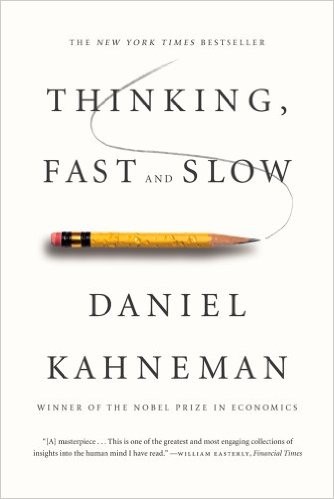
Thinking, Fast and Slow
Daniel Kahneman
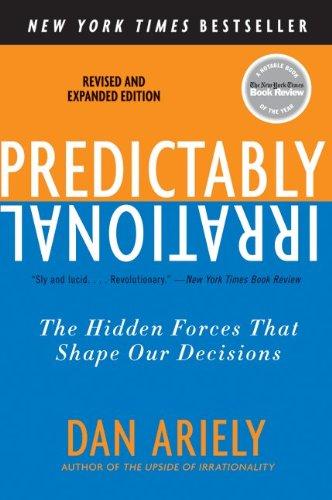
Predictably Irrational
Dan Ariely
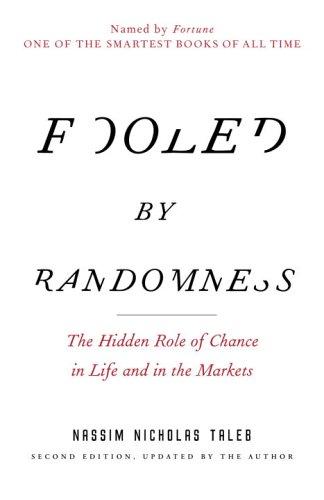
Fooled by Randomness
Nassim Nicholas Taleb
The Black Swan: The Impact of the Highly Improbable
Nassim Nicholas Taleb
