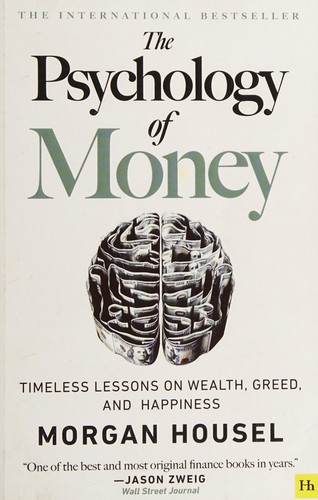
The Psychology of Money by Morgan Housel is a 2020 economics book about behavioral finance, wealth psychology, long-term thinking. Doing well with money has more to do with behavior than intelligence. Your history and psychology shape every financial decision in ways that are hard to observe from the inside.
Summary
The Psychology of Money is Morgan Housel's argument that financial success depends less on technical knowledge than on behavior — specifically, on understanding how your personal history, emotions, and cognitive biases shape every financial decision you make. Housel is a former columnist for The Wall Street Journal and The Motley Fool, and the book collects his thinking on why smart people make poor financial decisions and why ordinary people with no financial training sometimes build remarkable wealth.
The book is structured as twenty short essays, each exploring a different psychological phenomenon in personal finance. The range is deliberately broad: why getting rich and staying rich require completely different skills, why luck and risk make financial outcomes less controllable than people believe, why saving is more about freedom than money, why being reasonable beats trying to be rational, why the highest form of financial wealth is having control over your time. The essays do not build a single systematic argument; they accumulate evidence for the thesis that behavior is the dominant factor in financial outcomes.
Several ideas recur throughout. Compounding is so counterintuitive that even sophisticated investors underweight it — the bulk of Warren Buffett's wealth was accumulated after his 65th birthday, not because he became a better investor but because compounding had more time to work. Reasonable investors who can stay in the market through downturns will often outperform theoretically optimal investors who cannot tolerate the volatility. Wealth is what you don't spend, not what you earn or what your portfolio balance reads — true financial wealth is invisible because it exists in assets rather than consumption.
The writing is clear and anecdote-driven. Housel opens with two true stories — a janitor who died a multimillionaire through slow, patient investing, and a financier who repeatedly lost his fortune chasing larger returns — to frame the book's core claim. The essays are short enough to read individually and think about, which suits the mosaic structure. The book does not tell you what to invest in; it tells you why you behave the way you do around money, which Housel argues is the more important education.
Talk to The Psychology of Money like its author wrote you back.
Get the ideas that fit your life — not generic summaries.
- Chat with the book
- Audiobook-style main ideas
- Adapts to your life and goals
- Helps you take action
Key takeaways
- 1.
Doing well with money has more to do with behavior than intelligence. Your history and psychology shape every financial decision in ways that are hard to observe from the inside.
- 2.
Luck and risk are siblings. Financial outcomes are more random than most people admit, which makes both excessive pride in success and excessive blame for failure unwarranted.
- 3.
Compounding requires time above all else. The math works, but only if you don't interrupt it by selling during downturns or switching strategies after bad years.
- 4.
Getting wealthy and staying wealthy require different skills. Getting wealthy requires taking risks; staying wealthy requires caution and a little paranoia about what could go wrong.
- 5.
Saving is about freedom, not deprivation. The value of having savings is not what you might spend it on but the control it gives you over how you spend your time.
- 6.
Being reasonable is better than being rational. A strategy you can stick with through volatility beats a theoretically superior strategy you abandon when it gets uncomfortable.
- 7.
Wealth is hidden. The cars and clothes people buy to signal wealth are the opposite of wealth — they are wealth converted to consumption. Real wealth is what you don't see.
- 8.
Your personal experience of the economy shapes your financial worldview. People who lived through the Great Depression invest differently than people who grew up in the 1990s bull market, and both perspectives feel like common sense.
Discussion questions
Use these on your own, with a book club, or as chat starters in Superbook. Book club version, ready to copy or print →
- 1.
Housel argues that your personal financial history shapes your investment behavior more than any rational analysis does. What financial experiences from your past most influence how you behave with money today?
- 2.
The book opens with Ronald Read — a janitor who became a multimillionaire — and Richard Fuscone — a Harvard-educated financier who went bankrupt. What is the most important thing that explains the gap between those two outcomes?
- 3.
Housel distinguishes between getting rich and staying rich. Which set of behaviors feels harder for you to maintain, and why?
- 4.
The essay on luck and risk argues that financial success is more random than most successful people admit. How does that idea sit with you? Does it feel liberating or deflating?
- 5.
Housel's 'enough' concept argues that the failure to know when you have enough leads many wealthy people to take risks they should not take. What does 'enough' look like for you specifically?
- 6.
The book argues that staying in the market through downturns is the key behavioral skill in investing. What was your actual behavior during the most recent significant market downturn you experienced?
- 7.
Housel says reasonable beats rational. What is a financial decision you have made that was not theoretically optimal but that you knew you could stick with? Did it work out?
- 8.
The tail events concept — that a small number of events drive most returns — suggests that most investing time is spent waiting and not losing ground, rather than winning. Does that match your experience or expectations?
- 9.
Housel argues that the highest form of wealth is control over your time. How much control do you currently have over how you spend your days, and what would you change if you had more?
- 10.
The 20 essays are deliberately independent. Which single essay most changed how you think about your own financial situation?
- 11.
Housel writes that wealth is invisible — you can't see the savings or the restraint that built it, only the consumption that eroded it. How does that observation change how you interpret the apparent wealth of people around you?
- 12.
The book ends with a section on Housel's own financial approach. Do you find it reassuring or surprising that a financial writer with his knowledge makes the simple choices he describes?
Themes
Frequently asked questions
-
Is The Psychology of Money worth reading if I already know about index funds and compounding?
Yes. The book is not about investment mechanics — it assumes you understand the basics. It's about why intelligent people fail to execute what they know, and why behavior is the dominant factor in long-run financial outcomes. Even experienced investors find the behavioral essays useful as a mirror.
-
How is The Psychology of Money different from behavioral finance textbooks?
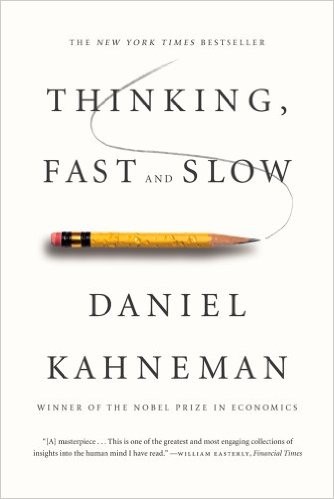
It's personal and anecdote-driven rather than academic. Housel writes about real people and specific financial decisions, not experiments and cognitive science literature. It reads more like a collection of wise essays than a systematic treatment of behavioral economics. For academic grounding in the same territory, Kahneman's Thinking, Fast and Slow is the complement.
-
What is the most important idea in the book?
That behavior matters more than intelligence in financial outcomes. Specifically: compounding requires time, and the key skill is not picking the best investments but not interrupting the process — not selling during crashes, not switching strategies after bad years, not chasing recent winners.
-
Who should read The Psychology of Money?
Anyone who has ever made a financial decision they later regretted, which is most people. The book is accessible enough for readers with no financial background and substantive enough to be genuinely useful for experienced investors who want to understand their own behavior better.
-
Does The Psychology of Money give investment advice?
Minimal specific advice. Housel's own investment approach — index funds, simple allocation, long holding periods — appears briefly at the end. The book's contribution is on the behavioral and philosophical side, not the technical side.
Similar books
The Psychology of Money vs.
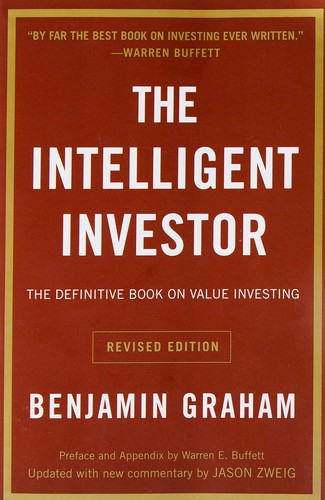
Deciding between two books? The Psychology of Money vs The Intelligent Investor or The Psychology of Money vs Rich Dad Poor Dad .
