Philosophy · Book club
Zen and the Art of Motorcycle Maintenance book club questions
Here are 12 book club questions for Zen and the Art of Motorcycle Maintenance by Robert Pirsig, ordered to open easily and end somewhere worth arguing about. Copy them, print them, or bring them up one at a time.
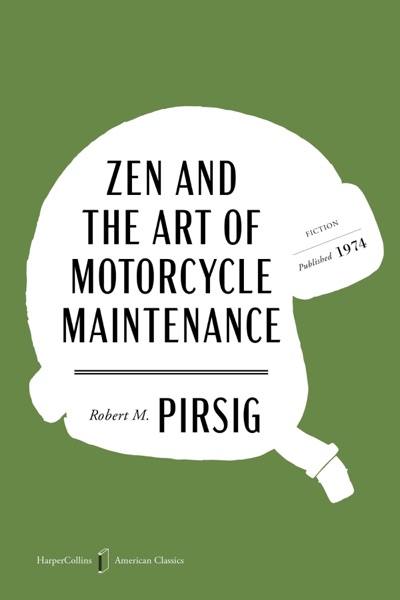
Robert Pirsig's 1974 book is structured as a cross-country motorcycle journey from Minnesota to California, narrated by a father traveling with his young son Chris.
Robert Pirsig · 1974 · 7h 15m
Full summary and key takeaways →The 12 questions
- 1.
Pirsig separates romantic and classical orientations. Which one describes you more naturally, and where has that orientation served you badly?
- 2.
The book argues that care — genuine attention to the work — is more fundamental than skill or intelligence. Can you think of work you've done where care made a visible difference in quality?
- 3.
Pirsig's Phaedrus is destroyed by his own philosophical pursuit. What does it mean to follow an idea too far? Have you ever been inside a thought that felt genuinely dangerous?
- 4.
The motorcycle maintenance sections are oddly calming. What is Pirsig suggesting about the relationship between careful attention to physical problems and peace of mind?
- 5.
Pirsig argues Quality is pre-intellectual — experienced before the mind divides it into subject and object. Does that claim seem plausible to you, or does it feel like mystification?
- 6.
The narrator and Phaedrus are the same person, but the narrator treats Phaedrus almost as an enemy. What does that suggest about the relationship between who we are now and who we were at our most intense?
- 7.
How does Pirsig's critique of rationalism apply to institutions you've worked in? Do those institutions reward classical or romantic thinking, and what gets lost?
- 8.
Gumption traps are the internal or external conditions that drain the energy required to engage hard work. What are your main gumption traps, and what restores your gumption?
- 9.
The book was written about a specific historical moment — post-1960s disillusionment with both technocracy and counterculture. Does its diagnosis of cultural split feel more or less relevant now?
- 10.
Chris is largely silent throughout the trip and clearly struggling. How does the narrator's philosophical obsession function as a form of absence from his son?
- 11.
Pirsig suggests that the Zen monk and the excellent mechanic share something the intellectual often lacks. What is that thing, and do you see it in anyone you know?
- 12.
The book ends on an optimistic but fragile note. Given what you know about Pirsig's life after publication — Chris died young, Pirsig himself remained troubled — does the ending read differently?
How to run the discussion
- Pick six to eight, not all of them. An hour of real discussion covers fewer questions than anyone expects, and racing the list is what makes a book club feel like homework.
- Open with what people noticed, not what they concluded. Asking for a verdict first hardens opinions before anyone has heard each other.
- Let the disagreement run. The questions below that split a room are the ones worth the time; the ones everyone answers the same way can be skipped.
- Ask the quiet person a specific question. A direct, narrow question is far easier to answer than an open invitation to contribute.
Themes worth steering toward
If the conversation stalls, these are the threads that usually restart it.
Common questions
What are good book club questions for Zen and the Art of Motorcycle Maintenance?
Here are 12 book club questions for Zen and the Art of Motorcycle Maintenance by Robert Pirsig, ordered to open easily and end somewhere worth arguing about. The strongest openers ask what each reader noticed rather than what they concluded, and the discussion usually turns on quality, rationalism and romanticism, self-discovery.
How long should a book club discussion of Zen and the Art of Motorcycle Maintenance last?
Most groups run 60 to 90 minutes of actual discussion. That is roughly six to eight questions, not all of them, so pick the ones that suit your group rather than working down the list in order.
What are the main themes in Zen and the Art of Motorcycle Maintenance?
Quality, Rationalism and romanticism, Self-discovery, Technology and humanity, Mental illness. Those are the threads most likely to divide a room, which makes them the useful places to steer a discussion that has gone quiet.
Picking the next one? See books like Zen and the Art of Motorcycle Maintenance or questions for other book club picks.
