100 Baggers: Stocks That Return 100-to-1 and How to Find Them by Christopher Mayer is a 2015 business book about long-term investing, stock selection, business quality. The single most important ingredient in producing 100-baggers is time. Most investors sell long before the compounding has done its work — often at 3x or 5x — forfeiting the next 20x.
Summary
Christopher Mayer built this book on research conducted earlier by Thomas Phelps, whose 1972 book 100 to 1 in the Stock Market studied stocks that returned one hundred times their purchase price. Mayer updated Phelps's work by studying every US-listed stock that returned 100-to-1 between 1962 and 2014 — identifying 365 stocks in total — and asked what they had in common. The answer structures the book.
The common characteristics of 100-baggers cluster around a few themes. First, exceptional business quality: the companies in the study tended to have high returns on equity, strong competitive positions, and the ability to reinvest earnings at high rates of return for extended periods. Second, growth: both in revenue and earnings, over many years. Third, valuation at purchase: while overpaying was possible, most 100-baggers were purchased at reasonable valuations relative to their eventual earnings power. Fourth, and most important, time: holding periods of ten, twenty, or thirty years. The math of compounding requires time, and most investors sell far too early, often at three or five times their purchase price, missing the vast majority of the eventual return.
Mayer draws extensively on examples — Monster Beverage, Kansas City Southern, Gillette, Sears (before its decline), and many lesser-known businesses — to illustrate what exceptional compounding looks like in practice. He is honest that identifying these stocks in advance is genuinely hard. The characteristics he describes are visible clearly only in hindsight. Many businesses that looked like 100-baggers at year five were not at year twenty.
The book's most practical contribution is probably what Mayer calls the "coffee can portfolio" concept, borrowed from Robert Kirby: buy a set of high-quality businesses and do nothing with them for a decade. The constraint is that you cannot add or remove holdings. The forced inaction tends to outperform active management because it eliminates the most common errors — taking profits too early, cutting losses that recover, and churning into whatever looks good this year.
100 Baggers is most useful as a mental model, not a stock-picking algorithm. Mayer is not promising that following his framework will produce 100-baggers. He is arguing that understanding what they required — business quality, growth, time, patience — changes how an investor should think about portfolio construction and time horizon.

Talk to 100 Baggers: Stocks That Return 100-to-1 and How to Find Them like its author wrote you back.
Get the ideas that fit your life — not generic summaries.
- Chat with the book
- Audiobook-style main ideas
- Adapts to your life and goals
- Helps you take action
Key takeaways
- 1.
The single most important ingredient in producing 100-baggers is time. Most investors sell long before the compounding has done its work — often at 3x or 5x — forfeiting the next 20x.
- 2.
High returns on equity, reinvested at high rates over long periods, are the mathematical engine behind every 100-bagger. The business quality must be exceptional and durable.
- 3.
Owner-operators — founders or major shareholders who run the business — outperform hired management in the 100-bagger data. Skin in the game aligns incentives over long periods.
- 4.
The coffee can portfolio approach (buy and do nothing for a decade) eliminates the most common investor errors: premature profit-taking, loss-aversion selling, and performance chasing.
- 5.
Valuation at purchase matters but not as much as business quality and time. Moderately expensive purchases in great businesses typically outperform cheap purchases in mediocre ones over long periods.
- 6.
Small-cap companies produce 100-baggers at higher rates than large-caps because they have more room to grow. A company already worth $100 billion faces a harder math problem than one worth $100 million.
- 7.
Most investors focus on next quarter's earnings or this year's macro environment. 100-bagger investing requires asking where this business could be in twenty years, which is a different cognitive task.
- 8.
Identifying 100-baggers in advance is genuinely difficult. Many of the characteristics Mayer describes — durable competitive position, exceptional capital allocation — are only clearly visible in hindsight.
Discussion questions
Use these on your own, with a book club, or as chat starters in Superbook. Book club version, ready to copy or print →
- 1.
The book argues that time in the market is the most underrated ingredient. What practical or psychological obstacles make it hardest for you to hold a position for ten or twenty years?
- 2.
Owner-operators consistently outperform hired management in the data Mayer presents. What does that tell you about how professional incentive structures work, and what would change them?
- 3.
The coffee can portfolio forces inaction. What would you have to believe about your own judgment to commit to not touching a portfolio for a decade?
- 4.
Mayer acknowledges that most stocks with 100-bagger characteristics don't actually become 100-baggers. What is the right way to think about base rates when looking for exceptional outcomes?
- 5.
High returns on equity reinvested at high rates are the mathematical foundation of the book's thesis. Can you identify a business in your life or field that seems to have that profile right now?
- 6.
The book covers a period (1962–2014) before the dominance of passive indexing and algorithmic trading. Do those changes affect the thesis, and in which direction?
- 7.
Many of Mayer's examples were unrecognized at the time. What makes a genuinely great business hard to recognize before the growth happens, and what heuristics might help?
- 8.
Mayer recommends focusing on business quality over macro conditions. How do you reconcile that with the evidence that macro factors (interest rates, recessions) significantly affect even the best businesses?
- 9.
The book is explicitly about public equities. Does the same logic apply to private investments, venture, or real estate? Where does the analogy hold and where does it break down?
- 10.
What's the worst mistake an investor can make after correctly identifying a great business? Mayer suggests it's selling too early — do you agree?
- 11.
The book is short and its thesis is simple. Does that simplicity make it more or less actionable? What would a more complicated version of the same argument offer?
- 12.
If you applied the 100-bagger criteria right now to companies you know well, which one would most closely fit the profile? What would have to be true for it to succeed?
Themes
Frequently asked questions
-
Is 100 Baggers worth reading if I already know the basics of value investing?
Yes, especially for the historical data on what 100-baggers actually looked like and the emphasis on holding period as the most undervalued variable. The ideas are not new, but the framing around patience and owner-operators is well-executed and the examples are concrete.
-
How long does it take to read 100 Baggers?
Around four hours. It's under 250 pages and reads as a series of case studies and principles. The chapters are short and self-contained.
-
Does the book give specific stock recommendations?
No. Mayer discusses historical examples in detail but frames the book as a mental model builder rather than a tip sheet. He is explicit that applying the framework requires judgment that no book can substitute for.
-
What is the coffee can portfolio?
A concept borrowed from investor Robert Kirby: pick a set of high-quality companies, put them in a 'coffee can,' and commit to not touching them for at least a decade. The constraint forces the patience that produces compounding returns and eliminates the active-management errors that most investors repeatedly make.
-
Who should read this book?
Individual investors interested in long-term equity compounding, and anyone who wants to think more seriously about business quality versus price as the primary variable in investment returns. Less useful for traders, macro investors, or anyone whose time horizon is under five years.
Similar books
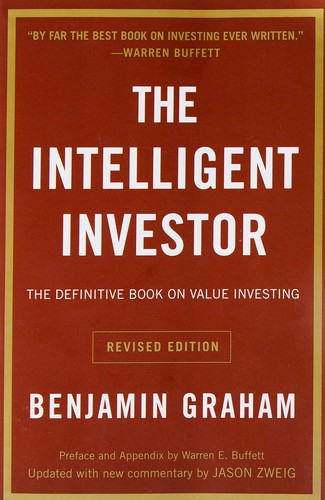
The Intelligent Investor
Benjamin Graham
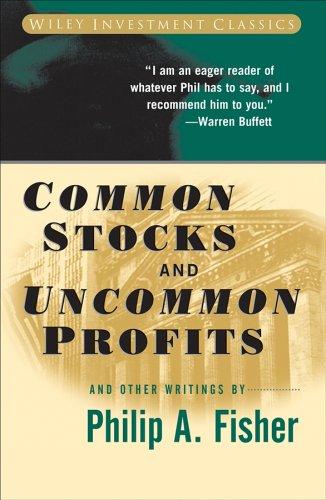
Common Stocks and Uncommon Profits
Philip A. Fisher

Poor Charlie's Almanack
Charlie Munger
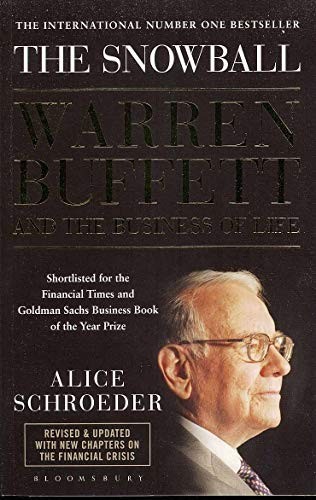
The Snowball: Warren Buffett and the Business of Life
Alice Schroeder
