History · Book club
1493: Uncovering the New World Columbus Created book club questions
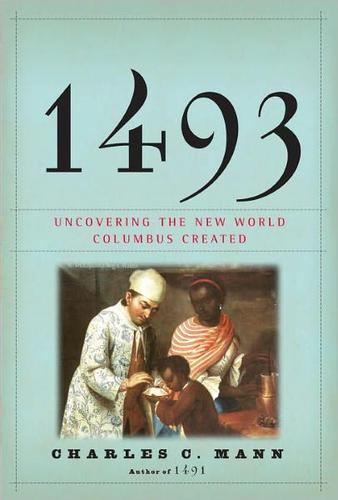
Here are 12 book club questions for 1493: Uncovering the New World Columbus Created by Charles C. Mann, ordered to open easily and end somewhere worth arguing about. Copy them, print them, or bring them up one at a time.
The 12 questions
- 1.
Mann argues that globalization began in 1493, not in the twentieth century. Does that reframing change how you think about contemporary debates over globalization's costs and benefits?
- 2.
The silver flows from the Americas both funded European expansion and destabilized China. Who bore the costs of that exchange, and who captured the benefits?
- 3.
The role of ecology and disease in history is often underweighted relative to military and political events. After reading this book, do you think that's right?
- 4.
The introduction of American crops dramatically increased food security in parts of Europe and Asia. Does that unambiguous benefit complicate a moral accounting of colonialism?
- 5.
Mann describes a world in which the consequences of individual actions — planting a crop, launching a ship — played out at continental scale without anyone understanding what they were doing. How different is our situation today?
- 6.
The ecological exchange continues. What contemporary species introductions, disease movements, or crop adoptions might be the 1493-scale events of the twenty-first century?
- 7.
Slave traders, silver miners, and rubber tappers all created global networks without intending to. What does that suggest about how we should assign moral responsibility for large-scale historical harms?
- 8.
How does the story of rubber — Amazon to Asia, enriching colonial powers, impoverishing Brazil — map onto contemporary debates about intellectual property and resource extraction?
- 9.
Mann covers Chinese, African, European, and American perspectives in the same book. Does the multi-continental framing work, or does it diffuse the argument?
- 10.
The book's ecological argument implies that environmental history is as important as political or economic history. How well do you think that proposition is accepted in mainstream historical education?
- 11.
If the Columbian Exchange was the origin of modern globalization, what does that suggest about attempts to reverse or contain globalization today?
- 12.
1493 is denser and more sprawling than 1491. Does the larger canvas serve the argument, or does it scatter it?
How to run the discussion
- Pick six to eight, not all of them. An hour of real discussion covers fewer questions than anyone expects, and racing the list is what makes a book club feel like homework.
- Open with what people noticed, not what they concluded. Asking for a verdict first hardens opinions before anyone has heard each other.
- Let the disagreement run. The questions below that split a room are the ones worth the time; the ones everyone answers the same way can be skipped.
- Ask the quiet person a specific question. A direct, narrow question is far easier to answer than an open invitation to contribute.
Themes worth steering toward
If the conversation stalls, these are the threads that usually restart it.
Common questions
What are good book club questions for 1493: Uncovering the New World Columbus Created?
Here are 12 book club questions for 1493: Uncovering the New World Columbus Created by Charles C. Mann, ordered to open easily and end somewhere worth arguing about. The strongest openers ask what each reader noticed rather than what they concluded, and the discussion usually turns on globalization, ecological exchange, trade.
How long should a book club discussion of 1493: Uncovering the New World Columbus Created last?
Most groups run 60 to 90 minutes of actual discussion. That is roughly six to eight questions, not all of them, so pick the ones that suit your group rather than working down the list in order.
What are the main themes in 1493: Uncovering the New World Columbus Created?
Globalization, Ecological exchange, Trade, Colonial history, Environmental history. Those are the threads most likely to divide a room, which makes them the useful places to steer a discussion that has gone quiet.
Picking the next one? See books like 1493: Uncovering the New World Columbus Created or questions for other book club picks.
