1493: Uncovering the New World Columbus Created by Charles C. Mann is a 2011 history book about globalization, ecological exchange, trade. The Columbian Exchange — the transfer of plants, animals, diseases, and people following 1492 — was the largest ecological event since the last ice age and the true origin of modern globalization.
Summary
Where 1491 ends, 1493 begins. After Columbus, Charles Mann argues, the world was fundamentally and permanently altered in ways that are still unfolding. The mechanism was what biologists call the Columbian Exchange: the movement of plants, animals, diseases, and people across the Atlantic and eventually around the entire globe. Mann's thesis is that this ecological event — unintentional, driven by market incentives, and accelerated by silver — was the origin of modern globalization and remains the largest ecological event in human history since the last ice age.
The book is organized around specific flows. Silver from the mines of Potosí and Mexico, extracted by coerced indigenous labor, funded the economies of Spain and China and underwrote the first genuinely global trade network. The Manila galleons created a direct link between the Americas and Asia that restructured Chinese agriculture and accelerated the decline of Ming dynasty. Rubber from Amazonia, potato from the Andes, and maize from Mesoamerica transformed agricultural systems, population dynamics, and political power across Europe, Asia, and Africa in ways their beneficiaries rarely acknowledged. Earthworms introduced from Europe disrupted North American forest ecology. The malaria and yellow fever that American mosquitoes spread after being transported on slave ships reshaped the demographics of the Caribbean and changed the military calculus of the American Revolution.
Mann's method is to follow specific substances, species, and people through the networks the exchange created. He travels to Potosí, to the river deltas of southern China where sweet potato farming changed peasant society, to the Caribbean plantation economies that the ecology of disease made possible and also eventually made untenable. The result is a deeply interconnected portrait of how a single navigational decision in 1492 set in motion chains of cause and effect that are still structuring the world we inhabit.
The book is longer and denser than 1491, and some sections reward patient reading more than others. But its core insight — that modern globalization is not a recent invention but a specific version of an exchange that began in 1493 — is genuinely illuminating. For anyone who wants to understand how the contemporary world economy and ecology were constructed, 1493 provides some of the most important backstory available in popular form.
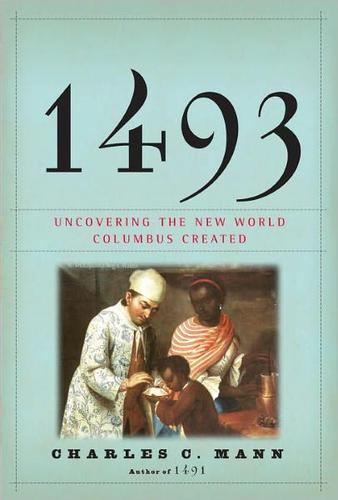
Talk to 1493: Uncovering the New World Columbus Created like its author wrote you back.
Get the ideas that fit your life — not generic summaries.
- Chat with the book
- Audiobook-style main ideas
- Adapts to your life and goals
- Helps you take action
Key takeaways
- 1.
The Columbian Exchange — the transfer of plants, animals, diseases, and people following 1492 — was the largest ecological event since the last ice age and the true origin of modern globalization.
- 2.
Silver from the Americas funded the first genuinely global trade network and underwrote Spanish imperial power while restructuring the Chinese economy through the Manila galleon trade.
- 3.
American crops — potato, maize, cassava, sweet potato — transformed agricultural productivity and population growth across Europe, Africa, and Asia in ways that their adopters rarely attributed to the Americas.
- 4.
Malaria and yellow fever, spread by mosquitoes transported on slave ships, reshaped the demographics of the Caribbean, made plantation slavery economically rational where it was most deadly to white Europeans, and affected the outcome of the American Revolution.
- 5.
Rubber from Amazonia enabled the industrial age's transportation revolution. Its eventual production in Asia, using seeds stolen from Brazil, illustrates how the ecological exchange created winners and losers in ways colonial powers actively managed.
- 6.
The Chinese adoption of New World crops — particularly sweet potato — changed the demographic and social structure of rural China, contributing to instability that fed the decline of the Ming dynasty.
- 7.
Earthworms introduced from Europe transformed North American forest ecology, changing soil composition in ways that affected native plant species and the structure of forests that pre-Columbian peoples had managed.
- 8.
The Columbian Exchange was not a planned or understood event. Its participants were responding to local incentives — profit, survival, competition — and the global consequences were invisible to them, as many global consequences remain invisible to us.
Discussion questions
Use these on your own, with a book club, or as chat starters in Superbook. Book club version, ready to copy or print →
- 1.
Mann argues that globalization began in 1493, not in the twentieth century. Does that reframing change how you think about contemporary debates over globalization's costs and benefits?
- 2.
The silver flows from the Americas both funded European expansion and destabilized China. Who bore the costs of that exchange, and who captured the benefits?
- 3.
The role of ecology and disease in history is often underweighted relative to military and political events. After reading this book, do you think that's right?
- 4.
The introduction of American crops dramatically increased food security in parts of Europe and Asia. Does that unambiguous benefit complicate a moral accounting of colonialism?
- 5.
Mann describes a world in which the consequences of individual actions — planting a crop, launching a ship — played out at continental scale without anyone understanding what they were doing. How different is our situation today?
- 6.
The ecological exchange continues. What contemporary species introductions, disease movements, or crop adoptions might be the 1493-scale events of the twenty-first century?
- 7.
Slave traders, silver miners, and rubber tappers all created global networks without intending to. What does that suggest about how we should assign moral responsibility for large-scale historical harms?
- 8.
How does the story of rubber — Amazon to Asia, enriching colonial powers, impoverishing Brazil — map onto contemporary debates about intellectual property and resource extraction?
- 9.
Mann covers Chinese, African, European, and American perspectives in the same book. Does the multi-continental framing work, or does it diffuse the argument?
- 10.
The book's ecological argument implies that environmental history is as important as political or economic history. How well do you think that proposition is accepted in mainstream historical education?
- 11.
If the Columbian Exchange was the origin of modern globalization, what does that suggest about attempts to reverse or contain globalization today?
- 12.
1493 is denser and more sprawling than 1491. Does the larger canvas serve the argument, or does it scatter it?
Themes
Frequently asked questions
-
Should I read 1491 before 1493?
It helps but isn't required. 1491 covers the Americas before contact; 1493 covers what happened after. They work as companion volumes and share Mann's method, but 1493 is largely self-contained and its argument is different enough to stand alone.
-
How long does it take to read 1493?
Around ten hours at average reading pace. It is longer and denser than 1491 at around 500 pages. Some sections — particularly the chapters on silver and China — are especially rich but require patience.
-
What is the main argument of 1493?
That the ecological and economic exchange unleashed by Columbus's voyage — the movement of crops, species, diseases, and people — was the origin of modern globalization and reshaped the demography, ecology, and economy of every continent within two centuries.
-
What is the Columbian Exchange?
The historian Alfred Crosby's term for the transfer of plants, animals, diseases, and people between the Old and New Worlds following 1492. Mann uses Crosby's framework but extends it to trace specific global flows of silver, crops, and species across multiple centuries.
-
Is 1493 accessible to non-specialists?
Mostly yes. Mann is a science journalist and writes for a general audience. The denser sections involve historical ecology and economic history that may require some patience, but the book is structured around specific stories and places rather than abstract argument.
Similar books
1491: New Revelations of the Americas Before Columbus
Charles C. Mann
Sapiens: A Brief History of Humankind
Yuval Noah Harari
Guns, Germs, and Steel
Jared Diamond
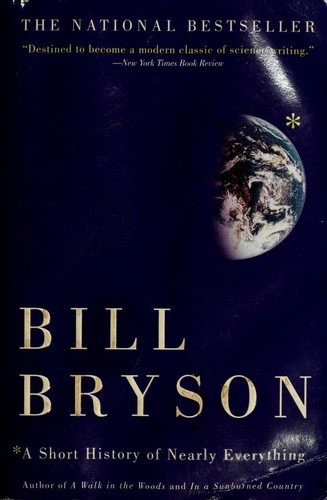
A Short History of Nearly Everything
Bill Bryson
