History · Similar reads
Books like 1493: Uncovering the New World Columbus Created
The best books like 1493: Uncovering the New World Columbus Created are 1491: New Revelations of the Americas Before Columbus, Sapiens: A Brief History of Humankind, and Guns, Germs, and Steel. 1493: Uncovering the New World Columbus Created by Charles C. Mann is about globalization, ecological exchange, trade. If that's what drew you in, here are 12 books that share its DNA — each summarized on Superbook, and ready to chat with in the app.
- 1491: New Revelations of the Americas Before Columbus
01
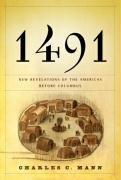
1491: New Revelations of the Americas Before Columbus
Charles C. Mann · History
Charles Mann's 1491 sets out to correct a widespread misconception: that the Americas before Columbus were a mostly empty wilderness populated by small, isolated bands of hunter-gatherers living in gentle harmony with an untouched nature.
A kindred history read.
Read the summary → - Sapiens: A Brief History of Humankind
02
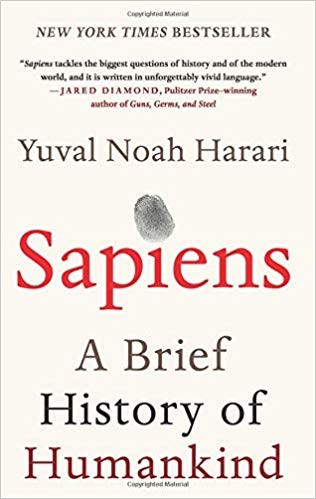
Sapiens: A Brief History of Humankind
Yuval Noah Harari · History
Sapiens traces the full arc of human history from the emergence of Homo sapiens in Africa roughly 70,000 years ago to the present.
A kindred history read.
Read the summary → - Guns, Germs, and Steel
03
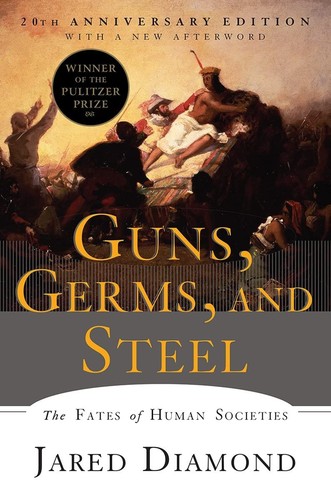
Jared Diamond · Science
Guns, Germs, and Steel is Jared Diamond's attempt to answer a question posed to him by a Papua New Guinean politician named Yali: why did Europeans end up with so much cargo — wealth, technology, power — while other peoples had comparatively little?
A kindred history read.
Read the summary →
- A Short History of Nearly Everything
04
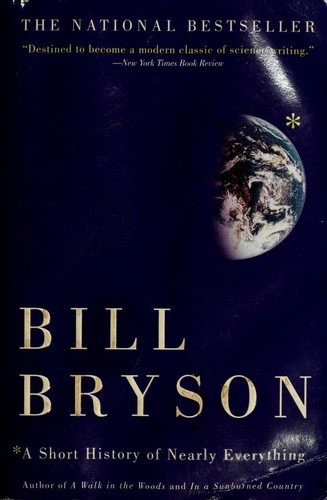
A Short History of Nearly Everything
Bill Bryson · Science
A Short History of Nearly Everything is Bill Bryson's attempt to understand the scientific story of everything — from the Big Bang to the emergence of modern humans — by spending three years talking to scientists and reading science history.
A kindred history read.
Read the summary → - Empire of Cotton: A Global History

05
Empire of Cotton: A Global History
Sven Beckert · History
Sven Beckert's Empire of Cotton argues that cotton was not just the raw material of the Industrial Revolution but the commodity through which modern capitalism was invented.
Both dig into globalization.
Read the summary → - The Fate of Rome: Climate, Disease, and the End of an Empire
06
The Fate of Rome: Climate, Disease, and the End of an Empire
Kyle Harper · History
The Fate of Rome makes a revisionist argument about one of history's most debated questions.
Both dig into environmental history.
Read the summary → - The Ascent of Money: A Financial History of the World
07
The Ascent of Money: A Financial History of the World
Niall Ferguson · Economics
Niall Ferguson published The Ascent of Money in 2008, with timing that turned out to be acute: the book appeared just as the global financial crisis was unfolding, making its subject matter suddenly urgent for readers who had barely thought about the mechanics of credit default swaps or mortgage securitization.
Both dig into globalization.
Read the summary → - The Wealth of Nations
08
Adam Smith · Economics
An Inquiry into the Nature and Causes of the Wealth of Nations, published in 1776, is Adam Smith's comprehensive account of how modern commercial economies work and what policies promote prosperity.
Both dig into trade.
Read the summary → - 1776
09
David McCullough · History
David McCullough's 1776, published in 2005, covers a single year of the American Revolution — from the winter siege of Boston through Washington's crossing of the Delaware and the surprise victory at Trenton.
A kindred history read.
Read the summary → - A Man on the Moon
10
Andrew Chaikin · History
A Man on the Moon is Andrew Chaikin's exhaustive narrative history of the Apollo program, from the first lunar orbit of Apollo 8 in 1968 through the final mission, Apollo 17, in 1972.
A kindred history read.
Read the summary → - A People's History of the United States
11
A People's History of the United States
Howard Zinn · History
Howard Zinn's A People's History of the United States, first published in 1980, retells American history from the perspective of those who rarely appear in conventional textbooks: Native Americans, enslaved people, industrial workers, women, immigrants, and dissidents of various kinds.
A kindred history read.
Read the summary → - Against the Gods: The Remarkable Story of Risk
12
Against the Gods: The Remarkable Story of Risk
Peter L. Bernstein · History
Against the Gods is Peter Bernstein's intellectual history of how humanity learned to measure, quantify, and manage risk — a story he traces from ancient gambling in the Mediterranean through the development of modern probability theory, statistics, and financial derivatives.
A kindred history read.
Read the summary →
Books like 1493: Uncovering the New World Columbus Created: quick answers
What are the best books like 1493: Uncovering the New World Columbus Created?
The best books like 1493: Uncovering the New World Columbus Created by Charles C. Mann are 1491: New Revelations of the Americas Before Columbus by Charles C. Mann, Sapiens: A Brief History of Humankind by Yuval Noah Harari, Guns, Germs, and Steel by Jared Diamond, A Short History of Nearly Everything by Bill Bryson, Empire of Cotton: A Global History by Sven Beckert, plus 7 more below. Each was chosen for themes it shares with 1493: Uncovering the New World Columbus Created, such as globalization, ecological exchange, trade.
What should I read after 1493: Uncovering the New World Columbus Created?
A natural next read after 1493: Uncovering the New World Columbus Created is 1491: New Revelations of the Americas Before Columbus by Charles C. Mann. A kindred history read. Other strong choices are Sapiens: A Brief History of Humankind by Yuval Noah Harari, Guns, Germs, and Steel by Jared Diamond, A Short History of Nearly Everything by Bill Bryson.
What books are similar to 1493: Uncovering the New World Columbus Created by Charles C. Mann?
1493: Uncovering the New World Columbus Created centers on globalization, ecological exchange, trade. Books with a similar feel include 1491: New Revelations of the Americas Before Columbus by Charles C. Mann, Sapiens: A Brief History of Humankind by Yuval Noah Harari, Guns, Germs, and Steel by Jared Diamond, A Short History of Nearly Everything by Bill Bryson, Empire of Cotton: A Global History by Sven Beckert, The Fate of Rome: Climate, Disease, and the End of an Empire by Kyle Harper — all free to read and chat with on Superbook.
