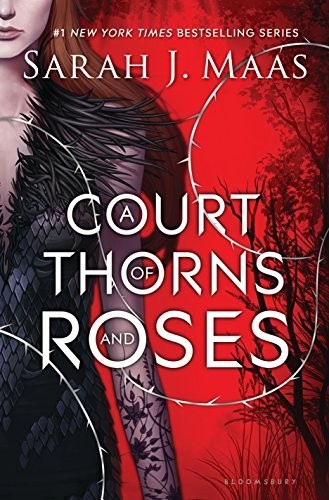
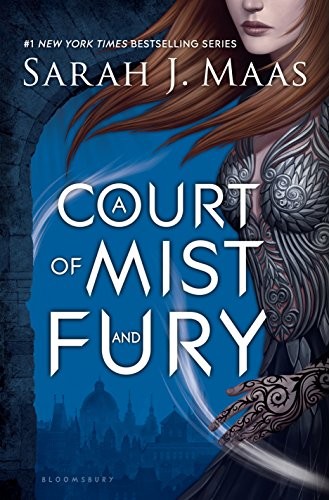
A Court of Mist and Fury by Sarah J. Maas is a 2016 fantasy book about trauma and recovery, freedom and self-determination, power and its responsibilities. The novel's central argument is that the version of love that controls, protects, and contains is not love — and that this truth can be concealed inside genuine affection for a long time.
Summary
A Court of Mist and Fury begins where A Court of Thorns and Roses ended: Feyre is back in the Spring Court with Tamlin, but she is not the same person who left. The trials she survived have marked her, and she is struggling — with nightmares, with stillness, with a domesticated life she chose but that has quietly become a cage. When a magical bargain forged in the previous book comes due, she is taken to the Night Court and to Rhysand, a character the first novel coded as threatening villain. The second book is largely the project of revising that reading.
This is the novel Maas fans point to when they argue the series transcends its genre. The Night Court and Velaris are richly imagined; the ensemble cast — Cassian, Azriel, Morrigan, Amren — has genuine personality and history; and Feyre's arc, from traumatized survivor learning to function again to an agent of her own story, is written with more psychological honesty than the first book managed. The pivot on Rhysand — from antagonist to love interest to the character most readers name as the reason they stayed in the series — is the novel's central achievement and its central risk. Whether it works depends on whether you accept the recontextualization Maas asks you to perform.
ACOMAF is long, roughly twice the length of the first book, and makes use of the length. The world expands considerably — courts, politics, an ancient history that becomes load-bearing — and the relationships deepen into something more like an ensemble drama. The romance is slower, more fraught, and more complicated by genuine ethical weight than the first book's. Maas is more confident here, and it shows in pacing, in the secondary characters, and in willingness to leave Feyre in real difficulty rather than resolving her discomfort too quickly.
This is a divisive book for reasons that are structurally interesting. Its treatment of Tamlin — a character many readers loved in book one — is deliberately uncomfortable, and not everyone accepts the pivot. But for readers who came for Rhysand or came for what the series was reaching toward in its first book, ACOMAF is the argument for why the series matters.
Talk to A Court of Mist and Fury like its author wrote you back.
Get the ideas that fit your life — not generic summaries.
- Chat with the book
- Audiobook-style main ideas
- Adapts to your life and goals
- Helps you take action
Key takeaways
- 1.
The novel's central argument is that the version of love that controls, protects, and contains is not love — and that this truth can be concealed inside genuine affection for a long time.
- 2.
Feyre's PTSD is treated with more specificity than most fantasy allows: the hypervigilance, the smallness, the loss of appetite, the dreams. It gives her arc real psychological weight.
- 3.
Rhysand's recontextualization is the book's boldest gamble. Whether it works depends on whether you accept that a character can be cruel in one context and compassionate in another for reasons that both make sense.
- 4.
Velaris and the Night Court are constructed as a deliberate inversion of what the first book's visual language suggested: darkness as safety, as community, as home.
- 5.
The ensemble cast of the Night Court works because each character has a distinct function that isn't reducible to personality type. Azriel, Cassian, Morrigan, and Amren each carry a different kind of story.
- 6.
The Cauldron mythology — the ancient threat that drives the geopolitical plot — is the framework the series uses to ask what individuals owe to forces larger than their personal choices.
- 7.
ACOMAF is explicitly about what it looks like to recover from trauma in a body and in a relationship: the ways recovery is nonlinear, the ways people around you can unwittingly delay it.
- 8.
The book made the enemies-to-lovers pivot a foundational move of the romantasy genre: the love interest who is not what he appeared, whose darkness is real but whose tenderness is also real.
Discussion questions
Use these on your own, with a book club, or as chat starters in Superbook. Book club version, ready to copy or print →
- 1.
The novel asks you to revise your reading of Rhysand from book one. Did the revision feel earned to you, or did it feel like retconning a villain into a love interest?
- 2.
Tamlin's behavior in this book is presented as stemming from love and fear. Does the novel succeed in making him pitiable rather than simply villainous?
- 3.
Feyre's trauma is central but the novel doesn't resolve it neatly. What do you think the book is arguing about what recovery actually looks like?
- 4.
Velaris is a secret kept from enemies, which requires its residents to accept constraints for a collective good. How does that parallel the individual relationships in the novel?
- 5.
Morrigan's backstory, revealed late in the book, reframes her behavior across the series. How did that reveal change your understanding of her earlier choices?
- 6.
The bond between Feyre and Rhysand is in part magical and involuntary. Does the involuntary nature of it complicate the romance for you, or does the novel successfully address that concern?
- 7.
ACOMAF is much longer than the first book. Were there sections where you felt the length working for the story, and sections where you felt it against you?
- 8.
The Night Court is presented as a model of chosen family. What distinguishes it from the Spring Court, and what does the contrast argue about what healthy community looks like?
- 9.
Several readers found ACOMAF's treatment of Tamlin as a cautionary tale about controlling relationships to be its most important contribution. Is that reading available in the text, or does it require bringing it from outside?
- 10.
Feyre's sisters become more prominent as the book progresses. How do their reactions to her transformation complicate the theme of freedom and self-determination?
- 11.
How does ACOMAF work as a standalone novel versus as the second book of a series? Does it feel like a complete story, or does it require the series frame to function?
- 12.
If you read this before ACOTAR or without the series context, what would you make of Rhysand as a protagonist? Does the book earn him on its own terms?
Themes
Frequently asked questions
-
Is A Court of Mist and Fury better than the first book?
Most readers who love the series say yes, emphatically. It's longer, emotionally more complex, the world is larger, and the romance is more interesting. Readers who were satisfied with book one and don't need more complexity sometimes find the shift jarring.
-
Can I skip A Court of Thorns and Roses and start here?
No. ACOMAF depends entirely on what happened in book one, including your relationship with Tamlin, the nature of Feyre's transformation, and the bargain that drives the plot of this book.
-
Is ACOMAF explicit in its romantic content?
More so than the first book, yes. The series escalates as it progresses and this book marks a significant shift toward adult content. It is shelved as adult fantasy.
-
Who shouldn't read A Court of Mist and Fury?
Readers who liked Tamlin in book one and find his treatment here unfair. Also readers who find the length — over 600 pages — prohibitive without the series investment to sustain motivation.
-
What is the Night Court, and why do fans love it so much?
The Night Court is the seat of Rhysand's power — presented in book one as the most feared and dangerous court, and revealed in book two as an underground city of enormous beauty and community. The inversion is the emotional pivot the whole book hinges on.