A General Theory of Love by Thomas Lewis, Fari Amini, and Richard Lannon is a 2000 psychology book about attachment, neuroscience, love. Limbic resonance is the mammalian nervous system's capacity to synchronize with another's emotional state. This biological attunement is what love is, at its neurological core.
Summary
A General Theory of Love is a 2000 book by three psychiatrists at the University of California, San Francisco — Thomas Lewis, Fari Amini, and Richard Lannon — who set out to explain love scientifically without stripping it of its significance. They draw on neuroscience, evolutionary biology, and clinical experience to argue that love is not a sentiment or a social convention but a biological process involving the limbic brain, and that humans are fundamentally shaped by the emotional quality of their earliest relationships.
The book's central concept is limbic resonance — the idea that mammals have nervous systems designed to synchronize with one another. When two people are in emotional attunement, their physiological states literally align. Heart rate, hormones, sleep rhythms, immune function all respond to the emotional presence of significant others. The authors call this mutual regulation "limbic regulation" and argue it is as necessary for human health as food or sleep. Isolation, they suggest, is not merely unpleasant but biologically destabilizing.
The authors trace how early caregiving patterns become templates for adult relationships. They draw on Bowlby's attachment theory and primate research to explain why the emotional style of childhood caregivers becomes the default setting for adult intimacy. People don't choose this template consciously; the limbic brain runs it automatically, which is why the same relational patterns recur across different partners and decades. This section is the book's most clinically grounded and explains a great deal about why adult relationships can feel mysteriously compelled.
The final portion turns to therapy, arguing that effective psychotherapy works not through rational insight but through limbic revision — a sustained relationship with a regulated therapist that gradually updates the patient's emotional expectations. The authors are skeptical of purely cognitive approaches and of the idea that insight alone changes behavior. Their view is that the limbic brain learns through lived experience, not abstract understanding, which has implications for how therapy should be practiced and how all of us think about what actually heals emotional wounds.

Talk to A General Theory of Love like its author wrote you back.
Get the ideas that fit your life — not generic summaries.
- Chat with the book
- Audiobook-style main ideas
- Adapts to your life and goals
- Helps you take action
Key takeaways
- 1.
Limbic resonance is the mammalian nervous system's capacity to synchronize with another's emotional state. This biological attunement is what love is, at its neurological core.
- 2.
Humans require limbic regulation — the stabilizing effect of close emotional relationships — for basic physiological health. Social isolation degrades health not metaphorically but measurably.
- 3.
Early attachment patterns are stored in the limbic system, not as memories but as implicit emotional programs. These programs run in adult relationships without conscious choice or awareness.
- 4.
People are attracted to the familiar, even when familiar means painful. The limbic brain gravitates toward emotional environments that match its earliest templates.
- 5.
Insight alone does not change the limbic brain. Emotional healing requires a sustained corrective relationship, not just intellectual understanding of why one's patterns exist.
- 6.
The neocortex and the limbic brain can operate independently and in conflict. The rational brain can understand something fully while the emotional brain continues to behave differently.
- 7.
Psychotherapy works when the therapist's regulated limbic system gradually revises the patient's emotional expectations through the lived experience of the therapeutic relationship.
- 8.
Modern Western culture undervalues the biological necessity of close relationships. The ideology of self-sufficiency runs against the mammalian design of the nervous system.
Discussion questions
Use these on your own, with a book club, or as chat starters in Superbook. Book club version, ready to copy or print →
- 1.
The book argues that attraction to familiar emotional patterns explains many puzzling relationship choices. Does this framework help you understand any recurring patterns in your own relationships?
- 2.
Lewis and his co-authors claim that limbic regulation — physical proximity and emotional attunement — is as necessary as food. How do the people in your life currently affect your nervous system, for better or worse?
- 3.
The authors distinguish between the limbic brain's emotional learning and the neocortex's rational understanding. Can you identify places in your life where you understand something fully but behave differently anyway?
- 4.
What does the book's skepticism about insight-based therapy suggest about how you seek change in yourself? What has actually shifted your emotional patterns versus what has just clarified your understanding of them?
- 5.
The claim that early caregiving creates lifelong templates is both explanatory and potentially fatalistic. How do you hold both the explanation and the possibility of revision?
- 6.
Limbic resonance implies that you are constantly affecting the nervous systems of people around you. What responsibility does that create?
- 7.
The book suggests modern culture promotes a self-sufficiency that contradicts mammalian biology. Where do you notice this pressure toward self-sufficiency in yourself or your social environment?
- 8.
What would it mean to choose relationships not just for shared interests or attraction but for the quality of limbic regulation they provide?
- 9.
The authors argue that genuine change requires a sustained corrective relationship, not just willpower or information. Who in your life has functioned as a source of emotional revision for you?
- 10.
How does the book change the way you think about grief or loneliness — not as emotional states but as physiological conditions?
- 11.
If limbic learning happens through experience rather than understanding, what experiences are you currently in that are shaping your emotional expectations, whether you intend them to or not?
Themes
Frequently asked questions
-
What is limbic resonance?
Limbic resonance is the term the authors use for the capacity of the mammalian nervous system to synchronize with another's emotional state. When two people are in close emotional attunement, their physiological processes — heart rate, hormones, immune function — align. The authors argue this synchronization is the biological mechanism underlying what humans call love.
-
Is A General Theory of Love scientifically up to date?
The core neuroscience is from the late 1990s and some details have been updated by subsequent research, particularly around mirror neurons and attachment. The broader framework — that early relational experiences shape the nervous system, and that emotional healing requires relational experience — remains consistent with current clinical understanding.
-
Is the book accessible to non-scientists?
Yes. It is written for a general audience and uses literary language as much as scientific terminology. The neuroscience is explained through analogy and example. Readers without a psychology or biology background will follow the argument without difficulty, though clinicians will find additional depth.
-
What does the book say about therapy?
The authors argue that effective therapy works through limbic revision — the patient's nervous system is gradually updated by sustained contact with the therapist's regulated emotional presence, not by achieving rational insight. This makes them skeptical of brief cognitive interventions and attentive to the quality of the therapeutic relationship itself.
-
Who should read A General Theory of Love?
Anyone who has found themselves repeating relationship patterns despite understanding why, or who wants a scientific explanation of why close relationships matter physically. It is also valuable for therapists, parents, and those interested in the neuroscience of attachment and emotional development.
Similar books
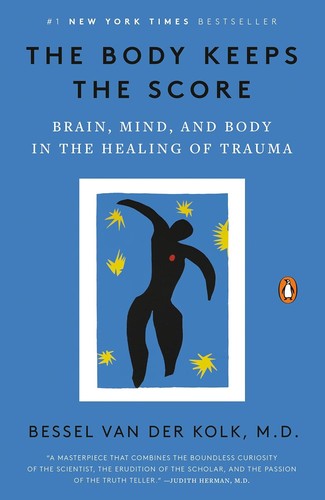
The Body Keeps the Score
Bessel van der Kolk
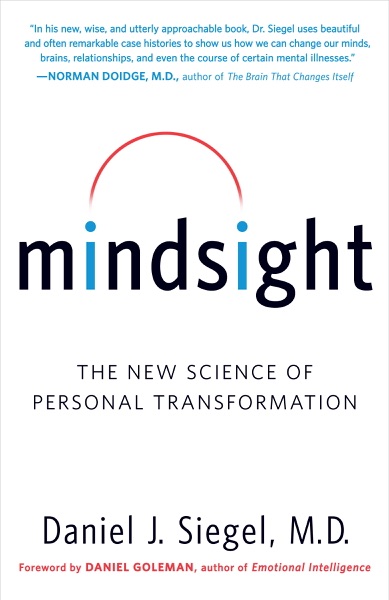
Mindsight: The New Science of Personal Transformation
Daniel J. Siegel
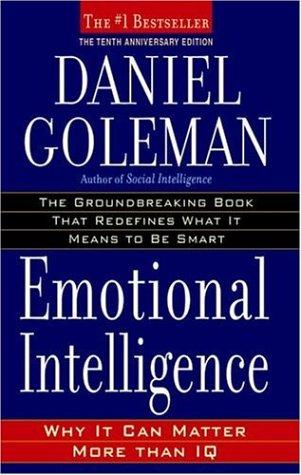
Emotional Intelligence
Daniel Goleman
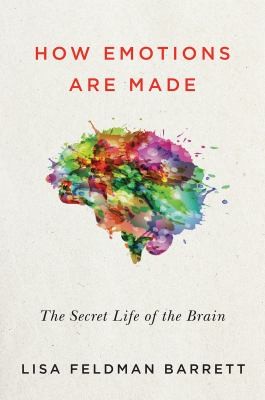
How Emotions Are Made: The Secret Life of the Brain
Lisa Feldman Barrett
