Psychology · Book club
An Unquiet Mind book club questions
Here are 12 book club questions for An Unquiet Mind by Kay Redfield Jamison, ordered to open easily and end somewhere worth arguing about. Copy them, print them, or bring them up one at a time.
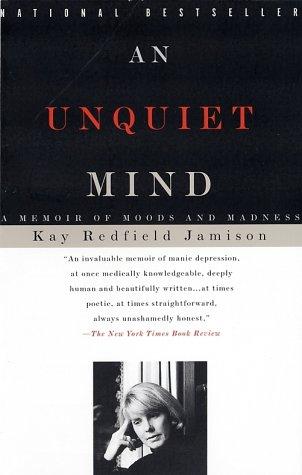
Kay Redfield Jamison is a psychiatrist and professor who has manic-depressive illness.
Kay Redfield Jamison · 1995 · 4h 40m
Full summary and key takeaways →The 12 questions
- 1.
Jamison describes mourning the loss of her hypomanic states even as she acknowledges the harm they caused. How do you think about ambivalence toward a condition that is both damaging and, in some ways, formative?
- 2.
She chose to write this book while still working as a psychiatrist and professor. What do you think that choice cost her, and what did it enable?
- 3.
Jamison writes about the specific difficulty of accepting a diagnosis that affects mood and judgment — the very faculties used to evaluate the diagnosis. How does that circularity complicate treatment?
- 4.
The book was published in 1995. How do you think the conversation about mental illness disclosure has changed, and how has it stayed the same?
- 5.
Jamison describes a suicide attempt with clinical detachment as well as emotional immediacy. What effect did that combination have on you as a reader?
- 6.
She credits specific people — her psychiatrist, a friend, her brother — with keeping her alive. What does her account suggest about the role of relationships in mental illness?
- 7.
Jamison's expertise in her own condition gave her insight but also did not prevent the illness from progressing. What does that suggest about the limits of self-knowledge?
- 8.
The book is often assigned in medical schools. What do you think it teaches that case studies or textbooks cannot?
- 9.
Jamison has also written about the relationship between mood disorders and creativity among writers and artists. Did that dimension of her argument feel convincing to you?
- 10.
What is the difference between accepting a chronic illness and resigning yourself to it? Does Jamison achieve acceptance, resignation, or something else by the end?
- 11.
Who in your life might benefit from reading this book, and how would you describe it to them?
- 12.
What does the title mean to you after reading it?
How to run the discussion
- Pick six to eight, not all of them. An hour of real discussion covers fewer questions than anyone expects, and racing the list is what makes a book club feel like homework.
- Open with what people noticed, not what they concluded. Asking for a verdict first hardens opinions before anyone has heard each other.
- Let the disagreement run. The questions below that split a room are the ones worth the time; the ones everyone answers the same way can be skipped.
- Ask the quiet person a specific question. A direct, narrow question is far easier to answer than an open invitation to contribute.
Themes worth steering toward
If the conversation stalls, these are the threads that usually restart it.
Common questions
What are good book club questions for An Unquiet Mind?
Here are 12 book club questions for An Unquiet Mind by Kay Redfield Jamison, ordered to open easily and end somewhere worth arguing about. The strongest openers ask what each reader noticed rather than what they concluded, and the discussion usually turns on bipolar disorder, mental health, memoir.
How long should a book club discussion of An Unquiet Mind last?
Most groups run 60 to 90 minutes of actual discussion. That is roughly six to eight questions, not all of them, so pick the ones that suit your group rather than working down the list in order.
What are the main themes in An Unquiet Mind?
Bipolar disorder, Mental health, Memoir, Stigma, Treatment. Those are the threads most likely to divide a room, which makes them the useful places to steer a discussion that has gone quiet.
Picking the next one? See books like An Unquiet Mind or questions for other book club picks.
