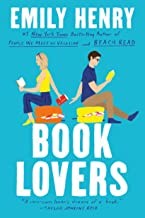
Book Lovers by Emily Henry is a 2022 contemporary fiction book about ambition and sacrifice, genre and identity, sisterhood. Nora is the woman left behind when the protagonist runs off to find love in the country — giving her the story restores agency to a character type that romance typically uses as background furniture.
Summary
Nora Stephens is a literary agent in New York who is professionally excellent and personally guarded. Her younger sister Libby convinces her to spend a month in the small town of Sunshine Falls, North Carolina — the kind of town that appears in the romance novels Nora sells for a living. Libby's theory is that Nora needs a small-town love story. What Nora finds instead is Charlie Lastra, a book editor she keeps colliding with professionally and who is, improbably, also in Sunshine Falls for the month. He is abrasive, perceptive, and deeply familiar with how Nora operates.
Book Lovers is Emily Henry's most self-aware novel. It knows the genre it's working in, inverts several of its conventions on purpose, and makes the genre metacommentary explicit — Nora sells the small-town romance and has read enough of them to recognize when she's inside one. That awareness is the book's main joke and its main argument: that the heroines who get left behind when the protagonist leaves the city for love are always the most interesting characters in those stories. Nora is the character who gets left behind in someone else's novel, and Henry gives her the romance she deserves.
The sisterhood plot is as important as the romantic plot. Nora's relationship with Libby — protective, enabling, slightly codependent — is what the novel is actually examining. The month in Sunshine Falls was Libby's idea, which means it isn't really about Nora at all. The book is about what happens when the person who has spent her life being someone else's support structure finally asks what she wants for herself. The Nora-Libby arc is more emotionally complex than the Nora-Charlie romance and, if you're honest about it, more moving.
This is Henry's funniest book and the one most comfortable with being entertaining. Charlie is better written than her previous male leads — sharper, less aesthetically tortured, a real foil for Nora rather than an object of desire who happens to have a backstory. The resolution comes with appropriate speed, the emotional beats land, and the genre inversions are done with enough lightness that they don't become lectures. If you want to understand why Henry became a phenomenon, this is the book to read first.
Talk to Book Lovers like its author wrote you back.
Get the ideas that fit your life — not generic summaries.
- Chat with the book
- Audiobook-style main ideas
- Adapts to your life and goals
- Helps you take action
Key takeaways
- 1.
Nora is the woman left behind when the protagonist runs off to find love in the country — giving her the story restores agency to a character type that romance typically uses as background furniture.
- 2.
The sisterhood between Nora and Libby carries more emotional complexity than the romantic plot; the book is ultimately about a woman renegotiating a relationship that has shaped her whole identity.
- 3.
Charlie is Henry's best male lead: his abrasiveness is shown as genuine rather than a pose, his emotional unavailability has a specific and plausible cause, and he functions as an actual intellectual equal to Nora.
- 4.
The small town of Sunshine Falls is knowingly drawn — Nora recognizes its genre conventions, which gives Henry permission to use them while treating them as construct rather than reality.
- 5.
Nora's professional identity as a literary agent who champions other people's books at the expense of her own creative or romantic life is a structure the novel eventually has to dismantle.
- 6.
The book argues that ambition and desire are not opposites, and that choosing a person doesn't have to mean choosing against yourself — a position that Henry earns rather than states.
- 7.
The novel's jokes about small-town romance conventions work because they're accurate; the people who have read the genre will recognize every beat.
- 8.
Libby's seemingly selfless act of engineering the vacation has its own complicated motivations that the novel reveals with enough care to make the sisterhood plot land as real.
Discussion questions
Use these on your own, with a book club, or as chat starters in Superbook. Book club version, ready to copy or print →
- 1.
Nora has spent her career selling stories she recognizes as comforting fictions. Does the novel suggest she's cynical about those stories, or that she just holds the pleasures of fiction differently from its promises?
- 2.
The central joke is that Nora is the type of woman who gets left behind in small-town romance novels. Does that premise hold up throughout, or does Henry eventually abandon it to deliver the genre experience anyway?
- 3.
Charlie's abrasiveness is established as a defense mechanism. At what point did you find it convincing versus irritating?
- 4.
Libby's month-in-Sunshine-Falls plan has motivations beyond wanting Nora to find love. How does the revelation of those motivations change how you read her character?
- 5.
The Nora-Libby relationship involves Nora consistently putting Libby first. Is that protective older sibling, or is it an avoidance mechanism — Nora not having to want things for herself?
- 6.
Henry uses the small town as a romance convention and then interrogates it. Does Sunshine Falls ever feel real, or does it stay deliberately fictional throughout?
- 7.
Charlie and Nora work together professionally before they interact personally. Does that shared professional context make their connection more convincing than most romance novel pairings?
- 8.
The novel is in Nora's first person, and she's self-aware enough to narrate herself unreliably in interesting ways. What is she missing about herself that the reader can see?
- 9.
The ending requires Nora to ask for something — to acknowledge want. Why is that structurally necessary, and does it feel earned?
- 10.
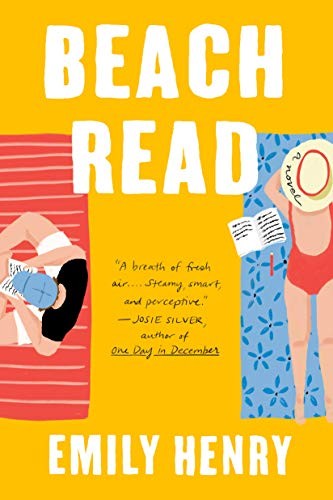
Compare Book Lovers to Beach Read. Both novels use a professional world (romance vs. literary fiction) to think about what kind of stories we tell about love. Which one handles that metacommentary more gracefully?
- 11.
If Libby were the protagonist instead of Nora, what would that novel look like?
- 12.
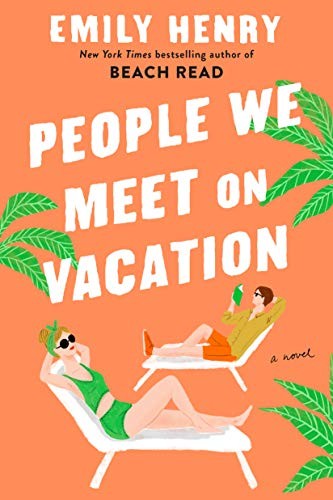
Henry's male leads (Gus in Beach Read, Alex in People We Meet on Vacation, Charlie here) are all emotionally defended and professionally serious. Is that a preference or a formula?
Themes
Frequently asked questions
-
Is Book Lovers a good starting point for Emily Henry?
Arguably the best one. It's her funniest, most polished, and most accessible novel. The genre metacommentary works whether or not you've read romance, and Charlie is her strongest male lead. If you want to understand why she has the readership she does, start here.
-
Do you need to read Emily Henry's other books first?
No — all three novels are completely standalone. There are minor Easter eggs for readers of the previous books, but nothing that requires prior knowledge.
-
Is this a light read or an emotionally heavy one?
Lighter than Beach Read (grief is less central) and much lighter than It Ends with Us. There are emotional stakes — particularly around Libby — but the dominant register is warm and funny rather than heavy.
-
Who shouldn't read Book Lovers?
Readers who find banter-heavy romance novels irritating. The first half of the book runs on witty antagonism between Nora and Charlie, and if that dynamic isn't working for you, the emotional second half won't recover it. The genre-inversion premise also requires some goodwill toward romance as a form.
-
Is the sisterhood subplot as important as the romance?
More important, by the end. The Nora-Libby relationship is what the book is actually examining, and readers who respond most strongly to the novel usually name that plot as the reason, not the romance.