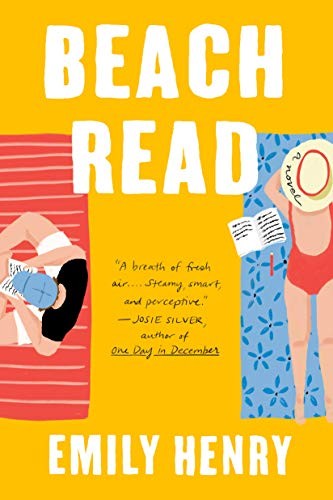
Beach Read by Emily Henry is a 2020 contemporary fiction book about grief, creative block, cynicism vs. hope. January's cynicism about love is rooted in her father's betrayal, not a romantic disappointment — which makes it more intractable and the book's emotional arc more interesting.
Summary
January Andrews is a romance novelist who has completely lost faith in love after discovering her late father had a secret mistress for years. She inherits his lakeside cottage, can't write, and finds herself neighbors with Augustus Everett, a literary fiction author she knew in college who is her creative opposite in every way. They make a bet: each will write the other's genre for the summer. January will attempt literary fiction; Gus will attempt romance. While they help each other with research, they fall in love despite themselves.
Emily Henry's debut novel is fundamentally about cynicism — how grief manufactures it, what it costs, and what it takes to set it down. January's romantic faith shattered not when a boyfriend disappointed her but when her father did, which is both more interesting than most romance setups and the source of the book's actual emotional stakes. The father plot — discovering the affair, processing the cottage inheritance, finding letters from the woman she didn't know about — runs parallel to the central romance and does considerably more emotional work than the love story.
What makes Beach Read better than its title suggests is the genre metacommentary. January and Gus's bet forces both of them to engage seriously with what the other writes: why literary fiction so often aestheticizes suffering, why romance demands hope as a feature rather than a consolation. The book doesn't fully resolve that tension but it takes it seriously. Henry writes the romance-novelist protagonist as someone who defends her genre intelligently, not as someone who apologizes for it.
The banter is genuinely funny, which matters because the book's first half runs almost entirely on dialogue chemistry. The second half is where the grief work happens and where Henry earns the romantic resolution. This is a summer read that is smarter than it needs to be and about something real — the way a parent's failure can collapse your entire architecture of belief — while still delivering the genre pleasures it promises. Readers who dismiss romance will be more engaged than they expect; readers who love romance will find the literary scaffolding a feature rather than a drag.
Talk to Beach Read like its author wrote you back.
Get the ideas that fit your life — not generic summaries.
- Chat with the book
- Audiobook-style main ideas
- Adapts to your life and goals
- Helps you take action
Key takeaways
- 1.
January's cynicism about love is rooted in her father's betrayal, not a romantic disappointment — which makes it more intractable and the book's emotional arc more interesting.
- 2.
The genre bet is Henry's way of taking the romance/literary fiction divide seriously as an intellectual question, not just a marketing category.
- 3.
Gus's literary fiction is described as bleak and formally rigorous; January's romance is warm and commercially successful. Their swap forces each to confront what they've been avoiding emotionally.
- 4.
The secret mistress plotline functions as a parallel grief story to the main romance — January's journey to understand her father's life is as important as her journey with Gus.
- 5.
The banter between January and Gus is the primary vehicle for character development in the first half, which means the writing has to be sharp — and largely is.
- 6.
Henry treats the romance novel as a legitimate artistic form, not a guilty pleasure, through January's defense of the genre's demands and its readers.
- 7.
The book argues that hope is a choice, not a temperament — and that cynicism is a form of self-protection that extracts its own costs.
- 8.
The resolution requires January to extend forgiveness — to her father, and to herself — before she can extend hope to Gus. The romantic and grief plots are fully integrated.
Discussion questions
Use these on your own, with a book club, or as chat starters in Superbook. Book club version, ready to copy or print →
- 1.
January lost faith in love because of her father, not a romantic partner. Does that origin story make her cynicism feel more or less sympathetic to you?
- 2.
The genre bet — each writing the other's form — is the book's central device. What does each genre represent emotionally for January and Gus?
- 3.
Henry defends romance fiction through January's voice while also being a romance author herself. Does that self-awareness make the genre defense feel earned or self-serving?
- 4.
The father's affair is presented as complicated — he clearly loved the mistress in a real way. Does the book want you to forgive him, or just understand him?
- 5.
Gus's literary fiction is characterized as bleak and removed from feeling. Is that a fair characterization of the genre, or is Henry setting up a straw man?
- 6.
The cottage inheritance structures January's summer — she can't afford to leave. How much of the romance is shaped by circumstance rather than genuine choice?
- 7.
January's creative block is connected directly to her grief. When she can write again, is it because she's healed, because she's distracted, or because she's given herself permission to hope?
- 8.
The book is set up as enemies-to-lovers but the enemies part is fairly thin. Does their antagonism feel genuine, or does the novel rush past it to get to the romance?
- 9.
Compare the emotional work the father plot does versus the romantic plot. Which one carries the book?
- 10.
Henry writes Gus as someone whose literary seriousness is partly a pose — a protection against feeling. Is that a convincing portrait of a certain kind of male intellectual?
- 11.
The title is somewhat ironic — this is a beach read that takes itself more seriously than a beach read. Does that tension serve the book or work against it?
- 12.
At the end, January chooses hope over the evidence. Is that shown as growth, as naivety, or as something the book refuses to fully judge?
Themes
Frequently asked questions
-
Is Beach Read actually a beach read?
It functions as one in pace and entertainment value, but it deals with grief, family secrets, and creative failure in ways that are more emotionally demanding than the typical beach read. Think of it as a beach read that occasionally makes you put it down and stare at the water.
-
Is Beach Read Emily Henry's best book?
It's her debut and a strong one. Most readers consider People We Meet on Vacation and Book Lovers more polished, but Beach Read has a rawness and emotional directness that her later books sometimes trade for polish.
-
Is there a content warning for Beach Read?
Yes — parental infidelity is a major theme, and there are extended passages dealing with grief around a parent's death. The tone is ultimately hopeful, but the emotional territory is real.
-
Who shouldn't read Beach Read?
Readers who want pure escapism without emotional weight, or those for whom parental infidelity is a painful subject. The novel doesn't sensationalize it, but it doesn't soften it either.
-
Do you need to read Beach Read before Emily Henry's other books?
No — all of her novels are standalone. But the genre metacommentary in Beach Read provides interesting context for understanding what Henry is doing across her catalog.