Health · Book club
Bouncing Forward book club questions
Here are 12 book club questions for Bouncing Forward by Michaela Haas, ordered to open easily and end somewhere worth arguing about. Copy them, print them, or bring them up one at a time.
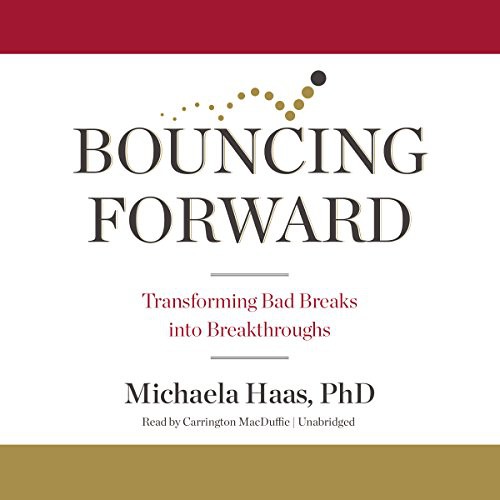
Bouncing Forward is Michaela Haas's examination of post-traumatic growth — the documented phenomenon in which people who survive severe trauma often report not just recovery but meaningful transformation.
Michaela Haas · 2015 · 4h 15m
Full summary and key takeaways →The 12 questions
- 1.
Haas distinguishes between bouncing back and bouncing forward. Looking at your own experience of adversity, which of the two would you say you've done?
- 2.
Post-traumatic growth doesn't negate suffering — it coexists with it. Does that nuance change how you think about the concept?
- 3.
What are the cultural narratives in your community about recovering from hardship? Do they allow for growth, or mostly for survival?
- 4.
Haas integrates Buddhist teachings into the psychological framework. Did that combination add depth or feel incongruous to you?
- 5.
The book suggests that meaning-making is central to growth after trauma. How do you currently make meaning from difficult experiences in your life?
- 6.
Which of the five growth domains — relationships, new possibilities, personal strength, spirituality, appreciation — do you think you have the most potential to develop through adversity?
- 7.
Haas is careful to avoid the implication that all trauma eventually produces growth. Why is that caveat important, and what happens when it is omitted?
- 8.
What role did social support play in your own most significant experience of adversity? Did you receive what you needed?
- 9.
The distinction between resilience (returning to normal) and growth (exceeding it) assumes there was something limited about the previous state. Do you agree with that assumption?
- 10.
The book profiles survivors of extreme trauma alongside people navigating more ordinary losses. Does the range of examples strengthen or weaken the argument?
- 11.
Post-traumatic growth research shows that expectations about what is possible after trauma affect outcomes. How do you currently talk to others about recovering from difficulty?
- 12.
If you could design a community environment that supported post-traumatic growth, what would be different from what currently exists?
How to run the discussion
- Pick six to eight, not all of them. An hour of real discussion covers fewer questions than anyone expects, and racing the list is what makes a book club feel like homework.
- Open with what people noticed, not what they concluded. Asking for a verdict first hardens opinions before anyone has heard each other.
- Let the disagreement run. The questions below that split a room are the ones worth the time; the ones everyone answers the same way can be skipped.
- Ask the quiet person a specific question. A direct, narrow question is far easier to answer than an open invitation to contribute.
Themes worth steering toward
If the conversation stalls, these are the threads that usually restart it.
Common questions
What are good book club questions for Bouncing Forward?
Here are 12 book club questions for Bouncing Forward by Michaela Haas, ordered to open easily and end somewhere worth arguing about. The strongest openers ask what each reader noticed rather than what they concluded, and the discussion usually turns on resilience, post-traumatic growth, trauma recovery.
How long should a book club discussion of Bouncing Forward last?
Most groups run 60 to 90 minutes of actual discussion. That is roughly six to eight questions, not all of them, so pick the ones that suit your group rather than working down the list in order.
What are the main themes in Bouncing Forward?
Resilience, Post-traumatic growth, Trauma recovery, Meaning-making, Transformation. Those are the threads most likely to divide a room, which makes them the useful places to steer a discussion that has gone quiet.
Picking the next one? See books like Bouncing Forward or questions for other book club picks.
