Brain on Fire: My Month of Madness by Susannah Cahalan is a 2012 memoir book about medical mystery, identity, neuroscience. Anti-NMDA receptor encephalitis mimics psychiatric illness so closely that many patients are still misdiagnosed and institutionalized rather than treated for the underlying disease.
Summary
Brain on Fire is Susannah Cahalan's account of the month she spent in a New York hospital in 2009, during which she experienced psychosis, paranoia, violent behavior, catatonia, and seizures — and was nearly committed to a psychiatric facility before a doctor correctly diagnosed her with anti-NMDA receptor encephalitis, a newly described autoimmune disease in which the body attacks the brain. The disease had only been named two years before her illness. Cahalan, who was twenty-four at the time and a reporter for the New York Post, reconstructed the month from medical records, hospital surveillance footage, and accounts from the people who were there, because she remembers almost none of it herself.
The reconstruction is the most interesting formal aspect of the book. Cahalan is essentially piecing together a story in which she is both the subject and an unreliable narrator by definition — the version of herself in the hospital was not her, and she had no access to that period through memory. She relies on what others saw and recorded, and the book has the texture of investigative reporting applied to one's own collapsed self. The disease had produced a person who hit nurses, issued religious proclamations, and behaved in ways the people who loved her found unrecognizable. She had to learn who she had been.
The medical dimension is important and carefully rendered. Cahalan writes about how her symptoms were initially dismissed and misread, how she spent days being evaluated for drug use and psychiatric illness before a neurologist named Dr. Souhel Najjar — to whom the book owes an enormous debt — correctly identified what was happening. The book is a documented case of what happens when a medical system encounters a presentation it isn't equipped to recognize, and how close she came to permanent institutionalization with the wrong diagnosis.
Brain on Fire reads quickly. It is not stylistically adventurous — Cahalan writes in the clear, accessible voice of newspaper journalism — but the story is genuinely gripping, and the existential questions underneath it are real. Who are you when the person you were for a month was effectively someone else? What does the experience of near-madness do to how you understand the self? The book doesn't fully answer these questions, but it asks them seriously.

Talk to Brain on Fire: My Month of Madness like its author wrote you back.
Get the ideas that fit your life — not generic summaries.
- Chat with the book
- Audiobook-style main ideas
- Adapts to your life and goals
- Helps you take action
Key takeaways
- 1.
Anti-NMDA receptor encephalitis mimics psychiatric illness so closely that many patients are still misdiagnosed and institutionalized rather than treated for the underlying disease.
- 2.
Memory is not a reliable record even of experiences we think we should recall. Cahalan had no access to a month of her own life, and had to reconstruct it from external sources.
- 3.
The self is not as continuous or stable as most people assume. The person Cahalan was during her illness was in important ways a different person, using her body.
- 4.
Medical systems are not well calibrated for unusual presentations. Presenting outside the normal pattern is itself a risk factor for misdiagnosis.
- 5.
Good diagnosticians are rare and disproportionately valuable. One doctor correctly identifying an unusual disease changed the entire trajectory of Cahalan's life.
- 6.
Families and partners absorb enormous cost during serious illness. The book's account of what her parents and boyfriend experienced is as important as the account of what she experienced.
- 7.
Journalism's methods — source cultivation, document analysis, fact-checking — can be turned inward to reconstruct one's own history in a way that is more rigorous than ordinary memoir.
- 8.
Recovery from neurological illness is not linear. Cahalan describes ongoing cognitive effects and the gradual work of returning to something like her former self.
Discussion questions
Use these on your own, with a book club, or as chat starters in Superbook. Book club version, ready to copy or print →
- 1.
Cahalan had to reconstruct a month of her life from external sources. What does it mean to have a period of your own life that is inaccessible to you through memory?
- 2.
The book documents near-misdiagnosis and the risk of psychiatric commitment for an organic illness. How does knowing this change how you think about psychiatric diagnosis?
- 3.
She writes about the person she was during her illness as someone using her body but not her. Where do you locate the boundary of the self?
- 4.
The doctor who correctly diagnosed her saw something the others missed. What made that possible, and what does that suggest about how medical expertise works?
- 5.
Her parents and boyfriend experienced the crisis differently than she did. Which character's account of the month affected you most, and why?
- 6.
Cahalan uses journalistic methods to investigate her own illness. Does that approach — reporting on oneself — seem like a strength or a limitation for memoir?
- 7.
The disease was only named two years before her illness. What does it mean to be sick with something that doesn't yet have a name in the medical literature?
- 8.
She describes cognitive effects that persisted after diagnosis and treatment. What does it mean to 'recover' from something that changed your brain?
- 9.
The book is partly about how close she came to a very different outcome. How does knowing what almost happened affect how you read the parts that did happen?
- 10.
Brain on Fire was used as evidence in advocacy for patients who had been misdiagnosed and institutionalized with the same disease. What obligations do you think public accounts of illness carry?
- 11.
Cahalan returns to work relatively quickly after her diagnosis. What does her relationship to her career suggest about how she understood her own identity?
- 12.
What is the book's implicit argument about what we owe patients whose presentations fall outside familiar categories?
Themes
Frequently asked questions
-
Is Brain on Fire worth reading?
Yes, especially for readers interested in medical mysteries, neuroscience, or memoir. The story is genuinely gripping, and the formal challenge of reconstructing a period you don't remember gives it a structural interest beyond the narrative. It's accessible and reads quickly.
-
How long does it take to read Brain on Fire?
Around five hours at average reading pace. The chapters are short and the narrative is propulsive. Most readers finish it in one or two sittings.
-
What is anti-NMDA receptor encephalitis?
An autoimmune disease in which the body produces antibodies that attack NMDA receptors in the brain, causing symptoms that closely mimic severe psychiatric illness including psychosis, paranoia, and catatonia. The disease was first described in 2007, two years before Cahalan's hospitalization.
-
How was Cahalan's illness initially diagnosed?
Doctors initially considered drug use and psychiatric illness. She spent days without a correct diagnosis before Dr. Souhel Najjar, a neurologist at NYU, recognized the presentation and ordered the test that identified the disease. She was days away from possible commitment to a long-term psychiatric facility.
-
Who should read Brain on Fire?
Readers interested in medical memoir, people curious about the neuroscience of the self and identity, anyone who has had a loved one misdiagnosed with psychiatric illness, and readers who want a rigorous journalistic account of a dramatic personal experience.
Similar books

When Breath Becomes Air
Paul Kalanithi

An Unquiet Mind
Kay Redfield Jamison

The Man Who Mistook His Wife for a Hat
Oliver Sacks
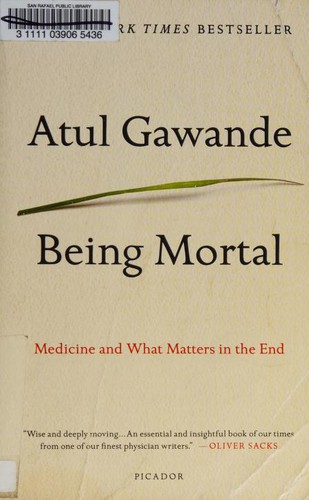
Being Mortal: Medicine and What Matters in the End
Atul Gawande
