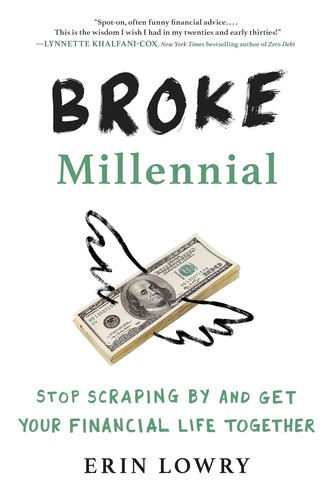
Broke Millennial by Erin Lowry is a 2017 self-help book about financial basics, student debt, budgeting. Your money script — the beliefs and narratives around money you absorbed growing up — drives your financial behavior more than your knowledge or intention does.
Summary
Broke Millennial is Erin Lowry's accessible guide to financial basics for people in their twenties and thirties who are either starting from scratch or who have accumulated bad habits and debt they want to correct. Lowry is a personal finance writer who grew up in a family that was unusually open about money and noticed that many of her peers lacked even the most basic financial literacy. The book is explicitly not a get-rich-quick guide; it's a how-do-I-stop-being-broke guide, covering the foundational skills most young adults were never taught.
Lowry starts with the emotional and psychological dimensions of money — the embarrassment around discussing finances, the different money scripts people absorb from their families, and the ways childhood experiences around money shape adult financial behavior. This framing distinguishes the book from purely technical personal finance guides and acknowledges that the relationship with money is as important as the mechanics.
The practical content covers setting up bank accounts correctly, understanding different types of debt and interest rates, creating a budget that actually works for your lifestyle rather than an idealized one, dealing with student loans (the book predates widespread loan forgiveness discussions but covers repayment strategies and income-based repayment), negotiating salary, and beginning to invest for retirement. The tone is conversational and non-judgmental — Lowry does not shame readers for being broke but instead provides the specific information and frameworks needed to change their situation.
The book is deliberately positioned as the first step, not the complete guide. Lowry recommends follow-up resources for each topic she covers and acknowledges that her target reader likely needs more detail on investing and retirement planning than she provides. For readers who have the basics in order and want to optimize, the book covers less than Sethi's or Collins's approach. But for readers who genuinely don't know what a credit score is or how a Roth IRA works, Broke Millennial fills a real gap that more sophisticated books skip over.
Talk to Broke Millennial like its author wrote you back.
Get the ideas that fit your life — not generic summaries.
- Chat with the book
- Audiobook-style main ideas
- Adapts to your life and goals
- Helps you take action
Key takeaways
- 1.
Your money script — the beliefs and narratives around money you absorbed growing up — drives your financial behavior more than your knowledge or intention does.
- 2.
Getting the right bank accounts set up correctly is a prerequisite for everything else. High-yield savings accounts, no-fee checking, and proper account organization precede any investment decisions.
- 3.
Understanding interest rates and compound interest on both debt and savings is the most important piece of financial literacy. The same force that builds wealth in investments destroys it in credit card debt.
- 4.
A budget doesn't have to be restrictive to work. The goal is to understand where your money goes and make conscious choices, not to deprive yourself of everything enjoyable.
- 5.
Student loan repayment options — standard, income-driven, refinancing — are meaningfully different in their long-term cost. Understanding which one applies to your situation is not optional.
- 6.
Negotiating salary is uncomfortable but consequential. Even a small increase compounded over a career, and negotiating is expected — employers rarely penalize applicants for asking.
- 7.
Contributing to an employer 401(k) up to the match is the highest-priority investment for most young workers. Not doing this is declining part of your compensation.
- 8.
Talking about money with friends and family — normally taboo — is one of the most effective ways to improve your financial situation. Comparison and shared knowledge both serve you.
Discussion questions
Use these on your own, with a book club, or as chat starters in Superbook. Book club version, ready to copy or print →
- 1.
Lowry discusses money scripts — the beliefs about money absorbed in childhood. What messages about money did you receive growing up, and how have they shaped your adult financial behavior?
- 2.
The book addresses the shame and embarrassment many young adults feel about their financial situation. How does that emotional dimension affect your ability to take practical action?
- 3.
Lowry recommends having specific conversations about money that most people avoid — with partners, with employers, with friends. Which of those conversations have you had, and which have you avoided?
- 4.
The student loan section covers different repayment strategies. If you have student debt, which approach are you using and have you actively evaluated whether it's optimal for your situation?
- 5.
What is your money script? Lowry identifies common ones: money is evil, money is security, money equals love, money equals status. Which resonates with your own history?
- 6.
The book is explicitly for people starting from scratch or recovering from bad habits. At what point does a reader outgrow the book, and what should they read next?
- 7.
Lowry argues that the financial basics — bank accounts, budgets, credit scores — are not taught in school and should be. Do you agree, and if so, what specifically should the curriculum cover?
- 8.
The negotiation chapter argues that most people underestimate the lifetime value of one salary negotiation. Have you ever negotiated your salary? What happened, and what would you do differently?
- 9.
The budget section suggests matching your budget to your actual lifestyle rather than an idealized one. How honest is your current budget about what you actually spend?
- 10.
Lowry notes that financial literacy discussions in the US often skip over the structural barriers (student debt, housing costs, stagnant wages) that affect young adults disproportionately. Does the book adequately address those structural issues?
- 11.
For which specific financial question in your life right now is this book most useful? And for which questions do you need a more advanced resource?
- 12.
The book's conversational, non-judgmental tone is deliberate. Does that approach make the content more effective, or does it sacrifice rigor for accessibility?
Themes
Frequently asked questions
-
Is Broke Millennial a book for beginners?
Explicitly yes. It is specifically for people who do not understand the basics — credit scores, compound interest, the difference between account types — and who need a friendly, non-intimidating starting point. Readers who already have the fundamentals in place will find the book covers familiar ground.
-
What's the difference between Broke Millennial and I Will Teach You to Be Rich?
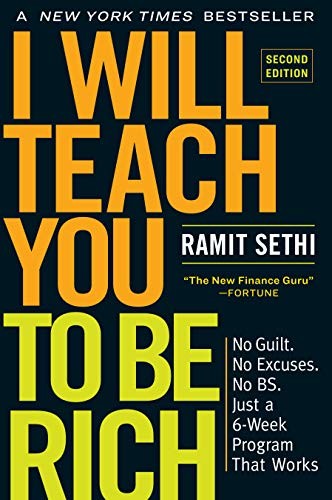
Broke Millennial goes earlier in the knowledge stack. It covers the very basics — opening bank accounts, understanding interest, building a first budget — that Sethi's book assumes. Sethi's book assumes you have the basics and focuses on optimization and automation. Read Broke Millennial first if you are genuinely starting from scratch.
-
Does Broke Millennial address investing?
Yes, but briefly. The book covers employer 401(k) contributions and introduces the concept of Roth IRAs, but detailed investment guidance is left for the sequel, Broke Millennial Takes On Investing. If you want comprehensive investment guidance, start here for the basics and read the follow-up.
-
Is the book applicable outside the United States?
The specific account types and regulatory framework are US-centric. The psychological and behavioral sections — money scripts, shame, difficult conversations — apply broadly. Non-US readers would need to adapt the specific account recommendations to their own financial system.
-
What is Lowry's recommended first step for someone who is completely overwhelmed by their finances?
Start by understanding what you actually owe and what you actually own. Get a credit report, list every debt with its interest rate, and look at your bank balance. The goal of that first step is clarity, not action — most people who feel overwhelmed haven't actually looked at the full picture.