Science · Book club
Complexity book club questions
Here are 11 book club questions for Complexity by M. Mitchell Waldrop, ordered to open easily and end somewhere worth arguing about. Copy them, print them, or bring them up one at a time.
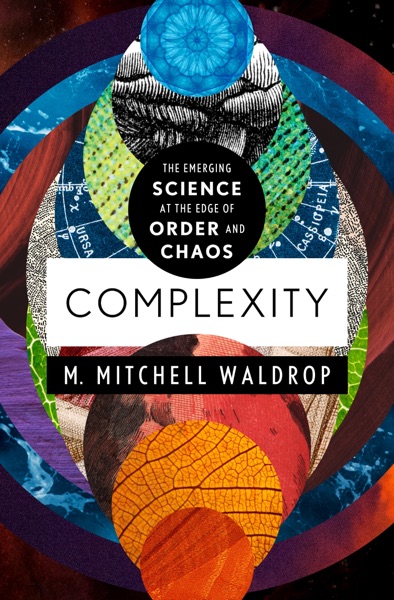
The 11 questions
- 1.
Waldrop describes scientists who felt their home disciplines had stopped asking the interesting questions. Have you encountered that feeling in your own work or study?
- 2.
Brian Arthur's theory of increasing returns was resisted by mainstream economics for years. What does that resistance say about how paradigms protect themselves?
- 3.
The edge of chaos concept suggests that living systems tune themselves toward maximum adaptability. Can you identify a human organization — a company, a family, an institution — that seems to sit at that edge?
- 4.
Emergence means the whole is not predictable from the parts. Where in your own life have you seen emergence — outcomes that no individual component could have produced alone?
- 5.
Waldrop suggests that many fields use the wrong toolkit because the right one didn't exist yet. What assumption in a field you know well might be similarly load-bearing and wrong?
- 6.
The Santa Fe Institute was founded on the belief that the most important problems are interdisciplinary. What problem do you care about that is clearly bigger than one discipline?
- 7.
Path dependence means small early events can lock in long-term outcomes. Can you think of an example from history or your own life where an early contingency shaped everything that followed?
- 8.
Kauffman's work suggests life may not be as improbable as it seems. Does that argument change your intuitions about the prevalence of life elsewhere in the universe?
- 9.
Computer simulation allowed complexity scientists to study systems that couldn't be solved analytically. Has simulation changed the way questions are asked in a field you follow?
- 10.
Waldrop portrays the intellectual culture at Santa Fe as unusually open and cross-disciplinary. What would need to change in conventional academic institutions to enable that kind of culture more broadly?
- 11.
The book is from 1992. Which of the ideas it introduces now seem prescient, and which have proven less predictive than the participants hoped?
How to run the discussion
- Pick six to eight, not all of them. An hour of real discussion covers fewer questions than anyone expects, and racing the list is what makes a book club feel like homework.
- Open with what people noticed, not what they concluded. Asking for a verdict first hardens opinions before anyone has heard each other.
- Let the disagreement run. The questions below that split a room are the ones worth the time; the ones everyone answers the same way can be skipped.
- Ask the quiet person a specific question. A direct, narrow question is far easier to answer than an open invitation to contribute.
Themes worth steering toward
If the conversation stalls, these are the threads that usually restart it.
Common questions
What are good book club questions for Complexity?
Here are 11 book club questions for Complexity by M. Mitchell Waldrop, ordered to open easily and end somewhere worth arguing about. The strongest openers ask what each reader noticed rather than what they concluded, and the discussion usually turns on complex systems, emergence, interdisciplinary science.
How long should a book club discussion of Complexity last?
Most groups run 60 to 90 minutes of actual discussion. That is roughly six to eight questions, not all of them, so pick the ones that suit your group rather than working down the list in order.
What are the main themes in Complexity?
Complex systems, Emergence, Interdisciplinary science, Chaos and order, Self-organization. Those are the threads most likely to divide a room, which makes them the useful places to steer a discussion that has gone quiet.
Picking the next one? See books like Complexity or questions for other book club picks.
