Dead Wake: The Last Crossing of the Lusitania by Erik Larson is a 2015 history book about world war i, maritime disaster, intelligence and decision-making. The Lusitania sank in eighteen minutes after a single torpedo strike, a speed that overwhelmed evacuation procedures and killed most of the 1,198 who died.
Summary
Dead Wake tells the story of the sinking of the RMS Lusitania on May 7, 1915, when a German U-boat torpedoed the British ocean liner off the coast of Ireland, killing 1,198 of the 1,959 people aboard, including 128 Americans. The event accelerated American public opinion toward entering the war and is one of the central incidents of World War I's escalation. Erik Larson tells it through three interweaving narratives: the passengers and crew aboard the Lusitania, the U-20 submarine and its commander Walter Schwieger, and Room 40, the British naval intelligence unit that had broken the German naval code and knew where the U-20 was operating.
That third thread — Room 40 — is where Larson's account becomes most unsettling. British naval intelligence possessed information that could have protected the Lusitania by routing it away from the submarine or dispatching a destroyer escort. Neither happened. Larson documents the bureaucratic failures, the turf battles between naval intelligence and operational command, and the possibility — which he addresses carefully — that Churchill or others in the Admiralty may have found a sinking useful for bringing America into the war. He does not accuse Churchill of deliberate conspiracy, but he makes the case that the inaction was remarkable and deserves scrutiny.
The passenger narrative centers on figures including Alfred Vanderbilt, a multi-millionaire who gave his life jacket to a young mother, and Charles Lauriat, a Boston bookseller who helped rescue survivors. Larson follows them from their embarkation in New York through the crossing — the ship's social life, the persistent anxiety about submarines, the contested decision of the captain and Cunard line to maintain speed and course — to the attack and its aftermath. The German submarine narrative follows Schwieger, whose matter-of-fact log entries contrast starkly with the accounts of survivors.
The sinking itself takes a small portion of the book; the dying took only eighteen minutes. Larson's account of those minutes, drawn from survivor testimony, is harrowing and precise. The structural problem with the Lusitania — its insufficient lifeboat provision, the difficulty of launching lifeboats on a listing ship — turned what might have been a survivable sinking into a catastrophe. Dead Wake is less interested in assigning blame than in reconstructing how a tragedy becomes inevitable through the accumulation of individually defensible decisions. It is among Larson's most accomplished books.

Talk to Dead Wake: The Last Crossing of the Lusitania like its author wrote you back.
Get the ideas that fit your life — not generic summaries.
- Chat with the book
- Audiobook-style main ideas
- Adapts to your life and goals
- Helps you take action
Key takeaways
- 1.
The Lusitania sank in eighteen minutes after a single torpedo strike, a speed that overwhelmed evacuation procedures and killed most of the 1,198 who died.
- 2.
British naval intelligence (Room 40) had broken the German naval code and knew approximately where the U-20 was operating, yet the Lusitania received no escort and no diversion.
- 3.
The possibility that the Admiralty allowed the sinking to help bring America into the war is not confirmed but not dismissible — the bureaucratic inaction is hard to explain otherwise.
- 4.
Captain Turner's decision to maintain course and reduce speed near the Irish coast violated Admiralty guidelines and contributed to the ship's vulnerability.
- 5.
The ship's structural design and inadequate lifeboat training meant that even with warning and time, evacuation would have been difficult.
- 6.
Submarine warfare in 1915 occupied a legal and moral gray zone — unrestricted submarine warfare had not yet been internationally condemned, and Germany argued the Lusitania was carrying munitions.
- 7.
The 128 American deaths moved American public opinion but did not immediately bring the US into the war — that took two more years and additional provocations.
- 8.
The ordinary people aboard — traveling for personal, commercial, and patriotic reasons — were caught between great powers in a conflict whose logic they could not fully see.
Discussion questions
Use these on your own, with a book club, or as chat starters in Superbook. Book club version, ready to copy or print →
- 1.
Larson structures the book around three parallel narratives. Did that approach make the final convergence more or less emotionally effective?
- 2.
Room 40 had intelligence that could have protected the ship. Where does responsibility lie when bureaucratic failure produces a catastrophe — with individuals or with the system?
- 3.
Larson raises the possibility of deliberate Admiralty inaction without accusing anyone directly. Is that the right approach, or does it leave the reader in an unsatisfying middle ground?
- 4.
Captain Turner was blamed after the sinking and spent years defending himself. Does Larson's account change how you assess his decisions?
- 5.
The German submarine commander Schwieger kept a matter-of-fact log recording the attack. What does that voice tell you about how individuals participate in mass violence?
- 6.
The Lusitania was carrying some munitions, as Germany claimed. Does that change your moral assessment of the attack?
- 7.
Larson focuses on named individuals — Vanderbilt, Lauriat, Schwieger — to anchor the narrative. What are the costs and benefits of that approach for understanding a historical event?
- 8.
Dead Wake is partly a book about intelligence failures. How does it compare to other intelligence failures you know about, in terms of cause and consequence?
- 9.
The ship sank so quickly that most evacuation procedures were irrelevant. What does that imply about how we design safety systems — for ships, aircraft, or other mass transport?
- 10.
The sinking increased American pressure to enter the war but didn't immediately produce it. What does that suggest about how public opinion and political decision-making interact?
- 11.
Which passenger story moved you most, and what does it reveal about the randomness of who survives a disaster?
- 12.
Larson ends with the aftermath — the legal battles, the long shadow of the sinking. Does knowing the historical consequences add or subtract from the narrative's emotional impact?
Themes
Frequently asked questions
-
Is Dead Wake worth reading?
Yes. It is one of Larson's best-constructed books — the three-strand narrative converges with genuine dramatic force, and the archival research is unusually thorough. The Room 40 thread in particular adds a dimension to the disaster that popular accounts typically omit.
-
How long does it take to read Dead Wake?
About seven to eight hours at average reading pace for the roughly 430-page book. The chapters are short and the pace is fast — Larson is a skilled thriller-pace writer, and the book moves quickly even during the setup.
-
Was the Lusitania carrying munitions?
Yes, it was carrying rifle cartridges and fuses declared in its manifest. Germany used this to claim the ship was a legitimate military target. Historians generally argue the munitions, while present, did not constitute the primary cargo and do not justify the civilian deaths.
-
Did Churchill deliberately allow the sinking?
Larson does not accuse Churchill of deliberate conspiracy. He documents that Room 40 had relevant intelligence and that the Admiralty failed to act on it, and he raises the question of intent without resolving it. The evidence is suggestive but not conclusive.
-
How does Dead Wake compare to Larson's other books?
Many readers rank it alongside The Devil in the White City as his most accomplished work. The parallel structure — passengers, submarine, intelligence — gives it more structural complexity than some of his other books, and the subject benefits from that architecture.
Similar books
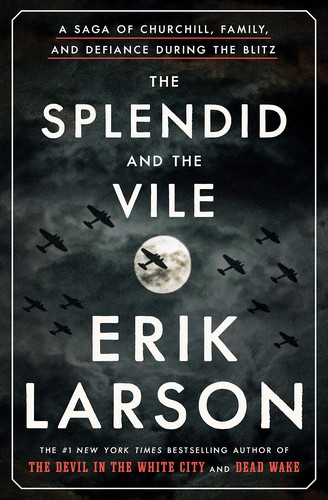
The Splendid and the Vile: A Saga of Churchill, Family, and Defiance During the Blitz
Erik Larson

The Devil in the White City
Erik Larson

Killers of the Flower Moon
David Grann
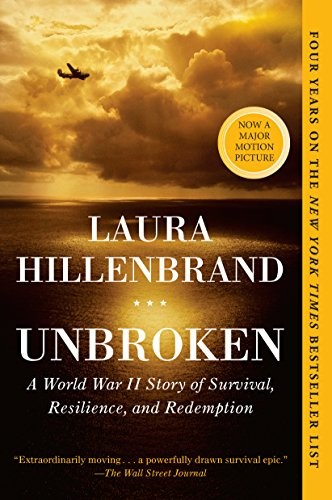
Unbroken: A World War II Story of Survival, Resilience, and Redemption
Laura Hillenbrand
