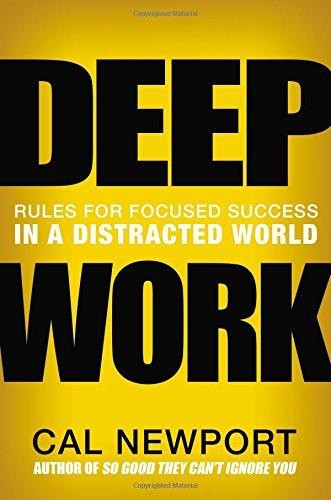
Deep Work by Cal Newport is a 2016 self-help book about focus, productivity, attention. Deep work is the ability to focus without distraction on cognitively demanding tasks. It's how you learn hard things quickly and produce at an elite level.
Summary
Deep Work is Cal Newport's case that the ability to focus without distraction on a cognitively demanding task is becoming both rarer and more valuable, and that people who cultivate it will thrive while everyone else stays stuck in shallow busywork. Newport calls focused, undistracted concentration "deep work" and the email-checking, meeting-attending, social-media-skimming alternative "shallow work."
The book makes two arguments back to back. First, deep work is valuable: it's how you learn hard things quickly and produce at an elite level. Newport draws on research showing that elite performers across fields (musicians, programmers, writers) practice in long, undistracted blocks rather than scattered short ones. Second, deep work is rare and getting rarer: open offices, Slack, and the always-on culture of knowledge work make sustained concentration almost impossible by default.
The second half of the book is practical. Newport gives four philosophies for scheduling deep work: monastic (block out the world for months), bimodal (alternating retreat with availability), rhythmic (a daily fixed block), and journalistic (any open slot, ruthlessly defended). He recommends ritualizing your deep work blocks, training your brain to tolerate boredom, embracing being unreachable, and quitting social media. The boldest claim: working fewer hours but with more focus beats working long hours half-distracted.
Newport writes in a clear, slightly academic voice. The case studies (Jung's stone tower, Knuth's email moratorium, Adam Grant's research blocks) are memorable. The book is most useful for knowledge workers — programmers, writers, researchers, students — whose output quality depends on sustained thinking. If your work doesn't require deep focus, the case is less compelling. But if it does, Deep Work reads less like advice and more like a warning.
Talk to Deep Work like its author wrote you back.
Get the ideas that fit your life — not generic summaries.
- Chat with the book
- Audiobook-style main ideas
- Adapts to your life and goals
- Helps you take action
Key takeaways
- 1.
Deep work is the ability to focus without distraction on cognitively demanding tasks. It's how you learn hard things quickly and produce at an elite level.
- 2.
Shallow work (email, meetings, Slack) feels productive but rarely creates lasting value. Most knowledge workers spend most of their day on it.
- 3.
Attention is a finite resource. Every context switch costs more than people realize: residue from the previous task lingers and degrades performance on the next.
- 4.
Pick a deep work philosophy that fits your life: monastic, bimodal, rhythmic, or journalistic. The rhythmic approach — a daily block at the same time — works for most people.
- 5.
Ritualize your deep work blocks. Same location, same start time, same setup. Rituals reduce the willpower cost of starting.
- 6.
Train your brain to tolerate boredom. If you reach for your phone every idle moment, you're conditioning yourself to be unable to focus.
- 7.
Quit social media, or at least treat it as a tool to be used with intent. Most people get a small benefit and a large concentration cost.
- 8.
Be hard to reach. Replying quickly trains people to ping you more. Make your default response time long enough that they think before they ask.
Discussion questions
Use these on your own, with a book club, or as chat starters in Superbook. Book club version, ready to copy or print →
- 1.
Newport claims deep work is becoming more valuable as it gets rarer. Do you see evidence of this in your own field?
- 2.
Which philosophy of deep work scheduling — monastic, bimodal, rhythmic, or journalistic — fits your life right now? Why?
- 3.
Pick a typical week. How many hours of true deep work did you actually do? How does that compare to the hours you spent feeling busy?
- 4.
Newport's '4DX' approach says to track one wildly important goal. What's yours, and how would you measure progress on it weekly?
- 5.
Where in your day do you reflexively reach for your phone? What feeling are you trying to escape?
- 6.
What rituals could you build around your most important work? Same time, same place, same opening move?
- 7.
Newport recommends quitting social media. Is that realistic for you? What would you lose, and what would you gain?
- 8.
Think of someone you admire for the quality of their output. How much of that, do you think, comes from how they manage attention?
- 9.
Newport distinguishes between high-quality work and high-quantity work. Where in your life are you optimizing for the wrong one?
- 10.
What's the deepest work you've ever done? What conditions made it possible, and could you recreate them?
- 11.
Newport says you should be 'hard to reach.' What would change if you replied to non-urgent messages once a day instead of immediately?
- 12.
The book argues that boredom is necessary for deep work. When was the last time you let yourself be bored without picking up your phone?
Themes
Frequently asked questions
-
Is Deep Work worth reading in 2026?
Yes. If anything the case Newport made in 2016 has only gotten stronger as remote work, Slack, and AI assistants have made shallow work even easier and deep work even more rare. The frameworks for protecting attention transfer cleanly to a 2026 work environment.
-
How long does it take to read Deep Work?
Around five hours at average reading pace for the 304-page book. The first half (the argument) reads quickly; the second half (the rules) is denser and rewards re-reading once you start putting the practices into your week.
-
What's the difference between Deep Work and Atomic Habits?
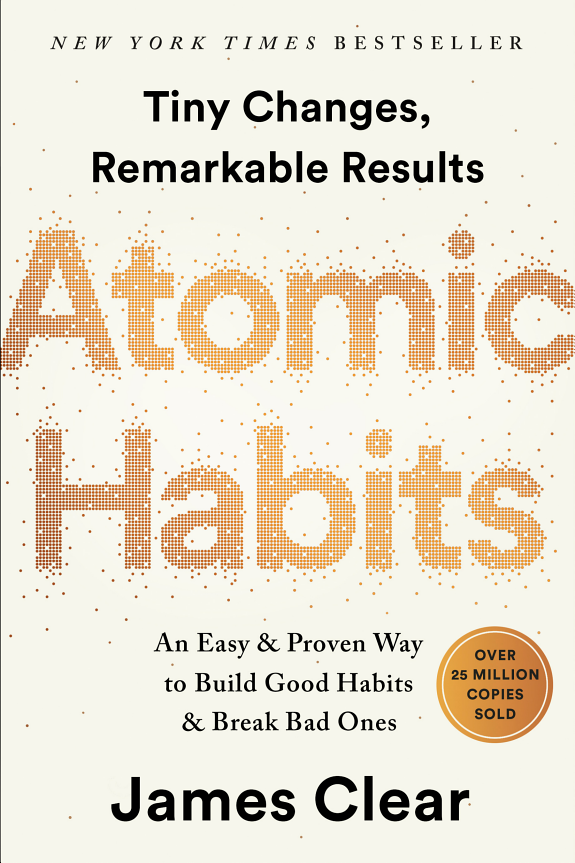
Atomic Habits is about building good habits in general; Deep Work is specifically about the habit of focused, undistracted work. Deep Work is narrower and more opinionated. Atomic Habits gives you a toolkit; Deep Work gives you a worldview about what kind of work actually matters.
-
Do I have to quit social media to apply Deep Work?
No, but Newport will try to convince you. The book's strict reading is that social media costs more than it gives most people, and that the costs show up in your ability to concentrate. A softer reading: be intentional about which platforms genuinely earn their place in your week, and quit the rest.
-
Who shouldn't read this book?
If your job is primarily reactive — customer support, logistics, on-call work where availability is the value — Deep Work's prescriptions will feel out of touch. The book assumes your output quality scales with sustained concentration. If it doesn't, your time is better spent elsewhere.
Similar books
Deep Work vs.
Deciding between two books? Deep Work vs Digital Minimalism or Deep Work vs Atomic Habits .
