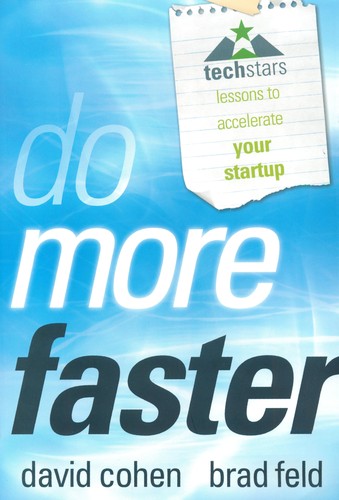
Do More Faster: TechStars Lessons to Accelerate Your Startup by Brad Feld and David Cohen is a 2010 business book about entrepreneurship, startups, mentorship. Speed is a competitive advantage at the earliest stage. The founders who move fastest to test their assumptions, regardless of how imperfect the test, learn faster than those who wait for a polished product to validate.
Summary
Do More Faster is a collection of short essays and lessons drawn from the TechStars accelerator program, organized by Brad Feld and David Cohen, the program's co-founders. TechStars launched in Boulder in 2007 and had become, by the time this book was published in 2010, one of the more respected startup accelerators in the United States. The book compiles advice from TechStars mentors — experienced entrepreneurs and investors — organized around seven themes: idea and vision, people, execution, product, fundraising, legal and structure, and the work and life balance that founders rarely discuss honestly.
The format is a series of short pieces, each two to six pages, written by a different mentor or drawn from founder experience in the program. Feld and Cohen contribute a handful of pieces themselves, but much of the value comes from the range of voices: people like Eric Ries (early contributor to lean startup thinking), Mark Suster (venture capitalist and former entrepreneur), and dozens of others who have built or funded early-stage companies. The short format means no single idea gets extended treatment, but it also means the book can be read in chunks and revisited at specific points in a startup's development.
The most recurring theme is speed: the title is not hyperbole. Almost every contributor emphasizes that the biggest risk for an early-stage startup is not moving too fast — it is moving too slowly, validating too little, and preserving too much of the original idea when the market is already telling you something different. The corollary is that doing more faster requires a high tolerance for imperfect information and a process for learning from failure quickly rather than avoiding it.
The book is most useful in the earliest stages of building a company. It speaks to the experience of the first six to eighteen months — before product-market fit, before significant funding, when everything is hypothesis. Founders further along may find many of the lessons already internalized, but for people at the beginning, the book functions well as a set of calibrations from people who have been through it.
Talk to Do More Faster: TechStars Lessons to Accelerate Your Startup like its author wrote you back.
Get the ideas that fit your life — not generic summaries.
- Chat with the book
- Audiobook-style main ideas
- Adapts to your life and goals
- Helps you take action
Key takeaways
- 1.
Speed is a competitive advantage at the earliest stage. The founders who move fastest to test their assumptions, regardless of how imperfect the test, learn faster than those who wait for a polished product to validate.
- 2.
Give before you get. The most useful relationships in the startup ecosystem — with mentors, investors, and potential co-founders — are built through contribution before anyone has asked for anything.
- 3.
The idea is the least important part of the startup. Every contributor who has built and sold companies says the idea was wrong in some important way, and execution in the presence of uncertainty was the actual work.
- 4.
Co-founder relationships require explicit agreements about equity, roles, and what happens if someone leaves. Most early co-founder breakups trace back to a conversation that didn't happen in the first month.
- 5.
Mentors are most valuable when they give you their mental models, not their answers. The best mentors in this book ask questions that force founders to examine their own assumptions.
- 6.
Legal and structural decisions made in the first year are expensive to undo later. Incorporate correctly, document equity, and get agreements in writing before the company has value.
- 7.
Fundraising is a process, not an event. Founders who treat it as something to do between other activities typically raise worse terms on a longer timeline than founders who run it as a focused sprint.
- 8.
Product intuition matters, but it degrades fast. Get the product in front of real users as early as possible and treat every feature decision as a hypothesis to be tested, not a preference to be defended.
Discussion questions
Use these on your own, with a book club, or as chat starters in Superbook. Book club version, ready to copy or print →
- 1.
The title is 'Do More Faster.' Is there a case where founders move too fast? When does speed become a liability rather than an advantage?
- 2.
The book draws heavily on TechStars' Boulder experience in 2007–2010. How well does the advice translate to the startup environment today?
- 3.
Multiple contributors say the idea is the least important part. If that's true, what is the most important part, and does the book answer that question clearly?
- 4.
The book's essay on co-founder agreements is one of its most practical. Have you seen a co-founder breakup trace back to a missing or misunderstood agreement?
- 5.
Feld and Cohen emphasize the 'give before you get' principle in building relationships. Have you experienced a professional relationship that operated on that principle? What did it look like in practice?
- 6.
Many contributors talk about the difficulty of knowing when to persist with an original idea versus when to pivot. What signals should founders be looking for?
- 7.
The legal and structure section is surprisingly candid about early decisions that founders get wrong. What's the most common early legal mistake, based on what the contributors describe?
- 8.
The book is organized around seven themes but was written by dozens of people. Does the multi-author format strengthen or weaken the advice? What gets lost in consistency?
- 9.
Several essays address the emotional experience of founding — anxiety, isolation, imposter syndrome. How well does startup advice literature in general address the psychological side of building a company?
- 10.
TechStars was designed to compress learning into a few months. What are the tradeoffs of learning under that kind of pressure versus learning more slowly in the market?
- 11.
Which of the seven themes — idea, people, execution, product, fundraising, legal, work/life — do you think is most neglected in startup advice generally?
- 12.
If a first-time founder read only one section of this book, which would you recommend and why?
Themes
Frequently asked questions
-
Is Do More Faster worth reading?
Yes, for first-time founders in the idea-to-early-product phase. The book is a quick read organized in short essays, so it's easy to absorb in pieces. If you've already been through an accelerator or raised your first round, much of it will feel familiar.
-
How long does it take to read Do More Faster?
Around three to four hours. The book is organized as short essays, most under five pages, which makes it easy to read in chunks. Many founders keep it nearby as a reference rather than reading it cover to cover.
-
What is TechStars?
A startup accelerator that began in Boulder, Colorado in 2007. Companies accepted into the program receive seed funding, intensive mentorship from experienced entrepreneurs and investors, and a network of alumni and advisors. TechStars has since expanded to multiple cities globally and has supported thousands of companies.
-
Who should read Do More Faster?
First-time founders in the earliest stage of building a company — ideally before they have raised money or hired their first employees. The book addresses the specific questions that arise in those first six to eighteen months and is less useful for founders who are already scaling.
-
What's the most actionable advice in Do More Faster?
The co-founder agreement section. Before you do anything else, document your equity split, roles, vesting schedule, and what happens if someone leaves. The founders who skipped that conversation at the beginning paid for it later.
Similar books
Zero to One: Notes on Startups, or How to Build the Future
Peter Thiel
The Lean Startup
Eric Ries
Rework
Jason Fried and David Heinemeier Hansson
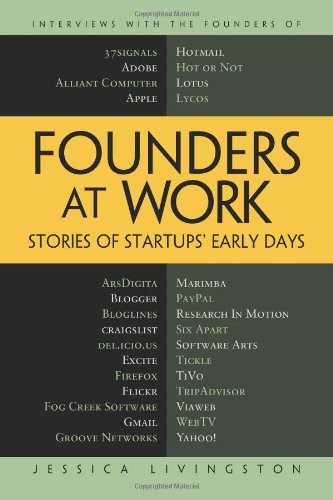
Founders at Work: Stories of Startups' Early Days
Jessica Livingston
