Do No Harm by Henry Marsh is a 2014 memoir book about surgery, medicine, mortality. Neurosurgery operates in a domain of radical uncertainty. Even experienced surgeons cannot reliably predict outcomes, and the pretense of certainty communicated to patients often serves the surgeon's comfort more than the patient's interests.
Summary
Do No Harm is Henry Marsh's memoir of life as a senior neurosurgeon in the National Health Service. Marsh spent decades operating on brains — removing tumors, clipping aneurysms, treating hydrocephalus — and the book is structured around a series of cases, each named after a neurological condition, each carrying a different kind of weight. The voice is blunt, self-critical, and unusually honest about a profession that tends to project more confidence than it earns.
Marsh's central preoccupation is the nature of the decisions neurosurgeons make, and how those decisions are lived with afterward. He describes operations that went as planned and patients who nonetheless died, operations that seemed routine until the moment they weren't, and the specific form of helplessness that comes from causing damage — however small — to a brain, knowing that the person on the table might wake up permanently altered. He does not romanticize the work. He describes the bureaucracy of the NHS, the management culture that drives him to periodic fury, and the way medicine teaches a particular kind of dissociation between the surgeon's controlled hands and the human suffering on the table.
What makes Do No Harm different from most medical memoirs is the degree to which Marsh refuses comfort. He recounts past errors, cases where he operated when he should not have, decisions where certainty was performed rather than felt. He is scathing about the paternalism historically embedded in medicine — the tendency to tell patients what they need rather than what they face — and equally hard on himself for how long he participated in it. The relationship between surgeon and patient, he argues, requires a kind of honesty about uncertainty that the culture of medicine makes almost impossible to offer.
Marsh's prose is clear and precise, with the quality of a man who has spent decades finding words for things he cannot look away from. The book is less about neuroscience than about what it is to hold the details of other people's lives and deaths in one's hands over the course of a career — and to try to understand, with age, what was worth it and what was not.

Talk to Do No Harm like its author wrote you back.
Get the ideas that fit your life — not generic summaries.
- Chat with the book
- Audiobook-style main ideas
- Adapts to your life and goals
- Helps you take action
Key takeaways
- 1.
Neurosurgery operates in a domain of radical uncertainty. Even experienced surgeons cannot reliably predict outcomes, and the pretense of certainty communicated to patients often serves the surgeon's comfort more than the patient's interests.
- 2.
Every neurosurgical decision involves a trade-off between the risk of operating and the risk of not operating, and both risks can end in catastrophe. Learning to live with that is a significant part of the job.
- 3.
Medical paternalism — telling patients what to do rather than explaining what they face — has historically been a way of protecting doctors from difficult conversations rather than protecting patients.
- 4.
Small failures accumulate over a career. Marsh is unusually frank about cases where he got things wrong, and about how inadequate the culture of medicine is at processing error honestly.
- 5.
The NHS bureaucracy and management culture that Marsh describes — with its targets, its protocols, and its institutional inertia — is one of the genuine antagonists of the book, regularly in conflict with good clinical care.
- 6.
The identity of surgeon — built around competence, control, decisive action — sits in permanent tension with the reality of the work, which frequently involves confronting the limits of what medicine can do.
- 7.
Informed consent, as typically practiced, is often a ritual rather than a genuine communication of risk and uncertainty. Marsh argues patients deserve honesty about how much surgeons don't know.
- 8.
What surgeons find hardest is not the technical difficulty of operations but the cognitive and emotional weight of decisions made under uncertainty that will affect another person's existence, often irrevocably.
Discussion questions
Use these on your own, with a book club, or as chat starters in Superbook. Book club version, ready to copy or print →
- 1.
Marsh is unusually self-critical for a physician. Does his willingness to admit error make him seem more trustworthy, or does it raise questions about why this kind of honesty is rare?
- 2.
The book describes operating under radical uncertainty — where even experienced judgment can be catastrophically wrong. What would it mean to honestly communicate that uncertainty to patients before major surgery?
- 3.
Marsh draws a distinction between performing confidence and feeling it. Where else in professional life do you see that gap, and what does it cost?
- 4.
The NHS bureaucracy frustrates Marsh throughout. Is institutional friction in medicine mostly harmful, or does it serve a function that isn't visible from the surgeon's perspective?
- 5.
Marsh argues that medical paternalism protects doctors more than patients. Do you want your own doctors to give you more uncertainty than they typically do? What would that require of you as a patient?
- 6.
The book describes cases where Marsh operated and wishes he hadn't, and cases where he held back and wishes he had operated. How do you think about living with that kind of irreversible decision-making?
- 7.
Marsh's voice is precise and unsentimental even when describing death. Is that quality something you find reassuring or cold in a physician?
- 8.
The cases in the book have names drawn from neurological conditions — meningioma, aneurysm, syrinx. What does giving cases those names rather than patient names do to how you read them?
- 9.
Marsh is hard on his younger self in some of the cases he recounts. What does he seem to have learned over his career, and what does he seem to have remained unchanged about?
- 10.
The book raises the question of when not to operate — when the surgery is possible but the outcomes probable are worse than doing nothing. How does that kind of restraint get cultivated in a culture that prizes decisive action?
- 11.
Marsh's relationship with his trainees appears occasionally. What kind of mentor does he seem to be, and what does the transmission of surgical culture look like through those scenes?
- 12.
After reading the book, how has your sense of what you would want from a surgeon — or from any expert in a high-stakes domain — changed, if at all?
Themes
Frequently asked questions
-
What is Do No Harm about?
It's a memoir by a senior British neurosurgeon exploring the decisions, uncertainties, and moral weight of a career spent operating on brains. Each chapter centers on a case that illuminates a different aspect of surgical practice, medical culture, and what it costs to hold responsibility for other people's lives.
-
Is Do No Harm worth reading if I'm not interested in medicine?
Yes. The book is as much about decision-making under uncertainty, professional identity, and living with error as it is about surgery. Readers who find medical memoirs alienating may still find the voice and the moral inquiry compelling.
-
How does Do No Harm compare to Atul Gawande's books?
Both surgeons write with unusual honesty about medical uncertainty. Marsh is more personal and darker — less interested in systemic solutions and more focused on the interior experience of operating. Gawande tends toward policy implications and improvement frameworks. The two books complement each other.
-
Is Do No Harm depressing?
It's honest in ways that can be uncomfortable, particularly in the chapters about operations that caused harm. But the tone is not despairing — it's the voice of a man who finds meaning in the work while refusing to pretend it is simpler than it is.
-
How long does Do No Harm take to read?
Around 280 pages, roughly four to five hours. The chapter structure — each named for a condition — makes it easy to read in segments, though the cumulative effect is best experienced across the full book.
Similar books
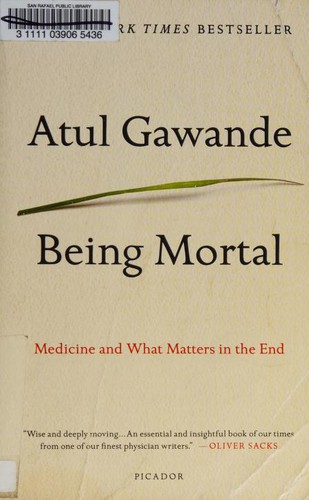
Being Mortal: Medicine and What Matters in the End
Atul Gawande
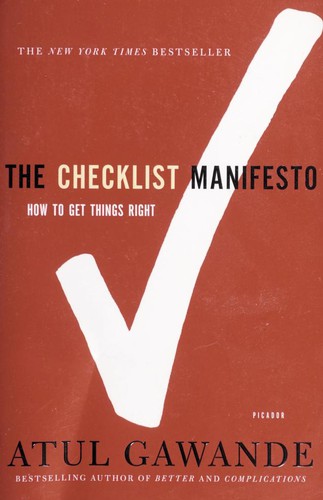
The Checklist Manifesto
Atul Gawande
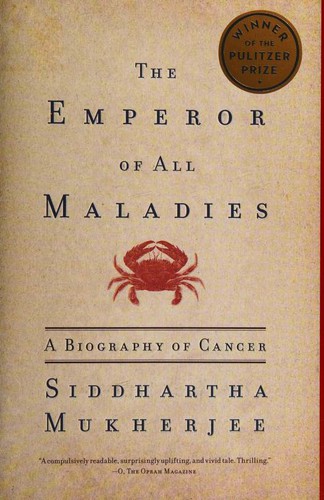
The Emperor of All Maladies: A Biography of Cancer
Siddhartha Mukherjee
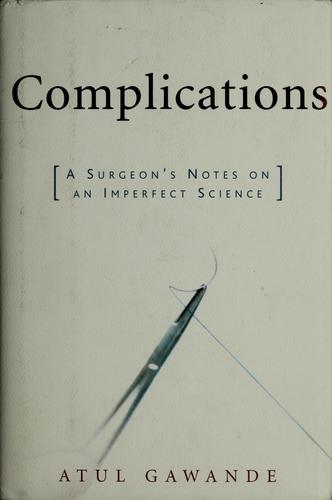
Complications
Atul Gawande
