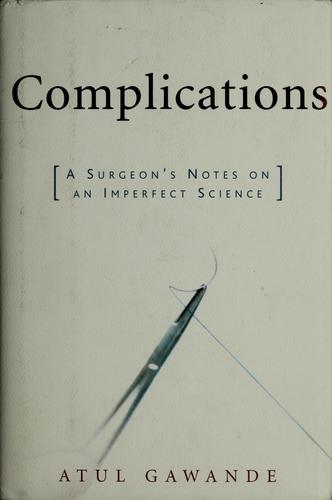
Complications by Atul Gawande is a 2002 health book about medicine, uncertainty, fallibility. Medicine is learned on patients. Surgical technique, clinical judgment, and diagnostic skill all improve with practice, which means early patients bear a disproportionate share of the learning cost.
Summary
Complications is Atul Gawande's first collection of essays, drawn from his New Yorker writing and his early years as a surgical resident at Brigham and Women's Hospital. The book is divided into three sections — fallibility, mystery, and uncertainty — and each section examines a different dimension of what it is to practice medicine when the knowledge is incomplete, the hands are still learning, and the stakes are measured in lives.
Gawande's central concern is the gap between medicine's image — competent, systematic, evidence-based — and its reality, which is far more contingent. Doctors learn on patients. No amount of simulation substitutes for the first time you do a procedure on a human being, and the system depends on that learning happening without fully disclosing it. The essay on how surgeons acquire technique is among the most honest accounts of medical education available: the first hundred cases of a new surgeon are statistically more likely to go wrong than the next hundred, and someone has to be those first hundred cases.
The mystery section covers conditions that medicine cannot fully explain — the patient who vomits compulsively and for whom every intervention fails, the man who blushes so severely it has destroyed his social life, the surgeon who develops a medical condition himself and must navigate the system from the inside. These essays complicate the idea that medicine is primarily applied science. Much of what clinicians actually do is pattern recognition under uncertainty, and the patterns are often incomplete.
The uncertainty section examines end-of-life decisions, the difficulty of knowing when to stop treating, and the moral weight of choosing for patients who cannot choose for themselves. Gawande is not polemical — he does not arrive at tidy conclusions. What he does is describe the actual texture of medical practice with enough precision that readers can understand why good intentions and good training still leave enormous room for harm. Complications reads like the opposite of a hospital brochure: careful, honest, and unwilling to perform a confidence it doesn't have.
Talk to Complications like its author wrote you back.
Get the ideas that fit your life — not generic summaries.
- Chat with the book
- Audiobook-style main ideas
- Adapts to your life and goals
- Helps you take action
Key takeaways
- 1.
Medicine is learned on patients. Surgical technique, clinical judgment, and diagnostic skill all improve with practice, which means early patients bear a disproportionate share of the learning cost.
- 2.
Error in medicine is not primarily the result of bad or reckless practitioners. It is embedded in the structure of a field where knowledge is incomplete, situations are complex, and pressure is constant.
- 3.
Doctors make diagnostic and treatment decisions using heuristics — pattern-matching shortcuts — that are often effective but fail systematically in predictable ways, the same ways all human cognition fails.
- 4.
Medical culture historically has suppressed honest discussion of error. Morbidity and mortality conferences can function as ritual rather than genuine inquiry when the culture does not make honest accounting safe.
- 5.
Many of the most vexing conditions in medicine — chronic pain, nausea that does not respond to treatment, conditions at the edges of diagnosis — expose how much of medicine consists of managing ignorance rather than applying knowledge.
- 6.
End-of-life decisions require a kind of value clarification from patients and families that medicine's culture and training have not historically prepared clinicians to facilitate well.
- 7.
Patients who become doctors experience the healthcare system from the inside in ways that change their perspective permanently. The loss of that naivety is both a loss and a gift.
- 8.
The drive to do something — to treat, to intervene, to not simply observe — is deeply embedded in medical culture and sometimes serves patients poorly when watchful waiting is the better option.
Discussion questions
Use these on your own, with a book club, or as chat starters in Superbook. Book club version, ready to copy or print →
- 1.
Gawande describes surgeons learning on patients without fully disclosing that fact. What is your reaction to that system — does it seem unavoidable, or is there a more honest approach?
- 2.
The book argues that medical error is structural, not just individual. What does that imply about how hospitals, regulators, and patients should respond to harm in medical settings?
- 3.
Gawande writes about his own early errors during training. Does a surgeon's willingness to be honest about mistakes change how you'd feel about being operated on by them?
- 4.
The heuristics that make diagnosis efficient also make it systematically biased. Where else do you see expert pattern-matching fail in ways that look obvious only afterward?
- 5.
The mystery section covers conditions that medicine can describe but not reliably treat. What would it mean to tell a patient honestly that the medical system doesn't have an answer for them?
- 6.
Gawande describes the culture of surgical training as one where admitting difficulty or uncertainty is professionally dangerous. How does that culture get changed, and who has to change it first?
- 7.
The uncertainty section raises the question of when to stop treating. How do you think about that decision for yourself or for family members — and what information would you want?
- 8.
Complications was published in 2002. Which of the problems Gawande identifies seem better addressed now, and which seem unchanged or worse?
- 9.
The book is written by a physician about medicine. How would the same stories read from the patients' perspectives, and what would be lost or gained in that shift?
- 10.
Gawande notes that some hospitals have better outcomes than others for the same procedures, and that neither patients nor referring doctors typically know which those are. What should follow from that?
- 11.
Which essay in Complications did you find most unsettling, and why? What assumption did it challenge?
- 12.
Gawande's tone is reflective rather than outraged. Is measured equanimity the right response to the problems he describes, or does it risk letting medicine off too easily?
Themes
Frequently asked questions
-
What is Complications about?
It's a collection of essays by a surgical resident examining fallibility, mystery, and uncertainty in medicine — particularly the gap between what medicine claims to know and what it actually does well, and the real costs of learning on patients.
-
Is Complications still relevant, given it was published in 2002?
Yes. The structural problems Gawande identifies — error culture, the learning curve of surgery, end-of-life decision-making, the limits of diagnostic certainty — remain central to medical practice. The details have changed; the underlying tensions have not.
-
How does Complications compare to Being Mortal?
Complications is broader and more fragmented, structured as a collection of essays rather than a sustained argument. Being Mortal is more focused — specifically on end-of-life care — and has a stronger policy dimension. Complications is the earlier, rawer book; Being Mortal is the more finished one.
-
Who should read Complications?
Anyone curious about what medical practice actually looks like from the inside, not from hospital marketing. Particularly useful for people facing significant medical decisions, medical students, and anyone interested in how expert institutions manage uncertainty and error.
-
How long does Complications take to read?
Around 270 pages — roughly four to five hours. The essay structure means it reads in natural stopping points, and the writing is clean enough that it moves faster than the page count suggests.
Similar books
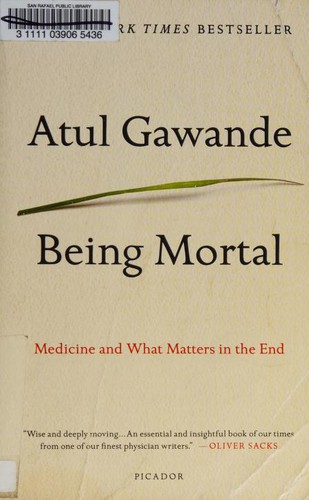
Being Mortal: Medicine and What Matters in the End
Atul Gawande
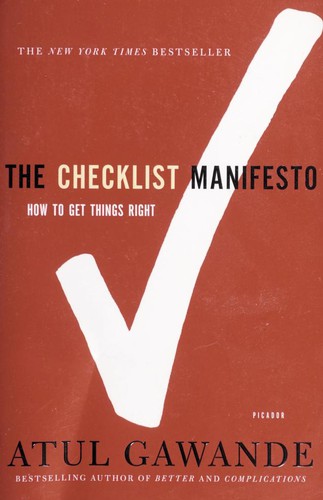
The Checklist Manifesto
Atul Gawande
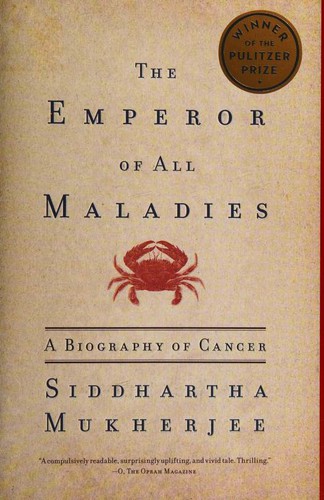
The Emperor of All Maladies: A Biography of Cancer
Siddhartha Mukherjee

Do No Harm
Henry Marsh
