Do the Work by Steven Pressfield is a 2011 self-help book about resistance, creative work, discipline. Resistance is strongest at the beginning and at the end — when you are starting something new and when you are about to ship. Those are the two moments to be most alert.
Summary
Do the Work is Steven Pressfield's shortest and most directly operational book about creative resistance. It was written as a companion to The War of Art — less a philosophical analysis of Resistance and more a field manual for getting through a project from start to finish. Pressfield takes a single creative project and walks through the three phases: beginning, the middle (where Resistance concentrates), and shipping.
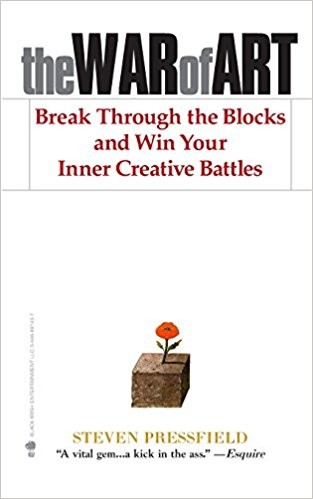
The central concept is the same as in The War of Art: Resistance, capitalized, is the invisible force that opposes all creative, entrepreneurial, and personally significant work. In Do the Work, Pressfield shifts from diagnosis to tactics. He gives direct instructions: start before you're ready, don't research excessively before beginning, put down a rough first pass and keep moving forward, don't reread and revise until the draft is done. These instructions run counter to most people's instincts about how creative work proceeds.
The book's best section deals with the crisis that arrives in the middle of every significant project. Pressfield calls this the belly of the beast — the point where the project feels impossible, the original excitement is gone, and the end is not yet in sight. He argues this is not a sign the project is wrong; it is a structural feature of creative work, and the only way through it is to keep moving. The instructions become urgent here: produce, don't edit, don't show anyone yet, finish the draft.
The book is short enough to read in a single sitting and designed to be read that way. It is not subtle or nuanced, and it does not try to be. It is addressed to someone who is stuck and needs to be told, plainly and with authority, to start anyway and keep going. For that reader, in that moment, it does what it promises.
Talk to Do the Work like its author wrote you back.
Get the ideas that fit your life — not generic summaries.
- Chat with the book
- Audiobook-style main ideas
- Adapts to your life and goals
- Helps you take action
Key takeaways
- 1.
Resistance is strongest at the beginning and at the end — when you are starting something new and when you are about to ship. Those are the two moments to be most alert.
- 2.
Start before you're ready. The act of beginning generates its own momentum; waiting for readiness is itself a form of Resistance.
- 3.
Produce first, fix later. The most common version of creative paralysis is revision during creation — editing while drafting, correcting while building.
- 4.
The belly of the beast is structural, not personal. Every significant project has a midpoint crisis. It is not a sign the project is wrong; it is a stage to push through.
- 5.
Don't research more than you need to begin. Excessive research is often Resistance in disguise — a way of deferring the work while feeling productive.
- 6.
Shipping — finishing and releasing — is itself an act of courage. Resistance intensifies just before completion precisely because something real is at stake.
- 7.
The goal is not to produce perfect work but to produce finished work. Perfection is Resistance's most sophisticated disguise.
Discussion questions
Use these on your own, with a book club, or as chat starters in Superbook. Book club version, ready to copy or print →
- 1.
Pressfield says to start before you're ready. What project in your life are you waiting to feel ready for? What would happen if you started it tomorrow in an imperfect state?
- 2.
His central concept is Resistance — the invisible force opposing significant work. How does it manifest most reliably for you? Procrastination, perfectionism, distraction, other?
- 3.
The 'belly of the beast' — the midpoint crisis — is described as structural, not personal. Have you experienced this in a project? What got you through it, or stopped you?
- 4.
Pressfield separates producing from editing. Do you naturally do them together, and does mixing them tend to stall your work?
- 5.
He argues excessive research is often Resistance in disguise. When have you done research that served as a substitute for beginning?
- 6.
The book is addressed bluntly to someone who is stuck. Did that tone help you, or did it feel like it missed the complexity of why people don't finish things?
- 7.
Pressfield frames creative work almost as a battle. Does the martial framing connect with your experience of what makes creative work hard?
- 8.
What is one project — finished or unfinished — that taught you the most about your personal relationship with Resistance?
- 9.
He says Resistance is always lying. It tells you the project is impossible, wrong, or unworthy. When have you believed that and been wrong?
- 10.
The final act — shipping — is where Resistance concentrates. What is something you've completed but not sent, posted, submitted, or released? What is in the way?
- 11.
Do the Work is a very short book that repeats its core idea in different forms. Did the repetition reinforce the point or feel like padding?
Themes
Frequently asked questions
-
What is Do the Work about?
It is a short, direct companion to The War of Art — less a philosophical exploration of creative Resistance and more a field manual for getting through a single project. Pressfield walks through the three phases of creative work: beginning, the middle, and shipping, with specific instructions for each.
-
Do I need to read The War of Art first?
No, though Do the Work assumes familiarity with the concept of Resistance. Reading The War of Art first gives the concept more depth; Do the Work works as a standalone field guide.
-
How long is Do the Work?
Very short — around 100 pages. Most readers finish it in under two hours, often in a single sitting. It is designed to be read in one go, close to whatever creative work you're avoiding.
-
Who should read Do the Work?
Anyone who is stuck mid-project, prone to abandoning creative work before finishing, or who has a pattern of starting things they don't complete. It is also useful for perfectionists who can't stop revising long enough to finish a draft.
-
Is this book too simple?
By design, yes. Pressfield is not trying to explain the psychology of creative resistance in depth — he's trying to give someone who is stuck a push. If you want depth, The War of Art is better. If you want a fast, direct kick, Do the Work is the right book.