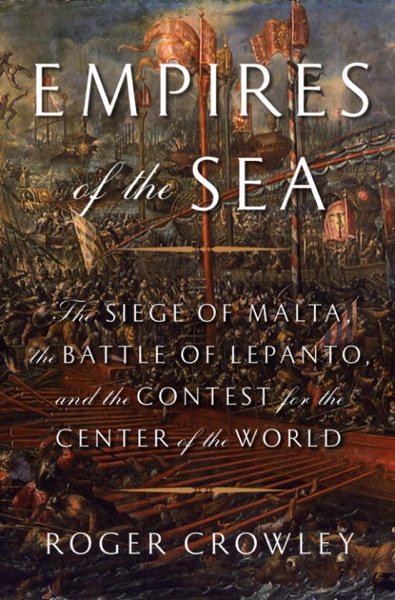
Empires of the Sea by Roger Crowley is a 2008 history book about naval warfare, mediterranean history, ottoman empire. The Mediterranean in the sixteenth century was contested between two imperial systems — Ottoman and Habsburg — that both understood the sea as essential to their power and religious mission.
Summary
Empires of the Sea is Roger Crowley's account of the Ottoman Empire's bid to control the Mediterranean in the sixteenth century, culminating in the Battle of Lepanto in 1571. It covers roughly thirty years of intermittent but ferocious naval warfare between the Ottoman Empire under Suleiman the Magnificent and his successors, and the fragmented Christian powers of the western Mediterranean — primarily Spain under Philip II, Venice, and the Knights of St. John. The book is narrative history at its most sustained: Crowley is primarily interested in events and people, and he maintains forward momentum across complex strategic terrain.
The centerpiece is the Great Siege of Malta in 1565, which occupies roughly a third of the book. The Ottoman fleet, the largest assembled in the Mediterranean since antiquity, landed on Malta to dislodge the Knights of St. John — a crusading military order that had been harassing Ottoman shipping and enslaving Muslim sailors. The siege lasted four months, cost tens of thousands of lives on both sides, and ended with a narrow Christian defense. Crowley reconstructs the daily experience of the siege — the tunneling, the bombardment, the running out of food and fresh water — without losing the strategic stakes. The commanders on both sides, particularly the Knight Jean de la Valette and the Ottoman admiral Dragut, are drawn with the specificity that sustained archival research allows.
The book then follows the story to Cyprus, which the Ottomans took from Venice in a brutal campaign in 1570, and to Lepanto the following year, where a combined Christian fleet under Don John of Austria handed the Ottomans their first major naval defeat in a century. Crowley is careful to complicate the idea of Lepanto as a decisive turning point — the Ottomans rebuilt their fleet within a year — but he gives full weight to its psychological impact on both sides and its meaning for how the two empires would thereafter understand each other.
Crowley's strength is pace and specificity: he writes military history that does not flatten experience into strategy, and strategic history that does not lose sight of the political and religious context. Readers looking for deep analysis of the social or economic structures underlying the conflict will find the coverage thinner; Empires of the Sea is a book about what happened and how, told vividly, rather than an attempt to explain the deeper forces driving it.
Talk to Empires of the Sea like its author wrote you back.
Get the ideas that fit your life — not generic summaries.
- Chat with the book
- Audiobook-style main ideas
- Adapts to your life and goals
- Helps you take action
Key takeaways
- 1.
The Mediterranean in the sixteenth century was contested between two imperial systems — Ottoman and Habsburg — that both understood the sea as essential to their power and religious mission.
- 2.
The Great Siege of Malta in 1565 was one of the most intense military encounters of the century: a four-month contest of attrition that exhausted both sides and ended in narrow Christian survival.
- 3.
The Knights of St. John — originally a crusading hospital order — had evolved into a professional naval fighting force whose resilience at Malta made them central to the defense of the western Mediterranean.
- 4.
Ottoman naval power was built on an industrial capacity for rapid fleet construction: after Lepanto, they rebuilt their fleet of more than 200 galleys within a single year.
- 5.
Lepanto in 1571 was the largest naval battle in Western history to that point and ended a century of Ottoman naval supremacy — but it did not fundamentally change the balance of power in the eastern Mediterranean.
- 6.
Both sides used enslaved oarsmen in their galleys: Christian slaves on Ottoman ships, Muslim slaves on Christian ones. The galley slave was the essential human infrastructure of Mediterranean naval power.
- 7.
The fall of Cyprus to the Ottomans in 1570, accompanied by the torture and execution of the Venetian commander Bragadin, was a defining atrocity that shaped Christian motivation at Lepanto.
- 8.
The conflict was simultaneously religious, commercial, and territorial — the language of crusade and jihad masked what were often straightforwardly strategic calculations about trade routes and safe ports.
Discussion questions
Use these on your own, with a book club, or as chat starters in Superbook. Book club version, ready to copy or print →
- 1.
Crowley shows both sides framing the conflict in religious terms while pursuing strategic interests. Does religious framing in warfare mislead contemporaries, or does it accurately describe how people experience and motivate themselves in conflict?
- 2.
The Knights of St. John at Malta were a crusading order fighting a rearguard action centuries after the Crusades. What does the persistence of the order tell us about how institutions outlive the conditions that created them?
- 3.
The siege of Malta cost tens of thousands of lives for control of a small island. How does reading about the scale of early modern military casualties change your sense of what warfare actually costs?
- 4.
Crowley notes that both sides used enslaved oarsmen. Does that parallel complicate the narrative of Christian defense against Ottoman expansion that contemporaries used?
- 5.
The Ottomans rebuilt their navy within a year of Lepanto. What does that capacity for rapid recovery tell us about the limits of what military victories actually decide?
- 6.
Don John of Austria at Lepanto is presented as a young commander under enormous political constraint. What made his leadership effective, and what does the battle reveal about the relationship between individual leadership and structural forces?
- 7.
The book's focus is narrative rather than analytical — it tells you what happened more than why it had to. What questions does the narrative raise that you'd want answered by a different kind of history?
- 8.
Both the Ottoman and Habsburg empires eventually declined from the heights described here. Reading this account, what do you notice as early signs of the constraints that would later limit both?
- 9.
Malta remains a crossroads of Mediterranean history and is still marked by the Knights of St. John. Does historical memory of events like the Great Siege shape modern political identity? What are the costs and benefits of that?
- 10.
Crowley reconstructs the experience of individual soldiers and sailors. What does that granular perspective give you that strategic overview doesn't? What does it cost?
- 11.
The conflict is often framed as Islam versus Christianity. What alternative framings — imperial, commercial, dynastic — does the book's evidence support, and which do you find most convincing?
- 12.
After reading this, do you find the Lepanto narrative — a decisive clash of civilizations — compelling, or does Crowley's own complexity undercut it?
Themes
Frequently asked questions
-
What is Empires of the Sea about?
The thirty-year Ottoman-Habsburg struggle for control of the Mediterranean in the sixteenth century, from the siege of Rhodes through the Great Siege of Malta to the Battle of Lepanto in 1571. Crowley tells it as narrative history focused on events, sieges, and the commanders who fought them.
-
Do I need prior knowledge of Ottoman or European history to enjoy it?
No. Crowley provides enough context to follow the story without background. Readers with some familiarity with the period will recognize more, but the narrative is designed to work for a general reader.
-
Is this primarily about Lepanto or the whole period?
The whole period, though Lepanto is the culminating event. The siege of Malta (1565) gets the most detailed treatment, and many readers find it more gripping than Lepanto itself.
-
How long does it take to read?
Around six hours. The pace is consistent and the chapters are short; it reads well in long stretches but is also easy to pick up and put down between chapters.
-
Is this suitable for someone interested in military history generally, not just this period?
Yes. The book is as much about the experience of siege and naval warfare as about the specific conflict. Readers interested in pre-gunpowder naval tactics, galley warfare, or sixteenth-century logistics will find it useful.
Similar books
Guns, Germs, and Steel
Jared Diamond
The Guns of August
Barbara Tuchman
Rubicon: The Last Years of the Roman Republic
Tom Holland
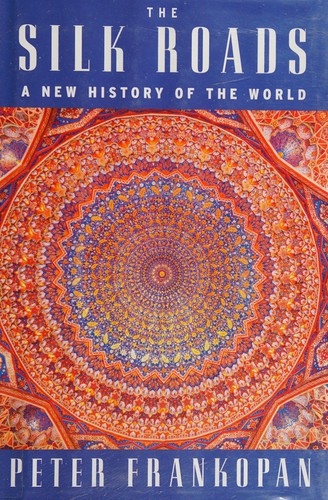
The Silk Roads: A New History of the World
Peter Frankopan
