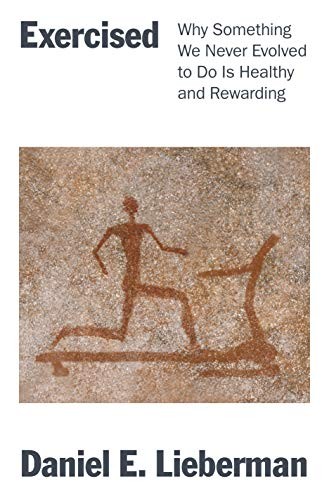
Exercised by Daniel Lieberman is a 2020 health book about exercise, evolution, physical activity. Humans evolved to be active when necessary and to rest otherwise — the 'natural laziness' narrative is wrong; what we have is rational energy conservation, which served our ancestors but maladapts in modern environments.
Summary
Exercised is Daniel Lieberman's follow-up to The Story of the Human Body, applying the same evolutionary lens specifically to physical activity — what it is, why we resist it, and which kinds produce which benefits. Lieberman's core provocation is that the common instruction to "exercise more" fundamentally misunderstands human biology: humans didn't evolve to exercise. We evolved to be physically active when necessary and to rest when possible, and that instinct — which served our ancestors well — now collides with environments where necessary activity has been engineered away.
The book opens by dismantling several widespread myths about exercise. Humans are not naturally lazy — they are rationally energy-conserving, which is different. Our ancestors were not running marathons daily; they walked long distances, carried loads, dug, climbed, and occasionally sprinted but also rested extensively between demands. Elite performance sports are a cultural invention of the last century or two; the human body was not designed for them. And exercise as a discrete, deliberate, scheduled activity is historically novel — for most of human existence, "exercise" was inseparable from survival tasks.
The bulk of the book examines specific types and amounts of physical activity through the lens of what the evidence actually shows about health benefits. Lieberman evaluates walking, running, strength training, high-intensity training, team sports, and sitting, synthesizing the research on each with particular attention to common misunderstandings. He is consistently willing to complicate simple narratives: running is good, but extreme amounts may not be; strength training is underutilized as a health intervention; sitting is harmful but the solution is not standing desks (which produce their own problems) but frequent breaks.
The final section addresses the cultural and policy question of why knowing that exercise is beneficial doesn't make people do more of it, and what kinds of environmental and social interventions actually change behavior. Lieberman argues that individual motivation is the wrong frame for a population-level problem, and that making physical activity normative, social, and embedded in daily life — as it is in blue zone communities — is more effective than prescriptions to go to the gym. The book is rigorous, opinionated, and consistently more nuanced than most exercise books.
Talk to Exercised like its author wrote you back.
Get the ideas that fit your life — not generic summaries.
- Chat with the book
- Audiobook-style main ideas
- Adapts to your life and goals
- Helps you take action
Key takeaways
- 1.
Humans evolved to be active when necessary and to rest otherwise — the 'natural laziness' narrative is wrong; what we have is rational energy conservation, which served our ancestors but maladapts in modern environments.
- 2.
Hunter-gatherers were active — roughly eight to ten miles of walking per day — but also rested extensively between physical demands, suggesting that rest is not a failure of discipline but a feature of healthy physiology.
- 3.
Walking, even at moderate amounts, produces substantial health benefits and may be the physical activity best supported by human evolutionary history.
- 4.
Strength training is dramatically underutilized as a public health intervention; muscle mass is a key predictor of metabolic health, longevity, and functional independence in aging.
- 5.
Extreme exercise — ultramarathons, very high-mileage running — may carry specific risks including cardiac changes and injury accumulation that moderate exercise does not.
- 6.
Prolonged sitting is independently harmful regardless of whether the person exercises; the solution is frequent interruptions to sitting (every thirty to sixty minutes) rather than standing desks, which produce different problems.
- 7.
Exercise as a deliberate, scheduled activity is historically novel and psychologically costly; making physical activity social, playful, and embedded in daily tasks reduces the motivation burden.
- 8.
The evidence on high-intensity interval training shows equivalent cardiovascular adaptation to longer moderate-intensity training in much less time — HIIT is the most time-efficient cardiovascular intervention.
Discussion questions
Use these on your own, with a book club, or as chat starters in Superbook. Book club version, ready to copy or print →
- 1.
Lieberman argues that human laziness is rational energy conservation rather than moral failure. Does that reframing change how you think about your own resistance to exercise?
- 2.
He shows that hunter-gatherers rested extensively between periods of activity. Does knowing that change how you think about rest in your own life — as laziness or as appropriate recovery?
- 3.
The book argues that extreme exercise carries specific risks. If you run or train at high volumes, does that evidence change your approach, or do you factor it in differently because of non-health goals?
- 4.
Strength training is the most underutilized health intervention according to Lieberman. Why do you think it receives less public health emphasis than aerobic exercise?
- 5.
He covers the standing desk phenomenon — that standing all day produces its own problems. What is the actual prescription, and does your work environment allow you to implement it?
- 6.
Lieberman argues that individual motivation is the wrong frame for a population-level physical inactivity problem. What structural and environmental changes would actually move population-level activity?
- 7.
The book distinguishes between physical activity (built into daily life) and exercise (deliberate, scheduled). Which do you primarily rely on for your physical activity, and does the distinction matter?
- 8.
He covers how social and cultural contexts make activity more or less normative. What in your social environment supports or undermines physical activity?
- 9.
Lieberman is skeptical of some fitness industry claims while being supportive of others. How do you calibrate trust in fitness recommendations from evolutionary versus clinical versus coach perspectives?
- 10.
He discusses the evidence that walking is the physical activity most consistent with human evolutionary history. Does that change how you prioritize walking versus other forms of exercise?
- 11.
If you could redesign your work and living environment to embed more physical activity without deliberate exercise time, what would you change?
- 12.
The book ends with policy rather than personal prescriptions. Is that satisfying, or does it feel like a cop-out for a book that most readers will read for personal guidance?
Themes
Frequently asked questions
-
How does Exercised differ from The Story of the Human Body?
The Story of the Human Body covers the full evolutionary history of the human body and a wide range of mismatch diseases. Exercised is focused specifically on physical activity — what types, how much, and why — going much deeper into exercise science alongside the evolutionary framing. They are complementary; Exercised is more practical for readers with specific fitness questions.
-
What does Exercised say about running?
That running is beneficial up to moderate volumes, with evidence for cardiovascular and cognitive benefits, but that extreme volumes (ultra-high mileage, ultramarathons) carry specific risks — including cardiac structural changes and cumulative injury — that moderate running does not. The sweet spot for health is regular moderate running, not maximum distance.
-
Does Exercised recommend a specific workout plan?
No — it is a science book rather than a training manual. Lieberman discusses what types of activity produce which benefits and how much is enough, but does not provide programming. The practical takeaways are general: mix aerobic activity, strength training, and frequent breaks from sitting.
-
What does Exercised say about sitting?
That prolonged sitting is independently harmful — it elevates cardiovascular risk even in people who exercise regularly. The solution is frequent interruptions (standing, walking briefly) every thirty to sixty minutes rather than wholesale replacement with standing desks, which carry their own problems.
-
Who should read Exercised?
Anyone who wants a scientifically grounded, myth-busting account of what physical activity actually does for health. Particularly useful for people who feel guilty about not exercising enough, those who exercise excessively and want to understand whether that's beneficial, and anyone interested in the evolutionary biology of movement.