Exit West by Mohsin Hamid is a 2017 literary fiction book about migration and displacement, love under pressure, identity and belonging. Migration changes people in ways that arrival alone cannot predict. The person who steps through the door is not the same person who will live on the other side.
Summary
Exit West follows Saeed and Nadia, two young people who meet and fall in love in an unnamed city beginning to fracture under the pressure of civil conflict. The novel opens in ordinary life — smartphones, coffee, flirtation — and then slowly, almost imperceptibly, the city becomes a war zone. The couple's relationship deepens precisely as the world around them becomes more dangerous, and the question hanging over every scene is whether love forged under siege can survive once the siege is over.
At the center of the novel is a quietly surreal device: doors that appear throughout the world and open onto other countries. Step through one in a collapsing Middle Eastern city and you emerge in a refugee camp in Mykonos, or a squat in London, or a hillside in California. Hamid uses these doors to compress the refugee experience — the weeks of sea crossings and border crossings and bribes and bureaucracy — into a single step. This isn't magical realism deployed for atmosphere. It's a formal argument: migration is both terrifying and ordinary, and the world's borders are more porous than governments pretend.
Hamid's prose is spare and deliberate, full of the long-view sentences that sweep from the particular to the global. Paragraphs will follow Saeed and Nadia through a tense afternoon and then briefly introduce a Chinese man in Australia or an elderly man in Amsterdam — strangers who will never meet any character in the book but who are living adjacent versions of the same story. The effect is of a novel that's simultaneously intimate and epic. The love story is real and specific; the migration story is everyone's.
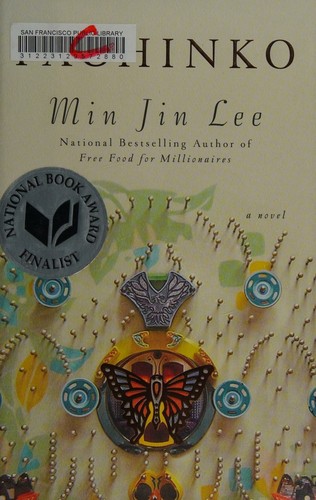
The novel will disappoint readers who want plot resolution or psychological interiority. Hamid doesn't explain his characters from the inside or give them clean arcs. What he offers instead is something closer to a parable: a meditation on how we change when we move, how relationships change under the pressure of circumstances they weren't built for, and what it means to be from somewhere when somewhere no longer exists. Readers who loved The Reluctant Fundamentalist and Pachinko will find much to think about here.
Talk to Exit West like its author wrote you back.
Get the ideas that fit your life — not generic summaries.
- Chat with the book
- Audiobook-style main ideas
- Adapts to your life and goals
- Helps you take action
Key takeaways
- 1.
Migration changes people in ways that arrival alone cannot predict. The person who steps through the door is not the same person who will live on the other side.
- 2.
Hamid's magical doors compress refugee experience into a single step — an act of formal argument rather than fantasy, insisting the journey is one of many kinds of loss.
- 3.
Love stories are also political stories. Saeed and Nadia's relationship is shaped by forces neither of them chose, and the novel refuses to pretend otherwise.
- 4.
The novel's roving paragraphs — briefly inhabiting strangers across the globe — argue that displacement is a universal human condition, not an exceptional one.
- 5.
Identity is not a fixed thing a person carries. It is made and remade by circumstance, and the self that arrives somewhere new may have little to do with the self that left.
- 6.
The refugee experience is not just about danger and trauma. It is also about boredom, petty humiliation, and the slow erosion of dignity in waiting.
- 7.
The ending resists comfort. Hamid is interested in what endures after love and place have both changed — not in reassuring the reader that things work out.
- 8.
Time moves strangely in the novel, sometimes slow and sometimes skipping years in a sentence. This formal choice enacts what memory and displacement actually feel like.
Discussion questions
Use these on your own, with a book club, or as chat starters in Superbook. Book club version, ready to copy or print →
- 1.
Hamid never names the city Saeed and Nadia come from. What does that ambiguity do for the novel — and what would be lost if it were named?
- 2.
The magical doors allow Hamid to skip the physical horror of border crossings. Is that a mercy, or does it risk making displacement seem too easy?
- 3.
Nadia chooses to wear the robe not for religious reasons but for protection and autonomy. How does the novel use her relationship to clothing to develop her character?
- 4.
Saeed grows more religious as the situation worsens; Nadia grows less so. What does that divergence say about how people respond to catastrophe?
- 5.
The novel briefly inhabits the perspective of strangers — a Chinese man in Australia, a Dutch man in his own city overrun with newcomers. Why include these interludes, and what do they add?
- 6.
Is Saeed and Nadia's relationship doomed from the beginning, or does the novel suggest it was the circumstances that broke it rather than something between them?
- 7.
The nativist reaction in the wealthy countries mirrors contemporary politics closely. Does the novel feel like reportage, or does the parable form give it distance?
- 8.
Hamid ends decades later, with an unexpected reunion. Does that ending feel earned? Does it soften the novel's politics too much?
- 9.
The novel's prose style — sweeping, parable-like — keeps us at arm's length from Saeed and Nadia's interiority. Did that distance make the emotional moments land harder or softer for you?
- 10.
Compare Exit West to another novel about migration or displacement you've read. Where does Hamid's formal choice — the doors — change what can be said?
- 11.
Nadia is the more independent and pragmatic of the two. Is the novel more sympathetic to her worldview than Saeed's? Does that asymmetry matter?
- 12.
By the novel's end, both characters have built entirely different lives. What, if anything, does the novel say people owe their past selves?
Themes
Frequently asked questions
-
Is Exit West worth reading?
Yes, especially if you want literary fiction that engages directly with the politics of migration without becoming didactic. Hamid writes short, clean prose that moves quickly, and the magical doors keep the novel from feeling like straight realism. It's a 200-page novel you can finish in a day.
-
What are the magical doors in Exit West?
Doors that appear throughout the world and serve as portals between countries. Hamid uses them to compress the refugee journey — bypassing weeks of dangerous crossings — into a single step. They're the novel's central conceit and its most debated formal choice.
-
Is Exit West hard to read?
No. The prose is accessible and the novel is short. Hamid writes in long, sweeping sentences that occasionally take adjustment, but the story moves quickly. Readers looking for dense psychological interiority may find it too spare, but the difficulty is one of ideas, not language.
-
Who shouldn't read Exit West?
Readers who want conventional narrative closure or detailed character psychology. Hamid writes at a distance, and neither Saeed nor Nadia is given deep interior access. If you want a novel that explains its characters from the inside, this will frustrate.
-
Is there a film adaptation of Exit West?
As of this writing, no major film adaptation has been released, though the rights have been optioned. The novel's formal conceit — the magical doors — poses real challenges for literal adaptation.