Free Time by Jenny Blake is a 2022 business book about business systems, delegation, entrepreneurship. The goal for entrepreneurs is to remove yourself as the bottleneck, not to work harder. Free time — space for strategy and rest — is the output of good systems, not a reward for suffering.
Summary
Free Time is Jenny Blake's argument that the goal for entrepreneurs, solopreneurs, and small business owners shouldn't be hustle-driven growth but the systematic removal of yourself as the bottleneck. The "free time" of the title is not leisure — it's the kind of freed-up mental and calendar space that comes from building business systems so robust that key functions run without you personally handling them. Blake frames this as both an operational goal and a creative one: the freed capacity is where new thinking, better strategy, and genuine rest can happen.
Blake structures her framework around what she calls the four Ps: people, processes, projects, and priorities. The people layer involves building teams (or contractor networks) that can own work independently. The process layer is about documentation, standard operating procedures, and automation — making the implicit explicit enough that others can execute reliably. The project layer involves designing for batch work and focused delivery windows rather than constant context-switching. The priorities layer is the filter that determines what gets into the system at all.
The book draws heavily on Blake's own experience as a solopreneur who has built a podcast, consulting practice, and book-writing operation largely with contractors and automation. The specificity is useful: she names tools, describes actual SOPs, and provides templates rather than staying at the level of principle. For entrepreneurs who have built a business that depends entirely on their personal presence, the book offers a practical roadmap out of that dependency.
The audience is narrower than the cover implies. The book is most useful for people who are already running something — a business, a freelance practice, a significant side project — and who feel crushed by the operational demands of keeping it going. For corporate employees or people who haven't started yet, some sections will feel aspirational to the point of being irrelevant. Blake's voice is warm and direct, and the book reads quickly. Readers who want deep systems theory will find it light; those who want practical templates and a framework they can apply this week will find it more useful.

Talk to Free Time like its author wrote you back.
Get the ideas that fit your life — not generic summaries.
- Chat with the book
- Audiobook-style main ideas
- Adapts to your life and goals
- Helps you take action
Key takeaways
- 1.
The goal for entrepreneurs is to remove yourself as the bottleneck, not to work harder. Free time — space for strategy and rest — is the output of good systems, not a reward for suffering.
- 2.
The four Ps framework — people, processes, projects, priorities — gives a structure for auditing where you are the single point of failure.
- 3.
Documentation is the foundation of delegation. You cannot hand off work that lives only in your head. Making the implicit explicit is a skill, not an administrative burden.
- 4.
Automation and repeatable SOPs compound over time. A process you document once saves hours repeatedly; a task you keep doing yourself costs hours indefinitely.
- 5.
Priorities must be set before anything else in the system makes sense. A well-run machine producing the wrong outputs is still the wrong machine.
- 6.
Batch work and protected time blocks for deep thinking are more productive than constant availability, but they require deliberate structural protection, not just intention.
- 7.
Hiring contractors and building a flexible team network is accessible to solopreneurs and small businesses, not just companies with HR departments.
- 8.
The freed capacity from good systems is where the best work happens — new products, strategic thinking, creative exploration — not just administrative relief.
Discussion questions
Use these on your own, with a book club, or as chat starters in Superbook. Book club version, ready to copy or print →
- 1.
Where are you currently the bottleneck in something you run or contribute to? What would it take to remove that dependency?
- 2.
Blake's framework requires documentation as a foundation. What's one process in your work that exists only in your head? What would it look like written down?
- 3.
The book is aimed primarily at entrepreneurs and solopreneurs. If you work in a larger organization, how much of the framework transfers to your situation?
- 4.
Blake distinguishes between free time as leisure and free time as freed capacity for strategic work. Which one do you feel you need most right now?
- 5.
Have you ever automated something you previously did manually? What did you do with the reclaimed time?
- 6.
The 'priorities' layer is presented as the filter that determines what enters the system. If you audited your current commitments, what would you remove from the system entirely?
- 7.
What's your current relationship with SOPs and documentation — do you produce them, resist them, or feel neutral?
- 8.
Blake's own operation depends heavily on contractors and tools. Is that model accessible in your work, or does your situation constrain it in ways the book doesn't address?
- 9.
Think of a person you know who seems to have 'free time' in Blake's sense — whose work runs without constantly demanding their personal attention. What systems do you think make that possible?
- 10.
The book promises freedom through structure. Some people find that counterintuitive — structure feels constraining, not freeing. What's your experience?
- 11.
Which of the four Ps — people, processes, projects, priorities — is the most underdeveloped in your current work situation?
- 12.
Blake is explicit that this is most useful for people already running something. If you're not yet there, what would you need to put in place before this framework becomes applicable?
Themes
Frequently asked questions
-
What is Free Time about?
It's a framework for entrepreneurs and solopreneurs to build business systems — people, processes, projects, and priorities — that reduce their personal bottleneck role and create space for strategic work and rest.
-
Is Free Time worth reading?
For entrepreneurs who feel trapped by operational demands, yes. The framework is practical and the templates are useful. For corporate employees or those who haven't yet built something to run, the relevance is narrower.
-
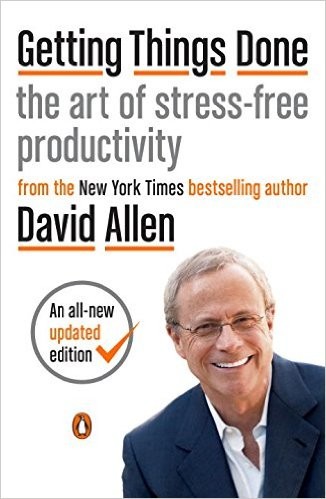
How does Free Time compare to Getting Things Done?
GTD is a personal productivity system for managing tasks and information. Free Time is a business-operations framework for building systems that run without you. They operate at different levels and complement each other.
-
Who should read this book?
Solopreneurs, freelancers, and small business owners who feel like the only person who can keep things running — and who want a practical path out of that dependency.
-
What's the most actionable idea in the book?
The process documentation exercise: pick one repeatable task you do that only you currently do, and write down every step in enough detail that someone else could do it. This single exercise usually surfaces both delegation opportunities and process improvements.