Self-help · Book club
Getting Things Done book club questions
Here are 12 book club questions for Getting Things Done by David Allen, ordered to open easily and end somewhere worth arguing about. Copy them, print them, or bring them up one at a time.
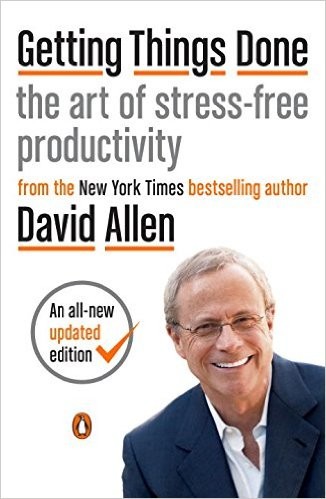
Getting Things Done is David Allen's argument that the main source of stress in modern knowledge work isn't the volume of tasks — it's having commitments that live only in your head.
David Allen · 2001 · 4h 45m
Full summary and key takeaways →The 12 questions
- 1.
How many open loops are currently living in your head rather than a trusted system? What does it cost you to keep them there?
- 2.
Allen says the weekly review is the hinge the entire system swings on. Have you ever tried a weekly review consistently? What broke it down for you?
- 3.
The two-minute rule sounds trivial, but many people resist it. What kinds of small tasks do you tend to defer even when they'd take less than two minutes?
- 4.
Allen distinguishes between next actions and projects. Pick a 'task' on your current list. Is it actually a project in disguise? What's the real next physical action?
- 5.
What's your current capture system? Does it cover all the places commitments arrive in your life, or are there channels that reliably fall through the cracks?
- 6.
The someday-maybe list is where good ideas go when you can't act on them now. What's been on your mental someday-maybe list for years that you've never written down?
- 7.
Allen argues the system works only if you trust it completely, and you only trust it if you review it regularly. Which comes first for you — trust or discipline?
- 8.
GTD is neutral about values. It will help you execute whatever you've decided to work on more reliably. Is there a risk that it makes you more efficient at the wrong things?
- 9.
Allen's altitude model — tasks, projects, goals, purpose — asks you to operate at multiple levels. At which level do you spend almost no time? What would it take to change that?
- 10.
The book was written before smartphones. How has your capture system adapted, or failed to adapt, to the number of inboxes modern life creates?
- 11.
Think of a time when your system broke down and the mental load returned. What triggered it, and how long did it take to recover?
- 12.
Some people find GTD liberating; others find it feels like maintenance overhead that costs more than it saves. Which camp do you fall into, and why?
How to run the discussion
- Pick six to eight, not all of them. An hour of real discussion covers fewer questions than anyone expects, and racing the list is what makes a book club feel like homework.
- Open with what people noticed, not what they concluded. Asking for a verdict first hardens opinions before anyone has heard each other.
- Let the disagreement run. The questions below that split a room are the ones worth the time; the ones everyone answers the same way can be skipped.
- Ask the quiet person a specific question. A direct, narrow question is far easier to answer than an open invitation to contribute.
Themes worth steering toward
If the conversation stalls, these are the threads that usually restart it.
Common questions
What are good book club questions for Getting Things Done?
Here are 12 book club questions for Getting Things Done by David Allen, ordered to open easily and end somewhere worth arguing about. The strongest openers ask what each reader noticed rather than what they concluded, and the discussion usually turns on productivity, organization, stress reduction.
How long should a book club discussion of Getting Things Done last?
Most groups run 60 to 90 minutes of actual discussion. That is roughly six to eight questions, not all of them, so pick the ones that suit your group rather than working down the list in order.
What are the main themes in Getting Things Done?
Productivity, Organization, Stress reduction, Decision-making, Systems thinking. Those are the threads most likely to divide a room, which makes them the useful places to steer a discussion that has gone quiet.
Picking the next one? See books like Getting Things Done or questions for other book club picks.
