Gone, Baby, Gone by Dennis Lehane is a 1998 mystery book about moral ambiguity and impossible choices, child welfare and neglect, working-class community loyalty. The central moral question — whether to rescue a child from her biological mother into a better life, or return her to her right to her own life — is not resolved. The novel earns the right to leave it open.
Summary
A four-year-old girl named Amanda McCready has gone missing from a Dorchester apartment while her mother, Helene, was out at a bar. Patrick Kenzie and Angela Gennaro — private investigators who know the neighborhood in ways the Boston PD does not — are hired to find her. What they find over the course of the investigation rewrites the question entirely: not just where Amanda is, but whether finding her is the right thing to do.
The novel is a procedural in the first half and a moral catastrophe in the second. Lehane uses the missing-child investigation to probe the specific failure of certain adults to be adequate parents, the specific way poverty and addiction are visited on children, and the specific temptation to decide for someone else that you know better than their life allows. The ending asks a question the novel does not answer — and then makes Patrick answer it anyway, in a choice that divides readers sharply.
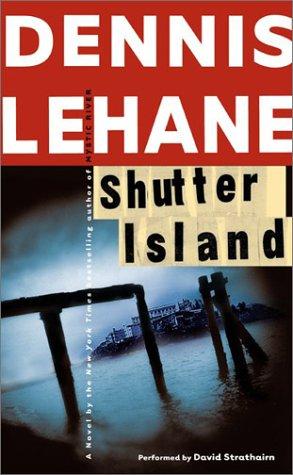
The Kenzie/Gennaro series is Lehane's most accessible work, faster-paced and more genre-conventional than Mystic River or Shutter Island. But Gone, Baby, Gone is the point where the series becomes something more serious than it started as. The Boston settings — the triple-deckers, the Irish bars, the ingrained codes of a neighborhood that punishes outsiders — are specific enough to feel documentary, and the supporting cast of detectives, drug dealers, and community figures is as well-drawn as anything in American crime fiction.
If you are reading Gone, Baby, Gone without the earlier Kenzie/Gennaro novels, the setup is accessible without them. You lose some of the relationship history between Patrick and Angie, but the case stands alone. Readers who are parents, particularly parents of young children, should be warned: this novel is harder to read with that vantage point. The ending is one of the most debated in crime fiction.
Talk to Gone, Baby, Gone like its author wrote you back.
Get the ideas that fit your life — not generic summaries.
- Chat with the book
- Audiobook-style main ideas
- Adapts to your life and goals
- Helps you take action
Key takeaways
- 1.
The central moral question — whether to rescue a child from her biological mother into a better life, or return her to her right to her own life — is not resolved. The novel earns the right to leave it open.
- 2.
Helene McCready is not a monster; she is a specific kind of neglectful parent that the novel insists on rendering with something like accuracy rather than contempt.
- 3.
Patrick Kenzie's final decision is the action of a man choosing principle over consequences, and the last pages ask whether principle is sufficient when consequences are this real.
- 4.
Lehane's Boston is a community where loyalty operates according to its own justice system, separate from the law and sometimes better, sometimes much worse.
- 5.
The police procedural half of the novel is technically excellent, and the transition from procedural to ethical crisis is the sharpest movement in Lehane's work.
- 6.
Amanda McCready's silence throughout the novel is a moral weight — the person most affected has no voice in the decisions made about her life.
- 7.
The book examines what it means to decide someone else's best interests, and whether love or expertise or competence provides adequate justification for that decision.
- 8.
The ending divided critics and readers on publication and continues to divide them. That unresolved tension is not a flaw; it is the point.
Discussion questions
Use these on your own, with a book club, or as chat starters in Superbook. Book club version, ready to copy or print →
- 1.
Patrick's final decision — to do what he believes is right rather than what he was hired to do — is the novel's hinge. Was it the right choice?
- 2.
Is Helene McCready a sympathetic character? Does the novel want you to sympathize with her, judge her, or something else?
- 3.
The people who take Amanda believe they are doing the right thing. Does the novel think they are wrong? Does it think Patrick is right?
- 4.
Ben Affleck's 2007 film adaptation changes a few significant details. If you've seen it, do those changes improve the moral argument or muddy it?
- 5.
The Dorchester setting is integral — it's a place where the official systems (the police, child services) are deeply mistrusted. Does the community's distrust seem reasonable given what the novel shows?
- 6.
Angie and Patrick end up in different places morally after the case is resolved. Was that division between them inevitable, or was it a choice?
- 7.
The novel suggests that knowing what is best for a child and having the right to act on that knowledge are different things. Do you agree?
- 8.
Several characters in the novel operate with a genuine belief that they are protecting children. How does Lehane differentiate between people acting from love and people acting from self-righteousness?
- 9.
Patrick says at the end that he would make the same choice again. Do you believe him? Does the novel believe him?
- 10.
Compared to Mystic River, which Lehane wrote three years later — which novel asks the harder question about what communities owe their most vulnerable members?
- 11.
The title is both literal and a question about identity. What does Amanda's disappearance reveal about what she is to the adults around her?
- 12.
If you were placed in Patrick's exact position at the end — would you make the same call? Why or why not?
Themes
Frequently asked questions
-
Do I need to read the earlier Kenzie/Gennaro books first?
No. The case is self-contained, and Lehane provides enough background on Patrick and Angie's relationship and history to follow the novel without prior reading. The earlier books add texture but are not required.
-
Is there a film adaptation of Gone, Baby, Gone?
Yes. Ben Affleck directed the 2007 film starring Casey Affleck and Michelle Monaghan. It is a strong adaptation, faithful to the novel's moral framework, with a few significant alterations to supporting characters.
-
What is Gone, Baby, Gone about, without major spoilers?
A private investigator is hired to find a missing four-year-old from a Boston neighborhood where he grew up. The investigation reveals that the question of where she is becomes less important than the question of where she should be.
-
Who shouldn't read Gone, Baby, Gone?
Readers who want resolution — this novel ends on a deeply ambiguous moral note that many readers find unbearable rather than satisfying. Also parents of young children who find child-harm narratives too distressing to engage with as fiction.
-
How does this compare to Mystic River?
Gone, Baby, Gone is faster and more conventionally plotted. Mystic River is more formally ambitious and emotionally heavier. Both turn on a terrible moral choice. Most readers find Mystic River the greater achievement; Gone, Baby, Gone is the more gripping read.