Psychology · Book club
Good Inside: A Guide to Becoming the Parent You Want to Be book club questions
Here are 12 book club questions for Good Inside: A Guide to Becoming the Parent You Want to Be by Becky Kennedy, ordered to open easily and end somewhere worth arguing about. Copy them, print them, or bring them up one at a time.
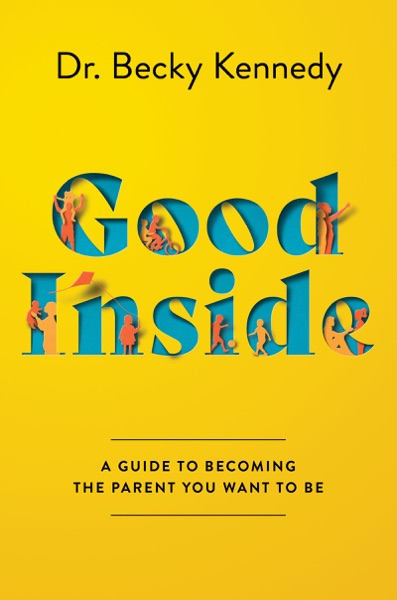
Good Inside is clinical psychologist Becky Kennedy's guide to a parenting philosophy built around one central premise: children are fundamentally good inside, and difficult behaviors are not character flaws or manipulation but signals of unmet needs or underdeveloped skills.
Becky Kennedy · 2022 · 5h 0m
Full summary and key takeaways →The 12 questions
- 1.
Kennedy's premise is that children are good inside and difficult behavior is a signal, not a character flaw. How does this framing change what you do in the moment of conflict with a child?
- 2.
The 'two-things-are-true' approach requires holding a limit and an empathy statement at the same time. Which part is harder for you — the limit or the empathy?
- 3.
Kennedy argues that shame is ineffective as a teaching tool and damages the relationship. Where do you see shame used as a parenting strategy, intentionally or not?
- 4.
The book spends significant space on parental regulation — managing your own reactivity as a parent. What are the situations that most reliably trigger your own escalation?
- 5.
Repair — acknowledging a parenting mistake and reconnecting — is presented as more important than perfection. How comfortable are you with modeling fallibility to children?
- 6.
Kennedy's framework is grounded in attachment theory and developmental psychology. Does the scientific grounding change how you receive the practical advice?
- 7.
The book provides actual scripts for difficult moments. Do you find scripted language helpful or does it feel artificial? What happens when the script doesn't fit the situation?
- 8.
The argument that boundaries and connection reinforce each other contradicts many parents' intuition that they are in tension. Has your own experience supported or challenged this claim?
- 9.
Kennedy's approach requires more emotional energy from the parent in the short run. What would need to change in a typical family day for this approach to be sustainable?
- 10.
The book focuses on parent-child relationships but the framework applies to other authority relationships. Where else could 'children are good inside' apply — with employees, students, or partners?
- 11.
Kennedy is transparent that she is not a perfect parent and that her children still melt down. How does this honesty affect how you receive her advice compared to authors who present themselves as having solved parenting?
- 12.
What is one specific change in how you respond to difficult child behavior that the book suggests, and how plausible does it seem to you in practice?
How to run the discussion
- Pick six to eight, not all of them. An hour of real discussion covers fewer questions than anyone expects, and racing the list is what makes a book club feel like homework.
- Open with what people noticed, not what they concluded. Asking for a verdict first hardens opinions before anyone has heard each other.
- Let the disagreement run. The questions below that split a room are the ones worth the time; the ones everyone answers the same way can be skipped.
- Ask the quiet person a specific question. A direct, narrow question is far easier to answer than an open invitation to contribute.
Themes worth steering toward
If the conversation stalls, these are the threads that usually restart it.
Common questions
What are good book club questions for Good Inside: A Guide to Becoming the Parent You Want to Be?
Here are 12 book club questions for Good Inside: A Guide to Becoming the Parent You Want to Be by Becky Kennedy, ordered to open easily and end somewhere worth arguing about. The strongest openers ask what each reader noticed rather than what they concluded, and the discussion usually turns on parenting, child development, emotional regulation.
How long should a book club discussion of Good Inside: A Guide to Becoming the Parent You Want to Be last?
Most groups run 60 to 90 minutes of actual discussion. That is roughly six to eight questions, not all of them, so pick the ones that suit your group rather than working down the list in order.
What are the main themes in Good Inside: A Guide to Becoming the Parent You Want to Be?
Parenting, Child development, Emotional regulation, Boundaries, Connection. Those are the threads most likely to divide a room, which makes them the useful places to steer a discussion that has gone quiet.
Picking the next one? See books like Good Inside: A Guide to Becoming the Parent You Want to Be or questions for other book club picks.
