Science · Book club
Hackers: Heroes of the Computer Revolution book club questions
Here are 12 book club questions for Hackers: Heroes of the Computer Revolution by Steven Levy, ordered to open easily and end somewhere worth arguing about. Copy them, print them, or bring them up one at a time.
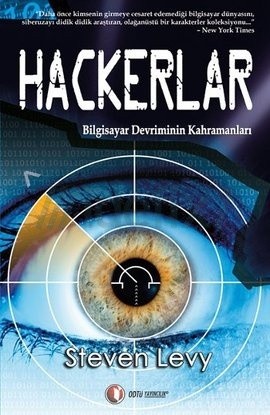
Hackers: Heroes of the Computer Revolution is Steven Levy's account of the community of computer enthusiasts who drove the digital revolution from the late 1950s through the early 1980s — the original hackers of MIT's Tech Model Railroad Club and later AI lab, the hardware hackers of the Bay Area Homebrew Computer Club, and the software entrepreneurs who built the early PC industry.
Steven Levy · 1984 · 9h 45m
Full summary and key takeaways →The 12 questions
- 1.
The hacker ethic holds that information wants to be free. Does that principle still seem right in an era of intellectual property law and cybersecurity concerns?
- 2.
Levy argues that the best hacking is a form of craftsmanship and art. Does that characterization seem accurate to you, or does it romanticize what is ultimately a technical skill?
- 3.
The conflict between the original hacker culture and commercial software began with Gates's 1976 letter asking hobbyists to pay for his BASIC interpreter. Was he wrong?
- 4.
The Homebrew Computer Club was a community of enthusiasts who shared knowledge and schematics freely. Can that kind of community form around any technology, or was there something specific about personal computing in the 1970s?
- 5.
The MIT AI Lab was explicitly anti-hierarchical. What are the benefits and costs of that approach to organizing technical work?
- 6.
The book documents the transition from the hacker era to the commercial era. Was something valuable lost in that transition, or was commercialization the only way to get computers to everyone?
- 7.
Richard Stallman founded the free software movement in response to commercial restrictions on software. How has the free software / open source movement affected how we use technology today?
- 8.
The early hackers were almost entirely young white men. The book barely engages with that demographic uniformity. Does that reflect the time the book was written, or does it miss something important about the culture?
- 9.
Levy writes with obvious admiration for the hackers he profiles. Does that affection seem earned, or does it prevent him from seeing problems in the culture he's documenting?
- 10.
The hacker culture of the 1960s–70s is the direct ancestor of Silicon Valley culture. Which values from the original hacker ethic survived the transition to commercial tech, and which didn't?
- 11.
Do you think the original hacker ethic — open access, information freedom, judgment by technical merit — is compatible with running a large commercial company?
- 12.
The book was written in 1984, before the internet, the World Wide Web, and smartphones. Which subsequent development would most have interested the hackers Levy profiles?
How to run the discussion
- Pick six to eight, not all of them. An hour of real discussion covers fewer questions than anyone expects, and racing the list is what makes a book club feel like homework.
- Open with what people noticed, not what they concluded. Asking for a verdict first hardens opinions before anyone has heard each other.
- Let the disagreement run. The questions below that split a room are the ones worth the time; the ones everyone answers the same way can be skipped.
- Ask the quiet person a specific question. A direct, narrow question is far easier to answer than an open invitation to contribute.
Themes worth steering toward
If the conversation stalls, these are the threads that usually restart it.
Common questions
What are good book club questions for Hackers: Heroes of the Computer Revolution?
Here are 12 book club questions for Hackers: Heroes of the Computer Revolution by Steven Levy, ordered to open easily and end somewhere worth arguing about. The strongest openers ask what each reader noticed rather than what they concluded, and the discussion usually turns on computing culture, hacker ethic, technology history.
How long should a book club discussion of Hackers: Heroes of the Computer Revolution last?
Most groups run 60 to 90 minutes of actual discussion. That is roughly six to eight questions, not all of them, so pick the ones that suit your group rather than working down the list in order.
What are the main themes in Hackers: Heroes of the Computer Revolution?
Computing culture, Hacker ethic, Technology history, Creativity, Counterculture. Those are the threads most likely to divide a room, which makes them the useful places to steer a discussion that has gone quiet.
Picking the next one? See books like Hackers: Heroes of the Computer Revolution or questions for other book club picks.
