How a Second Grader Beats Wall Street by Allan Roth is a 2009 economics book about passive investing, asset allocation, index funds. A three-fund portfolio of low-cost index funds covering US stocks, international stocks, and bonds is sufficient for most investors and outperforms most professional alternatives.
Summary
How a Second Grader Beats Wall Street is Allan Roth's argument that a portfolio simple enough for a child to manage will, over time, outperform the vast majority of professionally managed money. The central device — and it works — is that Roth's second-grade son Kevin built a three-fund portfolio of total market index funds covering US stocks, international stocks, and bonds, and that the logic behind this portfolio is genuinely straightforward once you strip away the industry jargon that makes investing seem complicated.
Roth is a certified financial planner and former CFO with a strong background in behavioral economics, and the book is as much about why people complicate their finances as about what they should do instead. The complexity, he argues, is not accidental: financial product complexity serves the interests of the industry, not the investor. High-fee products, frequent trading recommendations, and elaborate strategies generate revenue for advisors and institutions while systematically underperforming simpler, cheaper alternatives. Kevin's three-fund portfolio avoids all of this at negligible cost.
The behavioral section of the book is strong. Roth covers loss aversion, recency bias, overconfidence, and the tendency to confuse activity with progress — all of which lead investors to deviate from simple plans in ways that reduce returns. He is particularly good on the seduction of complexity: the widespread belief that a more sophisticated strategy must be better, when the evidence consistently shows the opposite. The second-grader framing keeps this argument sharp — if a child can build a portfolio that beats professionals, what exactly is the sophisticated strategy paying for?
The book is aimed at average investors who have been told their situation requires professional management and are paying handsomely for it. Roth's case is that this is rarely true, and that the primary beneficiary of complexity is the financial industry rather than the investor. For someone who wants the minimal effective investment strategy, the three-fund approach described here is as well-supported as anything in the mainstream personal finance literature.
Talk to How a Second Grader Beats Wall Street like its author wrote you back.
Get the ideas that fit your life — not generic summaries.
- Chat with the book
- Audiobook-style main ideas
- Adapts to your life and goals
- Helps you take action
Key takeaways
- 1.
A three-fund portfolio of low-cost index funds covering US stocks, international stocks, and bonds is sufficient for most investors and outperforms most professional alternatives.
- 2.
Financial complexity typically benefits the industry selling it rather than the investor buying it; simplicity is an active choice with strong evidence behind it.
- 3.
Investment costs compound over time just like returns — a 1% annual fee difference translates to a substantial fraction of terminal wealth over a 30-year horizon.
- 4.
Behavioral mistakes — panic selling, chasing returns, overtrading — cost more than suboptimal asset allocation in most real-world investor outcomes.
- 5.
The evidence that active management outperforms low-cost passive indexing over long periods is weak; the evidence that it underperforms, after fees, is strong.
- 6.
Asset allocation — the division between stocks and bonds — drives most of the variance in long-term returns and is the one decision that actually matters.
- 7.
Rebalancing once a year maintains target risk levels and provides a modest mechanical advantage by forcing buying of underperforming assets.
- 8.
The most important financial skill is not picking investments but having the emotional discipline to stay the course through downturns without selling.
Discussion questions
Use these on your own, with a book club, or as chat starters in Superbook. Book club version, ready to copy or print →
- 1.
Roth argues that investment complexity primarily benefits the industry, not investors. What evidence from your own financial life supports or challenges that claim?
- 2.
If a three-fund index portfolio really does beat most professional managers over time, why do you think most investors still pay for active management?
- 3.
Have you ever sold investments during a market downturn and later regretted it? What would have needed to be different to keep you in the market?
- 4.
How simple is your current investment approach? What has made it more complex than necessary, and who benefits from that complexity?
- 5.
Roth emphasizes costs. Do you know the annual expense ratios and total fees across all your investment accounts? How do those fees affect your expected long-term return?
- 6.
The book's central example is a child's portfolio. At what point does investing actually require expertise that a simple three-fund approach can't provide?
- 7.
He covers recency bias — the tendency to expect recent trends to continue. Where have you seen this bias affect your own or others' investment decisions?
- 8.
What would it take for you to fully simplify your portfolio to something like Kevin's three-fund approach? What's the biggest obstacle?
- 9.
Roth makes a distinction between complexity that serves the investor and complexity that serves the advisor. How would you tell the difference in your own situation?
- 10.
How much of your current investment behavior is driven by evidence versus habit, convention, or advice you've never verified?
- 11.
If you could give one piece of investment advice to a young adult starting out, what would it be — and does it align with what Roth argues?
Themes
Frequently asked questions
-
What is the three-fund portfolio in this book?
Three low-cost index funds: one covering the total US stock market, one covering international stocks, and one covering bonds. The allocation between them is adjusted based on the investor's time horizon and risk tolerance. The funds are held and rebalanced annually with minimal intervention.
-
Is this book suitable for investment beginners?
Yes, it's one of the better starting points available. Roth explains concepts clearly without dumbing them down. The child framing makes the core idea memorable, and the behavioral chapters are accessible to readers with no prior finance background.
-
How does this compare to The Bogleheads' Guide to Investing?
Both recommend low-cost passive indexing. The Bogleheads' Guide is more comprehensive and covers a wider range of situations. Roth's book is shorter, more opinionated, and stronger on the behavioral side — the reasons people deviate from simple strategies even when they know better.
-
Does the three-fund approach work for someone close to retirement?
The structure works; the specific allocations change. Closer to retirement, the bond allocation typically increases significantly to reduce sequence-of-returns risk. Roth covers this, though readers near retirement may want more detailed treatment of withdrawal strategies from other sources.
-
Is the book too basic for experienced investors?
Possibly, if you've already read widely in the passive investing literature. The core arguments will be familiar from Bogle, Malkiel, and others. The book's distinctive value is the clarity of the behavioral argument and the accessibility of the three-fund framework for readers new to the topic.
Similar books
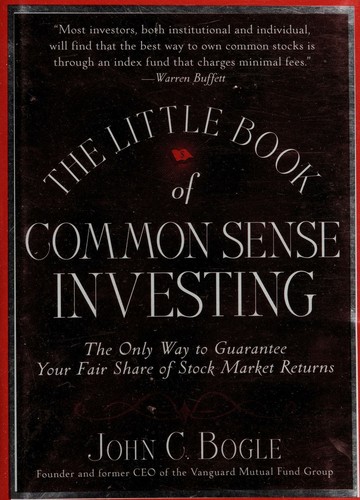
The Little Book of Common Sense Investing
John C. Bogle
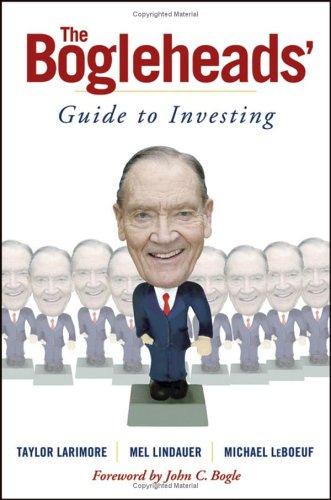
The Bogleheads' Guide to Investing
Taylor Larimore
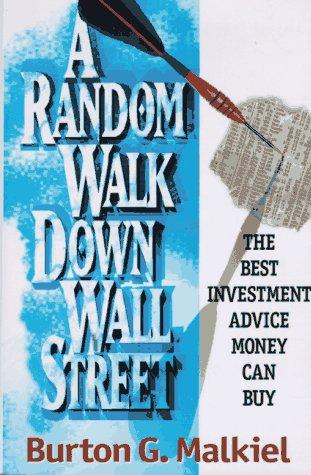
A Random Walk Down Wall Street
Burton G. Malkiel
The Simple Path to Wealth
JL Collins
