In the Kingdom of Ice: The Grand and Terrible Polar Voyage of the USS Jeannette by Hampton Sides is a 2014 history book about exploration, survival, leadership. The belief in an 'open polar sea' beyond the ice was not fringe pseudoscience in 1879 — it was a respectable geographic theory that sent real ships and real men to their deaths.
Summary
In 1879, the USS Jeannette sailed from San Francisco into the Arctic under the command of Lieutenant George Washington De Long, on a mission to reach the North Pole. The expedition was backed by newspaper mogul James Gordon Bennett Jr., fueled by the era's romantic belief that a warm open sea lay beyond the polar ice, and crewed by men who knew the odds were not in their favor. Hampton Sides reconstructs what happened to them with the pacing of a thriller and the research depth of serious history.
The ship became trapped in pack ice within weeks of entering Arctic waters. For the next twenty-two months, the Jeannette drifted with the ice, unable to break free, slowly being crushed. Sides traces the daily life aboard the icebound vessel — the boredom, the frostbite, the disciplinary tensions, the scientific observations De Long insisted on keeping — while building a portrait of a captain who held his crew together through sheer force of will and institutional faith in the navy's chain of command.
When the Jeannette finally sank in June 1881, the crew faced a march across the frozen sea toward the Siberian coast, dragging heavy lifeboats. The journey killed most of them. The survivors' eventual rescue — and the discovery of the dead — forms the book's devastating final act. Sides is meticulous about the science of Arctic survival and clear-eyed about the expedition's larger meaning: it was a disaster that also contributed to understanding of Arctic currents and ocean drift in ways that benefited the expeditions that followed.
The book works because Sides resists the temptation to make De Long a hero or a fool. He was a disciplined, earnest officer executing a mission that the state of geographic knowledge in 1879 made plausible. The failure was partly his, partly the era's, and partly the Arctic's. Readers who enjoyed Endurance or Into Thin Air will find the same qualities here: meticulous research, real human stakes, and a landscape that makes ordinary competence insufficient.
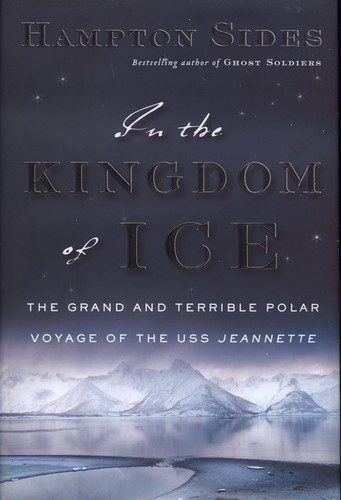
Talk to In the Kingdom of Ice: The Grand and Terrible Polar Voyage of the USS Jeannette like its author wrote you back.
Get the ideas that fit your life — not generic summaries.
- Chat with the book
- Audiobook-style main ideas
- Adapts to your life and goals
- Helps you take action
Key takeaways
- 1.
The belief in an 'open polar sea' beyond the ice was not fringe pseudoscience in 1879 — it was a respectable geographic theory that sent real ships and real men to their deaths.
- 2.
De Long's leadership was defined less by inspiration than by discipline: he maintained naval routines, kept detailed logs, and insisted on scientific observation even as the ship drifted helplessly.
- 3.
Pack ice is not a static obstacle. The Jeannette's drift across the Arctic — invisible at the time — was later recognized as a major discovery about ocean current patterns.
- 4.
Media sponsorship of exploration created perverse incentives. Bennett funded the expedition partly to generate sensational newspaper copy, which shaped the mission's risk tolerance.
- 5.
The march across the ice after the sinking revealed how quickly hierarchies and plans dissolve under physical extremity. The groups that survived were shaped by contingency as much as leadership.
- 6.
Survival literature consistently shows that the will to document — to keep journals, to take observations — serves a psychological function in crisis: it preserves the sense that the experience has meaning.
- 7.
The Jeannette disaster contributed indirectly to Nansen's successful Fram expedition, which used deliberate ice-drift as a navigation strategy after debris from the Jeannette washed ashore in Greenland.
- 8.
The gap between what explorers knew, what they believed, and what they were willing to risk was not a failure of intelligence. It was a feature of the era's epistemology about the natural world.
Discussion questions
Use these on your own, with a book club, or as chat starters in Superbook. Book club version, ready to copy or print →
- 1.
De Long knew the odds were poor before departure. What draws people — then and now — to missions they know may kill them, and how do we distinguish courage from recklessness?
- 2.
Bennett funded the voyage partly for the press value. How does the presence of a media sponsor change the risk calculus of an expedition — or a corporate project?
- 3.
The crew maintained naval routines, log-keeping, and rank structure for over two years trapped in ice. What does this tell us about the function of institutions under extreme stress?
- 4.
The 'open polar sea' theory was held by credible scientists. How do we recognize when a widely accepted belief is leading us toward catastrophe rather than discovery?
- 5.
Which member of the crew's story affected you most, and what does that tell you about what qualities you value in people under pressure?
- 6.
The survivors and the dead were separated partly by chance. How does Sides handle the moral weight of survival when it wasn't earned through superior virtue or skill?
- 7.
Nansen later used the Jeannette's drift data to plan a successful expedition. What does it say about progress in high-stakes endeavors that failure is often the prerequisite for the next success?
- 8.
De Long kept meticulous records almost to the end. Do you think the act of documentation changes how people experience crisis, or does it just leave evidence for those who come after?
- 9.
The rescue of survivors and recovery of the dead became a national obsession. What was the American public looking for in this story, and what do we look for in exploration disasters today?
- 10.
Sides draws explicit parallels between the Jeannette era and contemporary ambitions — space travel, deep-sea exploration. Are the parallels fair, and what should we take from them?
- 11.
How does In the Kingdom of Ice compare to other survival narratives you've read? What does the Arctic setting add or change?
- 12.
The book ends with the Jeannette's influence on Nansen. Does knowing the disaster contributed to eventual success change how you think about the men who died on the march?
Themes
Frequently asked questions
-
Is In the Kingdom of Ice worth reading?
Yes, particularly if you enjoy narrative nonfiction that reads like adventure fiction. Sides' research is thorough, the pacing is controlled, and the book avoids the sentimentality that makes some survival narratives feel manipulative. The Arctic setting is rendered with real precision.
-
How long does it take to read In the Kingdom of Ice?
Around seven hours at average reading pace for the 464-page book. The early sections are dense with historical context, but the middle sections — once the ship is locked in ice — accelerate significantly.
-
What is the main story of In the Kingdom of Ice?
The 1879–1881 voyage of the USS Jeannette, which attempted to reach the North Pole, became trapped in Arctic pack ice for nearly two years, and then sank, killing most of the crew during the subsequent march across the ice toward Siberia.
-
Who should read this book?
Readers who enjoyed Endurance, Into Thin Air, or Unbroken will find the same qualities here. It also works well for readers interested in the history of exploration, the Gilded Age, or the science of Arctic oceanography.
-
What is the most surprising fact in the book?
That wreckage from the Jeannette eventually washed ashore in Greenland, proving the existence of a trans-Arctic current. Nansen used this data to plan the Fram expedition — meaning the Jeannette's disaster directly enabled the first deliberate ice-drift voyage.
Similar books
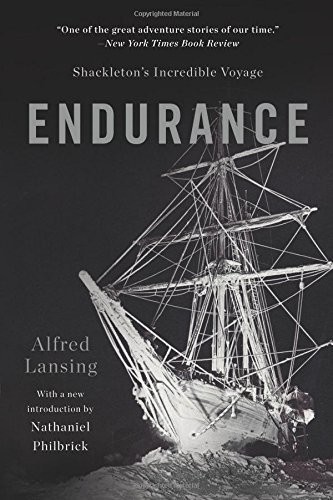
Endurance: Shackleton's Incredible Voyage
Alfred Lansing
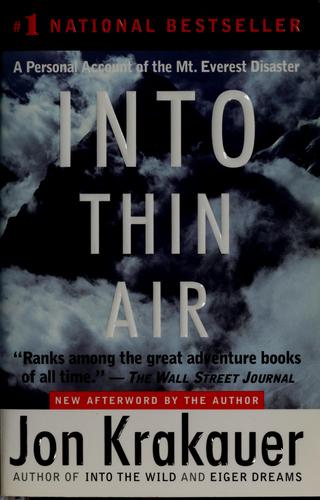
Into Thin Air
Jon Krakauer

The Lost City of Z
David Grann
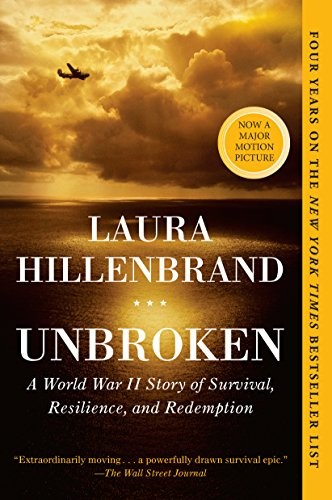
Unbroken: A World War II Story of Survival, Resilience, and Redemption
Laura Hillenbrand
