In the Lake of the Woods by Tim O'Brien is a 1994 mystery book about war trauma and its concealment, truth and unknowing, love and destruction. The novel's refusal to resolve its central mystery is a formal argument: some knowledge is structurally unavailable, and pretending otherwise is a form of lying.
Summary
In the Lake of the Woods begins with a political collapse and a disappearance. John Wade — a Vietnam veteran and Minnesota politician — has just suffered a devastating primary defeat after his role in the My Lai massacre is exposed. He and his wife Kathy retreat to a remote cabin on a Minnesota lake, and then Kathy vanishes. No body. No clear suspect. No resolution. The novel spends its length assembling evidence — testimony from witnesses, extracts from Wade's history, speculative hypotheses — without ever confirming what happened.
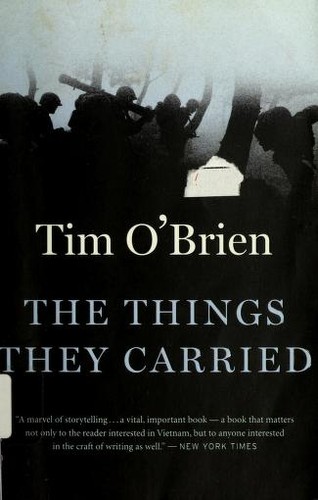
This is a mystery novel that refuses to solve its mystery, and that refusal is the point. O'Brien, working in the territory he explored in The Things They Carried, is interested in what cannot be known — about a marriage, about a man, about what war does to people who survive it and carry it home. Wade's history at My Lai was hidden for years behind a carefully maintained persona, and the novel argues that this concealment wasn't just strategic but psychological: he didn't fully know what he had done, or couldn't bear knowing it. The relationship between what he did in Vietnam and what may have happened at the lake is the novel's central question, and O'Brien will not answer it.
Structurally, the book is fragmented and formally experimental in ways that still feel fresh. Chapters of third-person narrative are interspersed with "Evidence" chapters — real and invented sources, footnotes that read like academic apparatus, speculative hypotheses that contradict each other. O'Brien puts himself in the novel explicitly, as an author figure trying to reconstruct what happened and acknowledging the limits of his access to truth. This is uncomfortable and deliberate. The form enacts the theme: we can gather evidence and still not know.
In the Lake of the Woods is a more demanding and rewarding book than most books shelved with it in the thriller section. It will frustrate readers who want a solution. It rewards readers who can engage with form as meaning — who understand that a mystery without an answer is not a failed mystery but a different kind of argument. The closest comparisons are not to crime fiction but to literary novels about history and memory: the forensic assemblage of evidence about something that remains finally opaque.

Talk to In the Lake of the Woods like its author wrote you back.
Get the ideas that fit your life — not generic summaries.
- Chat with the book
- Audiobook-style main ideas
- Adapts to your life and goals
- Helps you take action
Key takeaways
- 1.
The novel's refusal to resolve its central mystery is a formal argument: some knowledge is structurally unavailable, and pretending otherwise is a form of lying.
- 2.
Wade's capacity for concealment — of his Vietnam history, of his own psychology — is presented as both a survival strategy and a disease that spreads into his marriage.
- 3.
O'Brien's use of competing hypotheses for what happened at the lake asks the reader to act as juror rather than consumer of a predetermined verdict.
- 4.
The footnotes and 'Evidence' chapters destabilize the fiction/nonfiction boundary in ways that implicate the reader: we construct John Wade from partial documents the way we construct anyone we think we know.
- 5.
The My Lai massacre material is presented without melodrama — its matter-of-factness is more disturbing than dramatization would be.
- 6.
The love between John and Kathy is rendered specifically enough to make both the marriage's warmth and its failure plausible, which is harder than it looks.
- 7.
O'Brien's narrative presence — visible in the text as an author figure — prevents the false comfort of objective narration and holds the reader responsible for their own interpretations.
- 8.
The lake itself functions structurally as a figure for the unconscious: deep, dark, and holding what cannot be retrieved.
Discussion questions
Use these on your own, with a book club, or as chat starters in Superbook. Book club version, ready to copy or print →
- 1.
The novel refuses to reveal what happened to Kathy. How did you experience that refusal? Did it feel like a failure or a statement?
- 2.
O'Brien presents multiple hypotheses, including the possibility that Wade killed his wife. How much weight did you assign to each, and what evidence drove your intuition?
- 3.
The My Lai material is woven into a novel about a missing person. Is that juxtaposition earned, or does the massacre function as a convenient explanation for everything that follows?
- 4.
Wade's habit of concealment is portrayed as rooted in childhood trauma as much as in Vietnam. Does the novel apportion causes fairly, or does it let the war carry too much weight?
- 5.
O'Brien appears in his own novel as an investigator. How does his presence change the reading experience? Did you find it intrusive or illuminating?
- 6.
The novel compared to The Things They Carried: which do you think is more formally accomplished? More emotionally effective?
- 7.
Kathy's interiority is substantially less accessible than Wade's — we see her mainly through his perspective and through witnesses. Is that a structural limitation or a deliberate choice?
- 8.
The 'Evidence' chapters include invented documents (diary entries, testimonies) alongside real ones. How did that blurring of source reliability affect how you read them?
- 9.
The novel ends on a speculative vision of Kathy alive, elsewhere — clearly one hypothesis among many. Did that ending comfort or disturb you?
- 10.
In the Lake of the Woods is about the unknowability of another person, especially one you are intimate with. Do you think intimacy actually makes people more or less knowable?
- 11.
The political context — Wade's exposure and defeat — frames the personal mystery. Does the novel have a view on political ambition and its relationship to selfhood?
- 12.
How does this book compare to other literary thrillers — mysteries that use the form to make arguments rather than to solve puzzles?
- 13.
Tim O'Brien is one of the canonical Vietnam War writers. Does knowing that shape how you read this novel's treatment of My Lai and its aftermath?
Themes
Frequently asked questions
-
Does In the Lake of the Woods ever reveal what happened to Kathy?
No. The novel explicitly refuses to resolve its central mystery. O'Brien presents competing hypotheses through an Evidence structure but does not endorse any of them. This is a deliberate formal and thematic choice, not an evasion.
-
Is this a genre thriller or literary fiction?
Literary fiction using the thriller structure. The mystery setup — missing person, possible murder, investigation — is real, but the purpose is thematic rather than procedural. Readers expecting a conventional solution will be frustrated; readers engaging with form as meaning will find it profound.
-
How does In the Lake of the Woods relate to The Things They Carried?
They share themes and formal approaches — both blur fiction and nonfiction, both deal with what war does to people who carry it home, and both are interested in the limits of what can be known about experience. In the Lake of the Woods is more novel-shaped; The Things They Carried is more fragmented and explicitly metafictional.
-
Is the My Lai massacre material difficult to read?
Yes, though not because it is dramatized graphically. O'Brien's matter-of-fact presentation of the massacre is, if anything, more disturbing than violence depicted for effect. Readers who find documentation of real atrocities distressing should know this is a significant portion of the novel.
-
Who shouldn't read this book?
Anyone who needs narrative resolution. The novel's commitment to unknowing is total and sustained. Also readers who find metafictional intrusions (the author appearing in his own text) irritating rather than illuminating.