Psychology · Book club
Irrationality book club questions
Here are 11 book club questions for Irrationality by Stuart Sutherland, ordered to open easily and end somewhere worth arguing about. Copy them, print them, or bring them up one at a time.
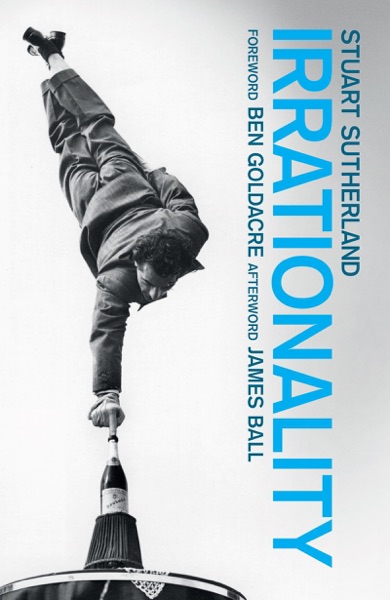
Irrationality is Stuart Sutherland's rigorous and often mordant survey of the ways human beings consistently fail to reason well.
Stuart Sutherland · 1992 · 6h 0m
Full summary and key takeaways →The 11 questions
- 1.
Sutherland argues that knowing about cognitive biases does not reliably help you avoid them. Does this match your experience of trying to think more carefully?
- 2.
The availability heuristic distorts our sense of which risks are large. Which risks do you personally overestimate because of vivid news coverage, and which might you underestimate?
- 3.
Milgram's obedience findings disturbed the postwar psychological world. How do they apply to authority structures in organizations, families, or institutions you know?
- 4.
Sutherland is scathing about the irrationality of doctors and medical judgment. Has this finding become more or less relevant as evidence-based medicine has developed?
- 5.
The sunk cost fallacy is one of the most economically costly biases. Can you identify a decision in your professional or personal life where you continued largely because of past investment?
- 6.
Confirmation bias is deeply tied to identity. At what point does holding a view firmly become irrational rather than appropriately confident?
- 7.
Sutherland wrote Irrationality before social media, algorithmic news feeds, and the attention economy. How do contemporary information environments amplify the failures he describes?
- 8.
The book implicitly argues that better policy and institutional design should compensate for individual cognitive failure. What are the limits of that approach?
- 9.
Why do you think books like Thinking, Fast and Slow became much more famous than Irrationality, which anticipated many of the same arguments and did so more honestly about the limits of self-correction?
- 10.
Sutherland includes a chapter on how irrationality affects his own life, giving personal examples. Does that honesty make the argument more credible, or does it undermine his authority as an analyst?
- 11.
Which cognitive failure described in the book do you most recognize in yourself, and what circumstances make it most likely to occur?
How to run the discussion
- Pick six to eight, not all of them. An hour of real discussion covers fewer questions than anyone expects, and racing the list is what makes a book club feel like homework.
- Open with what people noticed, not what they concluded. Asking for a verdict first hardens opinions before anyone has heard each other.
- Let the disagreement run. The questions below that split a room are the ones worth the time; the ones everyone answers the same way can be skipped.
- Ask the quiet person a specific question. A direct, narrow question is far easier to answer than an open invitation to contribute.
Themes worth steering toward
If the conversation stalls, these are the threads that usually restart it.
Common questions
What are good book club questions for Irrationality?
Here are 11 book club questions for Irrationality by Stuart Sutherland, ordered to open easily and end somewhere worth arguing about. The strongest openers ask what each reader noticed rather than what they concluded, and the discussion usually turns on cognitive bias, decision-making, rationality.
How long should a book club discussion of Irrationality last?
Most groups run 60 to 90 minutes of actual discussion. That is roughly six to eight questions, not all of them, so pick the ones that suit your group rather than working down the list in order.
What are the main themes in Irrationality?
Cognitive bias, Decision-making, Rationality, Human error, Judgment. Those are the threads most likely to divide a room, which makes them the useful places to steer a discussion that has gone quiet.
Picking the next one? See books like Irrationality or questions for other book club picks.
