Science · Book club
Life 3.0: Being Human in the Age of Artificial Intelligence book club questions
Here are 12 book club questions for Life 3.0: Being Human in the Age of Artificial Intelligence by Max Tegmark, ordered to open easily and end somewhere worth arguing about. Copy them, print them, or bring them up one at a time.
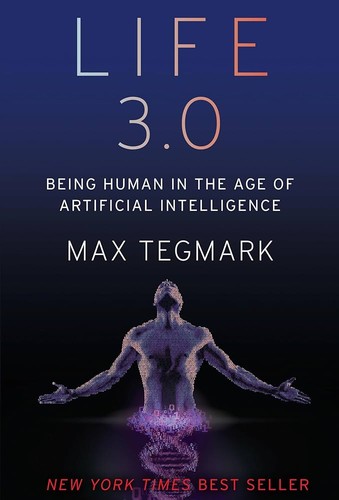
Life 3.0 is Max Tegmark's accessible survey of the questions raised by the prospect of human-level and superhuman artificial intelligence: What are the plausible paths to AGI?
Max Tegmark · 2017 · 8h 0m
Full summary and key takeaways →The 12 questions
- 1.
Tegmark's Life 1.0 / 2.0 / 3.0 taxonomy is a frame for thinking about AI. Is it a useful frame, and does it obscure anything important?
- 2.
The fictional prologue depicts a company that develops AGI secretly. Is that scenario realistic, and what should the response be if it happened?
- 3.
How does the AI risk question compare to other large-scale risks — climate change, nuclear weapons, pandemics — in terms of how tractable it is and how urgently it should be addressed?
- 4.
Tegmark argues that consciousness is a property of information processing. Does that seem right? What would follow if it were true?
- 5.
The book distinguishes narrow AI (current systems) from AGI (human-level general intelligence). How confident are you that that distinction is well-defined?
- 6.
He presents economic disruption from AI as a near-term concern separate from the existential risk questions. Which concerns you more, and why?
- 7.
What is your reaction to the range of scenarios Tegmark presents — from utopian to catastrophic? Do you find the full range plausible, or do some scenarios seem far-fetched?
- 8.
Autonomous weapons are already being developed by multiple countries. What international frameworks might govern them, and how realistic is it to negotiate them?
- 9.
Tegmark cofounded the Future of Life Institute and is an insider to the AI safety community. Does that context affect how you read his presentation of the issues?
- 10.
He argues that what matters is who develops advanced AI and under what incentive structures. Do you think those decisions are made by governments, companies, or researchers?
- 11.
How does Life 3.0 compare to Bostrom's Superintelligence in its conclusions and its tone?
- 12.
If you could change one thing about current AI development practices based on reading this book, what would it be?
How to run the discussion
- Pick six to eight, not all of them. An hour of real discussion covers fewer questions than anyone expects, and racing the list is what makes a book club feel like homework.
- Open with what people noticed, not what they concluded. Asking for a verdict first hardens opinions before anyone has heard each other.
- Let the disagreement run. The questions below that split a room are the ones worth the time; the ones everyone answers the same way can be skipped.
- Ask the quiet person a specific question. A direct, narrow question is far easier to answer than an open invitation to contribute.
Themes worth steering toward
If the conversation stalls, these are the threads that usually restart it.
Common questions
What are good book club questions for Life 3.0: Being Human in the Age of Artificial Intelligence?
Here are 12 book club questions for Life 3.0: Being Human in the Age of Artificial Intelligence by Max Tegmark, ordered to open easily and end somewhere worth arguing about. The strongest openers ask what each reader noticed rather than what they concluded, and the discussion usually turns on artificial intelligence, existential risk, ai safety.
How long should a book club discussion of Life 3.0: Being Human in the Age of Artificial Intelligence last?
Most groups run 60 to 90 minutes of actual discussion. That is roughly six to eight questions, not all of them, so pick the ones that suit your group rather than working down the list in order.
What are the main themes in Life 3.0: Being Human in the Age of Artificial Intelligence?
Artificial intelligence, Existential risk, AI safety, Future, Consciousness. Those are the threads most likely to divide a room, which makes them the useful places to steer a discussion that has gone quiet.
Picking the next one? See books like Life 3.0: Being Human in the Age of Artificial Intelligence or questions for other book club picks.
