Business · Book club
Managing book club questions
Here are 11 book club questions for Managing by Harold Geneen, ordered to open easily and end somewhere worth arguing about. Copy them, print them, or bring them up one at a time.
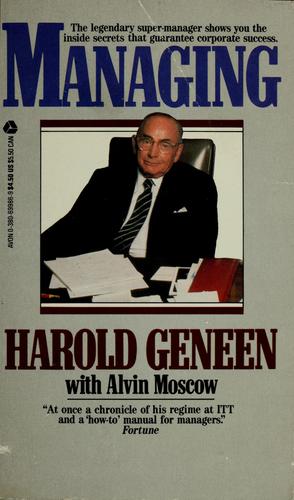
Managing is Harold Geneen's account of the principles that governed his twenty-year tenure as CEO of ITT, which he transformed from a modest international telephone company into one of the largest conglomerates in the world.
Harold Geneen · 1984 · 5h 0m
Full summary and key takeaways →The 11 questions
- 1.
Geneen's distinction between facts as they seem and facts as they are is easy to accept in principle and hard to apply in practice. Where in your own work do you most often mistake category two for category three?
- 2.
His Brussels meetings ran for days and were famously intense. What does that investment of time signal about what Geneen actually believed mattered in management?
- 3.
Geneen says bad news should travel faster than good. What organizational structures or incentives in places you know work against that principle?
- 4.
He is dismissive of management theory and business school case methods. Is that dismissiveness a strength — focus on empirical reality — or a weakness that prevented him from learning from others' experience?
- 5.
The conglomerate model ITT represented has mostly been abandoned. Does that outcome retroactively undermine Geneen's management principles, or were the principles sound and the strategy separate?
- 6.
Geneen describes himself as absolutely committed to results above everything else. What does an organization lose when results become the only measure of performance?
- 7.
His approach to operating reviews — personal interrogation of every manager on every significant number — is not replicable by most leaders. What can be extracted from it that scales?
- 8.
Geneen believes the best managers learned primarily from doing. How much of your own management development has come from formal training versus the experience of actually running things?
- 9.
He talks extensively about accountability. How do you distinguish genuine accountability — consequences attached to outcomes — from performative accountability, where the process happens but consequences don't follow?
- 10.
Geneen ran ITT as a highly centralized operation despite its size and diversity. What are the limits of centralization, and how would you know when you've exceeded them?
- 11.
The book is an autobiography-as-management-text. How does that format affect its reliability? What would you want to hear from the people who reported to Geneen?
How to run the discussion
- Pick six to eight, not all of them. An hour of real discussion covers fewer questions than anyone expects, and racing the list is what makes a book club feel like homework.
- Open with what people noticed, not what they concluded. Asking for a verdict first hardens opinions before anyone has heard each other.
- Let the disagreement run. The questions below that split a room are the ones worth the time; the ones everyone answers the same way can be skipped.
- Ask the quiet person a specific question. A direct, narrow question is far easier to answer than an open invitation to contribute.
Themes worth steering toward
If the conversation stalls, these are the threads that usually restart it.
Common questions
What are good book club questions for Managing?
Here are 11 book club questions for Managing by Harold Geneen, ordered to open easily and end somewhere worth arguing about. The strongest openers ask what each reader noticed rather than what they concluded, and the discussion usually turns on management, leadership, business performance.
How long should a book club discussion of Managing last?
Most groups run 60 to 90 minutes of actual discussion. That is roughly six to eight questions, not all of them, so pick the ones that suit your group rather than working down the list in order.
What are the main themes in Managing?
Management, Leadership, Business performance, Facts and accountability, Corporate culture. Those are the threads most likely to divide a room, which makes them the useful places to steer a discussion that has gone quiet.
Picking the next one? See books like Managing or questions for other book club picks.
