Talk to Managing like its author wrote you back.
Get the ideas that fit your life — not generic summaries.
- Chat with the book
- Audiobook-style main ideas
- Adapts to your life and goals
- Helps you take action
Managing, in detail
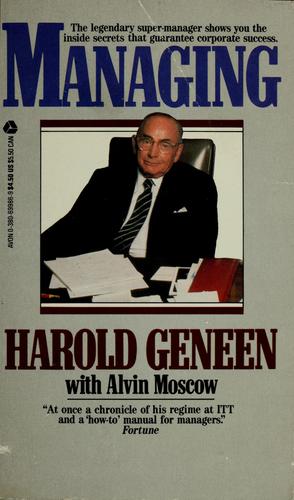
Managing is Harold Geneen's account of the principles that governed his twenty-year tenure as CEO of ITT, which he transformed from a modest international telephone company into one of the largest conglomerates in the world. Geneen ran ITT from 1959 to 1977, growing revenues from $765 million to $17 billion through a combination of aggressive acquisition, strict financial controls, and a management culture built on what he called "unshakeable facts."
Geneen's central distinction is between facts as managers wish they were, facts as they appear to be, and facts as they actually are. Most organizational failure, in his view, comes from people working with the first or second category while believing they have the third. His solution was the monthly management meeting in Brussels where all ITT division heads and their staffs would assemble for extended sessions — sometimes days — in which every business was reviewed against its numbers with Geneen himself asking questions until he was satisfied the reported facts matched reality. The meetings were legendary for their intensity and for Geneen's refusal to accept hedged answers.
The book is direct about what Geneen believes management actually requires: total immersion, continuous attention, and a willingness to confront bad news faster than it would naturally surface. He is contemptuous of management theories and frameworks, arguing that managing is an empirical discipline that must be learned from doing and that no amount of reading cases at business school substitutes for the actual experience of running a business. He quotes himself more than he cites anyone else.
Geneen's methods are not universally applicable, and he acknowledges this. The conglomerate structure he built has largely been abandoned by the corporate world as evidence accumulated that diversified conglomerates trade at a discount. His approach to management was also intensely personal and dependent on his own capacity to absorb enormous quantities of operating data — not a model that scales beyond a particular kind of exceptional individual. But as a document of how one extremely capable manager thought about the craft of running an organization, it remains unusually candid and specific.
The big ideas
- 1.
The most important task of a manager is getting the facts — not the comfortable version, not the polished version, but the actual situation as it exists. Most organizations systematically obscure this.
- 2.
Bad news should travel faster than good news. A culture where managers delay reporting problems until they have solutions is a culture where problems compound before leadership knows they exist.
- 3.
Numbers are a language for facts but not facts themselves. Geneen insisted on understanding the business behind the numbers rather than managing the numbers directly.
