Millionaire by Thirty by Douglas R. Andrew is a 2008 economics book about wealth building, personal finance, cash value life insurance. Starting to build wealth at twenty-two rather than thirty-five is not a minor advantage — the compounding difference over a working lifetime is enormous.
Summary
Millionaire by Thirty is Douglas R. Andrew's guide for young adults who want to build substantial wealth before age thirty. Andrew, a financial strategist who built a following around unconventional approaches to wealth accumulation, argues that the conventional advice given to young people — maximize your 401(k), pay off debt as fast as possible, buy a house — is often suboptimal or even counterproductive. His alternative framework centers on liquidity, utilization, and rate of return rather than contribution amounts alone.
The central and most controversial claim is Andrew's advocacy for cash value life insurance as a savings and wealth-building vehicle. He argues that properly structured whole life insurance policies provide tax-advantaged growth, guaranteed returns, and liquidity that 401(k)s and IRAs do not. This claim is disputed. Most mainstream personal finance writers, including advocates of index fund investing, argue that the internal costs of whole life insurance offset its tax advantages and that low-cost index funds in tax-advantaged accounts produce better outcomes for most people. Readers should weigh this section against competing perspectives.
Beyond the insurance argument, Andrew covers more widely accepted principles. He emphasizes the importance of building an emergency fund before aggressive investing, distinguishes between assets that generate income and assets that merely appreciate, and argues for multiple income streams rather than reliance on a single salary. His discussion of compound interest and the mathematical advantage of starting young is accurate and well-illustrated. A dollar saved at twenty-two is worth more at sixty than ten dollars saved at forty-five.
The book's intended audience is genuinely young people just beginning their financial lives, and the tone is direct and motivating without being preachy. The weakest sections are those where Andrew promotes specific financial products, which readers should approach skeptically. The stronger sections address basic wealth-building principles that are hard to argue with: spend less than you earn, invest early, diversify income sources, and understand the difference between appearing wealthy and actually building net worth.

Talk to Millionaire by Thirty like its author wrote you back.
Get the ideas that fit your life — not generic summaries.
- Chat with the book
- Audiobook-style main ideas
- Adapts to your life and goals
- Helps you take action
Key takeaways
- 1.
Starting to build wealth at twenty-two rather than thirty-five is not a minor advantage — the compounding difference over a working lifetime is enormous.
- 2.
True financial independence requires distinguishing between assets that generate cash flow and assets that simply increase in nominal value.
- 3.
Liquidity matters. An investment you can't access without penalty or tax consequence is less valuable than it appears, particularly in the first decades of life.
- 4.
Andrew advocates for cash value life insurance as a tax-advantaged savings vehicle — a claim that is contested by most mainstream personal finance writers and requires careful independent evaluation.
- 5.
Multiple income streams reduce vulnerability to job loss and create optionality that a single salary cannot. Building them early compounds their value over time.
- 6.
The psychological habits of wealth — delayed gratification, distinguishing needs from wants, tracking where money actually goes — matter as much as the specific vehicles you choose.
- 7.
Paying off low-interest debt aggressively while foregoing investment returns can be mathematically suboptimal. Interest rate comparisons should drive the decision, not an emotional aversion to debt.
- 8.
Financial literacy is a skill, not a personality trait. Understanding how money works is learnable, and the earlier it's learned the more impact it has.
Discussion questions
Use these on your own, with a book club, or as chat starters in Superbook. Book club version, ready to copy or print →
- 1.
Andrew argues that conventional advice for young people — maximize your 401(k), pay off all debt — is often wrong. Do you find his counterarguments persuasive or motivated by product promotion?
- 2.
What financial habits did you develop in your twenties that turned out to be correct, and which turned out to be wrong?
- 3.
How do you evaluate the claim that cash value life insurance is a better savings vehicle than index funds in tax-advantaged accounts? What evidence would change your mind?
- 4.
Andrew's central premise is that young people have the most to gain from starting early. What actually prevented you or people you know from building wealth in their twenties?
- 5.
What's the difference between building net worth and looking financially successful? Where have you seen that distinction matter in practice?
- 6.
If you were designing a basic financial curriculum for a twenty-two-year-old starting their first job, what would the three most important concepts be?
- 7.
The book was published in 2008, just before the financial crisis. How did that event affect the assumptions underlying Andrew's advice?
- 8.
How do you think about the trade-off between optimizing financial returns in your twenties and using that time and money for experiences, education, or risks that might not pay off financially?
- 9.
Andrew argues for multiple income streams. How realistic is that for people in demanding careers or with limited time? What's the minimum viable version of that idea?
- 10.
Which piece of financial advice from your twenties turned out to be most wrong, and where did it come from?
- 11.
Andrew distinguishes between assets and liabilities in a specific way. How does your current major financial commitment — housing, car, education debt — fit into that distinction?
- 12.
What would it mean to you, practically speaking, to have financial independence by thirty? What would you do differently?
Themes
Frequently asked questions
-
Is Millionaire by Thirty worth reading?
With caveats. The sections on compounding, multiple income streams, and financial habits are useful. The sections advocating for cash value life insurance require skepticism and independent research. Most fee-only financial planners reach different conclusions on that specific point.
-
What's the main controversy about this book?
Andrew's advocacy for whole life insurance as a primary savings vehicle. Critics argue the internal costs outweigh the tax benefits for most people, and that he has a financial interest in promoting insurance products. This doesn't invalidate the rest of the book but it's a reason to read critically.
-
Can you actually become a millionaire by thirty?
With high income, low expenses, aggressive investing, and no major setbacks, yes. For most people, the book's title is aspirational rather than literal. The more modest goal — building real financial habits and net worth in your twenties — is achievable and valuable.
-
Who should read this book?
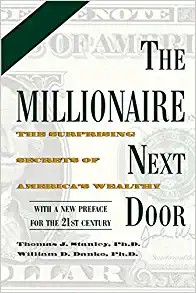
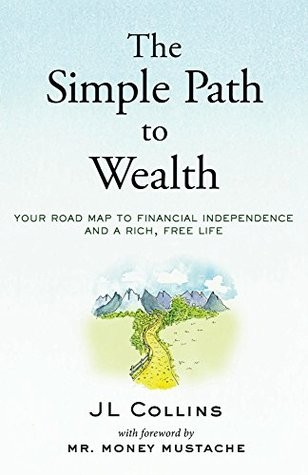
Young adults just starting their financial lives who want a readable overview of wealth-building principles. Read it alongside a mainstream personal finance book like The Simple Path to Wealth or The Millionaire Next Door for balance.
-
How long is it?
About 250 pages. Most readers finish it in a few sittings. The writing is accessible and aimed at readers without prior financial knowledge.