Mind Over Money by Claudia Hammond is a 2016 psychology book about behavioral economics, money psychology, decision-making. The pain of paying is real and neurologically measurable: cash activates more discomfort than cards, which reduces spending friction in ways that often lead to overspending.
Summary
Mind Over Money is Claudia Hammond's survey of the research on how people actually think about, feel about, and make decisions with money — which turns out to be considerably less rational than economic theory assumes. Hammond, a science journalist and BBC broadcaster with a background in psychology, moves through a wide range of findings: why people pay differently with cash versus cards, why people attach emotional significance to particular notes or coins, how childhood experiences with money shape adult financial behavior, and why losses feel psychologically larger than equivalent gains.
The book is organized around specific psychological phenomena rather than a single thesis. Hammond draws on behavioral economics research, neuroscience, and clinical psychology to explain why people consistently make financial choices that don't serve their stated preferences. The pain of paying — which is reduced when you use a credit card and even further reduced with contactless payment — partly explains overconsumption. Mental accounting, where people treat identical dollars differently depending on how they came to have them, explains why windfalls get spent while equivalent savings are preserved. Anchoring explains why the first price you see distorts your judgment of subsequent ones.
Hammond is at her best when connecting research findings to recognizable real-world behavior. The book covers money and relationships — why couples fight about it, why financial secrecy is corrosive, why people hide purchases from partners — with the same empirical grounding as the investment behavior chapters. Her treatment of money and happiness, drawing on the Kahneman and Deaton research on the income-wellbeing relationship, is clear and appropriately nuanced about what the data does and doesn't say.
The limitation of covering so much territory is that no single topic gets treated in depth. Readers already familiar with behavioral economics will recognize most of the concepts and won't find new synthesis. But as an accessible introduction to the psychology of money — written with clarity and without oversimplification — Mind Over Money is a reliable guide to the research, and useful for understanding why financial self-knowledge matters as much as financial knowledge.

Talk to Mind Over Money like its author wrote you back.
Get the ideas that fit your life — not generic summaries.
- Chat with the book
- Audiobook-style main ideas
- Adapts to your life and goals
- Helps you take action
Key takeaways
- 1.
The pain of paying is real and neurologically measurable: cash activates more discomfort than cards, which reduces spending friction in ways that often lead to overspending.
- 2.
Mental accounting causes people to treat identical sums of money differently based on source, history, or arbitrary categories, leading to irrational financial decisions.
- 3.
Loss aversion means losses feel roughly twice as painful as equivalent gains feel good, which explains panic-selling, insurance over-purchase, and the endowment effect.
- 4.
Anchoring distorts price judgments: the first number you encounter sets a reference point that skews your evaluation of everything that follows.
- 5.
Money scripts — deeply held beliefs about money formed in childhood — operate largely below conscious awareness and drive financial behavior in predictable patterns.
- 6.
The relationship between income and happiness is real but flattens at higher income levels; beyond a moderate threshold, more money buys less happiness per dollar than most people expect.
- 7.
Financial secrecy in relationships correlates with lower relationship satisfaction and is a more reliable predictor of financial conflict than income level.
- 8.
People consistently underestimate how much they will adapt to financial changes — both gains and losses — which distorts major financial decisions like buying a bigger house.
Discussion questions
Use these on your own, with a book club, or as chat starters in Superbook. Book club version, ready to copy or print →
- 1.
Hammond describes the pain of paying as a genuine friction. When have you noticed that paying in cash felt different from using a card?
- 2.
What's your own mental accounting system — do you have categories of money you treat differently even when the amounts are identical?
- 3.
She covers how childhood experiences shape adult money beliefs. What is the clearest money message you received growing up, and is it still influencing you?
- 4.
Think of a financial decision you regret. Which of the biases Hammond describes best explains it: anchoring, loss aversion, overconfidence, or something else?
- 5.
The research on money and happiness suggests we're poor predictors of how much financial changes will affect us. Where has hedonic adaptation surprised you?
- 6.
Hammond discusses financial secrecy in relationships. Is financial transparency a norm in your close relationships? What would change if it were more complete?
- 7.
Anchoring affects everyone — what anchors do you carry from past salaries, rent prices, or stock prices that distort your current financial judgments?
- 8.
How do you respond emotionally to a windfall versus to equivalent savings? Is the spending pattern different?
- 9.
She covers the Kahneman and Deaton research on income and happiness. If the research is roughly right, what are the implications for your current financial goals?
- 10.
What money script — a belief about what money means or how to handle it — did you inherit from your family? Is it serving you or costing you?
- 11.
Hammond writes about people who are compulsive spenders or hoarders. Most people fall somewhere between. Where on that spectrum do you sit, and is it where you want to be?
- 12.
If you could remove one cognitive bias from your financial decision-making, which would have the biggest effect on your life?
Themes
Frequently asked questions
-
Is Mind Over Money a personal finance book?
Not primarily. It's a psychology book about how and why people make financial decisions the way they do. There is no investment advice, budgeting system, or savings plan. The value is in understanding the biases and emotional patterns that undermine financial behavior — which is a prerequisite for changing them.
-
Who should read Mind Over Money?
Anyone curious about why they make financial decisions they later regret, or why financial knowledge doesn't automatically translate into financial behavior. Also useful for financial advisors, therapists, and anyone in a relationship where money is a source of conflict.
-
How does this compare to The Psychology of Money by Morgan Housel?
Housel's book is more personal and anecdotal, organized around a series of short essay-style arguments. Hammond's is more research-driven and systematic, covering a wider range of psychological phenomena. They complement each other well; Hammond provides more empirical grounding, Housel more narrative wisdom.
-
What is the most surprising finding in the book?
Probably the research on hedonic adaptation — our consistent tendency to overestimate how much financial events (raises, windfalls, losing money) will affect our long-term happiness. This has significant implications for how much effort is worth putting into maximizing income versus improving present experience.
-
Is Mind Over Money up to date?
The core behavioral economics research it draws on is well-established and hasn't been overturned. Some specific findings may have been refined or replicated since publication, but the major concepts — loss aversion, anchoring, mental accounting, the pain of paying — remain well-supported.
Similar books
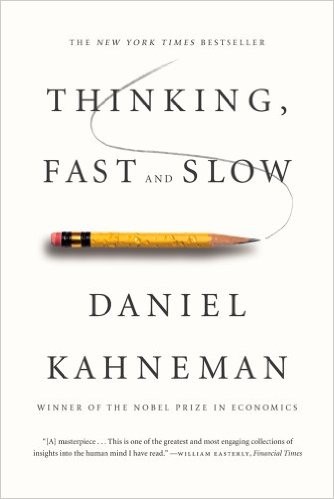
Thinking, Fast and Slow
Daniel Kahneman
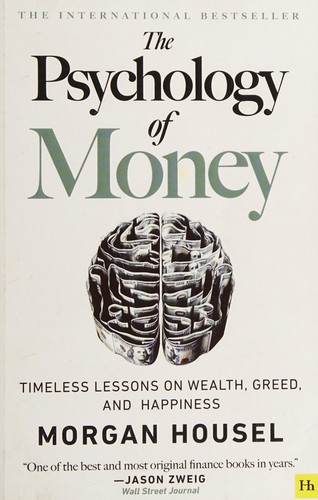
The Psychology of Money
Morgan Housel
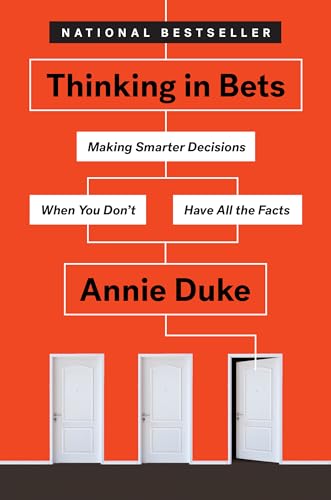
Thinking in Bets: Making Smarter Decisions When You Don't Have All the Facts
Annie Duke
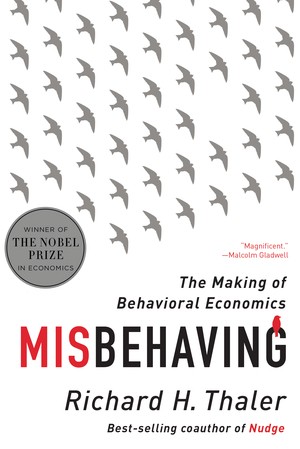
Misbehaving: The Making of Behavioral Economics
Richard H. Thaler
