Mindset: The New Psychology of Success by Carol S. Dweck is a 2006 psychology book about growth mindset, learning, resilience. The fixed mindset treats intelligence and talent as static traits to be proved. The growth mindset treats them as qualities that can be developed with effort and the right strategies.
Summary
Carol Dweck's central claim is simple but far-reaching: people hold one of two basic beliefs about their own abilities. Those with a fixed mindset believe their intelligence, talent, and character are essentially carved in stone — they perform to prove themselves and avoid situations where they might fail. Those with a growth mindset believe these qualities can be developed through effort, good strategies, and input from others — they pursue challenges because difficulty is where learning happens. Dweck draws on decades of research at Stanford to argue that this underlying belief, often invisible to the person holding it, shapes nearly everything: how people respond to failure, whether they persist when work gets hard, and whether they can ultimately reach their potential.
The fixed mindset's core problem is that it turns every performance into a referendum on identity. If you believe ability is fixed, a setback doesn't just mean you didn't do well this time — it means you might not have what it takes. This leads to a predictable set of behaviors: avoiding challenges to protect the appearance of competence, giving up quickly when something requires sustained effort, ignoring criticism, and feeling threatened by other people's success. Dweck shows how the fixed mindset can coexist with high achievement, since talented people can coast on natural ability for a long time before hitting the wall where effort actually matters.
The growth mindset doesn't make failure painless, but it changes what failure means. When ability is understood as expandable, a difficulty is information rather than a verdict. The book covers how both mindsets play out across school, sports, business, and relationships. Dweck profiles coaches who built championship programs by refusing to evaluate players solely on raw talent, leaders whose need to appear infallible drove their companies into decline, and teachers whose belief (or disbelief) in students' capacity to grow directly shaped outcomes. The research on praise is particularly useful: praising children for being smart tends to produce fixed-mindset responses, while praising the process — effort, strategy, persistence — produces growth-mindset ones.
Where the book is weakest is in the transition from diagnosis to prescription. Dweck argues convincingly that mindset matters enormously, and the descriptions of fixed-mindset thinking will be recognizable to most readers. The instructions for actually changing one's mindset are thinner: acknowledge the fixed-mindset voice, name it, and choose a growth-oriented response. That advice is directionally correct but leaves a gap between intellectual agreement and behavioral change. Readers who want the full intervention toolkit will need to look beyond this book. What it does well — probably better than anything else in its category — is make the case for why the belief you hold about your own malleability is the variable that determines almost everything else.

Talk to Mindset: The New Psychology of Success like its author wrote you back.
Get the ideas that fit your life — not generic summaries.
- Chat with the book
- Audiobook-style main ideas
- Adapts to your life and goals
- Helps you take action
Key takeaways
- 1.
The fixed mindset treats intelligence and talent as static traits to be proved. The growth mindset treats them as qualities that can be developed with effort and the right strategies.
- 2.
When you believe ability is fixed, failure becomes a judgment on who you are, not information about what you did. This makes challenges feel dangerous rather than instructive.
- 3.
Praising children for being smart backfires: it teaches them to avoid hard tasks to protect their reputation as smart. Praising effort and process builds a growth mindset instead.
- 4.
High achievement and a fixed mindset can coexist for years — talented people can coast on natural ability until they hit a challenge that requires sustained effort and fail.
- 5.
Fixed-mindset leaders surround themselves with people who validate rather than challenge them. Growth-mindset leaders actively seek honest feedback because they prioritize improvement over image.
- 6.
In sports, coaches who focus on effort, coachability, and process tend to build more durable excellence than coaches who select only for raw talent and treat it as destiny.
- 7.
Relationships have mindsets too. Believing that compatibility is either there from the start or it isn't leads to giving up on fixable problems; believing it can be built leads to working through them.
- 8.
The fixed-mindset voice is identifiable: it interprets challenges as threats, setbacks as proof of inadequacy, and other people's success as a personal diminishment. Naming it is the first step to not acting on it.
Discussion questions
Use these on your own, with a book club, or as chat starters in Superbook. Book club version, ready to copy or print →
- 1.
Dweck argues that praise for intelligence backfires. Think back to how you were praised as a child — did it push you toward proving yourself or toward learning? How does it show up now?
- 2.
Pick a domain where you hold a fixed mindset. What challenge are you currently avoiding to protect your self-image in that area?
- 3.
The book claims failure looks different depending on which mindset you bring to it. What's a recent failure you interpreted as a verdict rather than as information?
- 4.
Fixed-mindset behavior shows up in relationships too. Where in a close relationship do you avoid honest conversation because you'd rather protect the appearance of compatibility than actually improve it?
- 5.
Dweck profiles leaders whose need to look smart drove bad decisions. Where in your professional life does looking competent compete with actually learning?
- 6.
Think of a skill you gave up on because you decided you didn't have natural talent for it. Was that a reasonable conclusion, or a fixed-mindset exit ramp?
- 7.
The growth mindset doesn't mean effort always produces results. How do you distinguish between productive persistence and persisting in the wrong direction?
- 8.
Dweck's research shows that the word 'yet' shifts a student's relationship to failure. Where in your own thinking would adding 'yet' change something meaningful?
- 9.
She argues that fixed-mindset athletes plateau while growth-mindset athletes develop. Can you think of an example from sports or work where this played out — either in your own experience or someone you've observed?
- 10.
The book says that a growth mindset is about believing abilities can develop, not believing everyone is equal or that effort always equals success. Does that distinction change how you think about the idea?
- 11.
Which person in your life most embodies a growth mindset? What specific behaviors make that visible, and what would it take to adopt one of those behaviors yourself?
- 12.
If your organization ran on a fixed mindset — rewarding talent over effort, punishing failure, hiring to look good rather than to grow — what would have to change first?
Themes
Frequently asked questions
-
Is Mindset worth reading?
Yes, particularly if you've ever held back from a challenge because you weren't sure you were good enough at it. Dweck makes a compelling empirical case that the belief you hold about your own malleability is more consequential than actual ability in many domains. The book is accessible and the research grounding is stronger than most popular psychology titles.
-
How long does it take to read Mindset?
Around four to four and a half hours at an average reading pace for the roughly 270-page book. The chapters are organized by domain — school, sports, business, relationships — so it's easy to read the sections most relevant to you and return to the others later.
-
What is the main idea of Mindset?
That people hold one of two implicit beliefs about intelligence and talent: fixed (you have a set amount and must prove it) or growth (abilities can be developed with effort). The fixed mindset leads to avoiding challenges and interpreting failure as a verdict on identity. The growth mindset leads to seeking difficulty because that's where learning happens.
-
Who should read Mindset?
Anyone who manages, teaches, coaches, or raises children will find directly applicable ideas. It's also useful for anyone who recognizes themselves in Dweck's portrait of the fixed mindset — the avoidance of hard tasks, the fragility around criticism, the threat posed by other people's success.
-
What's the most actionable idea in Mindset?
Changing how you give praise. Praising effort, strategy, and process rather than innate ability is the most replicable finding in the book. It works with children, employees, and athletes, and it doesn't require overhauling your worldview — just changing a sentence or two in how you respond to performance.
Similar books
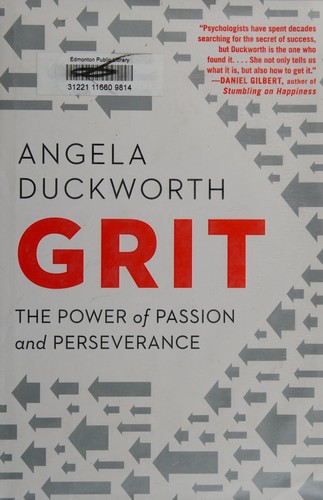
Grit: The Power of Passion and Perseverance
Angela Duckworth
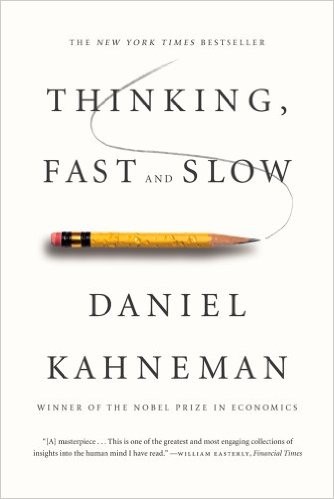
Thinking, Fast and Slow
Daniel Kahneman
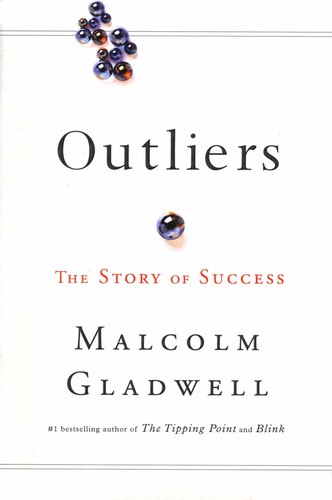
Outliers: The Story of Success
Malcolm Gladwell
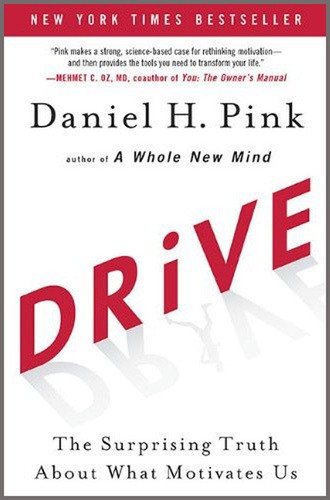
Drive: The Surprising Truth About What Motivates Us
Daniel H. Pink
Mindset vs.
Deciding between two books? Mindset vs Grit .
