Psychology · Book club
Mindsight: The New Science of Personal Transformation book club questions
Here are 12 book club questions for Mindsight: The New Science of Personal Transformation by Daniel J. Siegel, ordered to open easily and end somewhere worth arguing about. Copy them, print them, or bring them up one at a time.
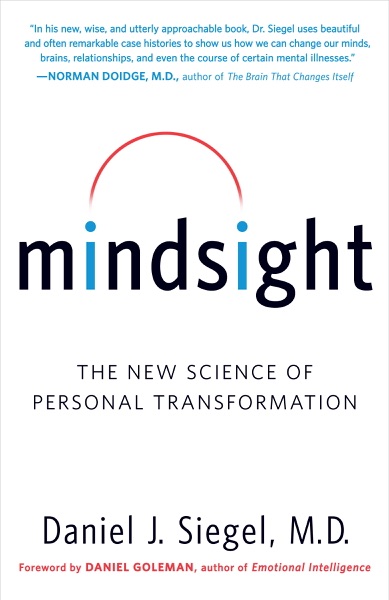
Mindsight is Daniel Siegel's case that humans have a distinct capacity he calls "mindsight" — the ability to sense and shape one's own mental processes and to perceive the inner lives of others.
Daniel J. Siegel · 2010 · 5h 45m
Full summary and key takeaways →The 12 questions
- 1.
Siegel argues that observing your mental states without being controlled by them is a trainable skill. What situations in your life make that kind of observation most difficult?
- 2.
Think about a significant relationship pattern that keeps recurring in your life. What early experiences might have wired it into place?
- 3.
The book links narrative coherence — how well you can tell the story of your own life — to parenting quality. How would you rate the coherence of your own autobiography right now?
- 4.
Siegel describes integration as the key to mental health. Where in your emotional life do you experience the most rigidity? The most chaos?
- 5.
The Wheel of Awareness separates open awareness from specific mental contents. Have you had experiences that feel like accessing that 'hub'? What were the conditions?
- 6.
Siegel's cases often involve people who can't feel their own emotions or can't stop feeling them. Which direction is more familiar to you, and how does it affect your relationships?
- 7.
The book claims that a therapist's regulated nervous system can help co-regulate a patient's. Have you noticed anyone in your life who has a similar stabilizing effect on you? What do they do differently?
- 8.
Siegel argues that mindsight practice changes the physical brain. Does that framing — neurobiology rather than just 'self-awareness' — change how seriously you take practices like meditation or journaling?
- 9.
Early attachment patterns are powerful, but the book is fundamentally optimistic about change. What evidence from your own life suggests that old patterns can be rewired?
- 10.
How does Siegel's framework change the way you think about someone in your life who behaves in ways that seem self-destructive or inexplicable?
- 11.
The book treats relationships as neurobiological events, not just social ones. Does that framing make relationships feel more or less meaningful to you?
- 12.
If you tried the Wheel of Awareness meditation and distinguished your sense of awareness from its contents, what would you find at the hub?
How to run the discussion
- Pick six to eight, not all of them. An hour of real discussion covers fewer questions than anyone expects, and racing the list is what makes a book club feel like homework.
- Open with what people noticed, not what they concluded. Asking for a verdict first hardens opinions before anyone has heard each other.
- Let the disagreement run. The questions below that split a room are the ones worth the time; the ones everyone answers the same way can be skipped.
- Ask the quiet person a specific question. A direct, narrow question is far easier to answer than an open invitation to contribute.
Themes worth steering toward
If the conversation stalls, these are the threads that usually restart it.
Common questions
What are good book club questions for Mindsight: The New Science of Personal Transformation?
Here are 12 book club questions for Mindsight: The New Science of Personal Transformation by Daniel J. Siegel, ordered to open easily and end somewhere worth arguing about. The strongest openers ask what each reader noticed rather than what they concluded, and the discussion usually turns on neuroscience, self-awareness, emotional regulation.
How long should a book club discussion of Mindsight: The New Science of Personal Transformation last?
Most groups run 60 to 90 minutes of actual discussion. That is roughly six to eight questions, not all of them, so pick the ones that suit your group rather than working down the list in order.
What are the main themes in Mindsight: The New Science of Personal Transformation?
Neuroscience, Self-awareness, Emotional regulation, Mindfulness, Relationships. Those are the threads most likely to divide a room, which makes them the useful places to steer a discussion that has gone quiet.
Picking the next one? See books like Mindsight: The New Science of Personal Transformation or questions for other book club picks.
