Economics · Book club
Money: Master the Game book club questions
Here are 12 book club questions for Money: Master the Game by Tony Robbins, ordered to open easily and end somewhere worth arguing about. Copy them, print them, or bring them up one at a time.
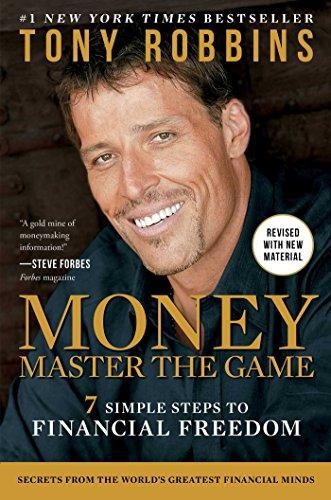
Money: Master the Game is Tony Robbins's attempt to distill financial wisdom from interviews with fifty of the world's most successful investors — including Ray Dalio, Warren Buffett, Jack Bogle, and Paul Tudor Jones — into a practical guide for ordinary people.
Tony Robbins · 2014 · 12h 0m
Full summary and key takeaways →The 12 questions
- 1.
Robbins argues fees are the silent killer of long-term returns. Have you ever calculated the total fee impact on your own investments over a 20- or 30-year horizon?
- 2.
What is your actual financial freedom number — the passive income that would make work optional — and how did you arrive at it?
- 3.
Dalio's All Weather Portfolio prioritizes stability across economic seasons over maximum returns in any one season. How does that tradeoff fit your own temperament as an investor?
- 4.
Robbins interviews both billionaires and people who achieved freedom on modest incomes. Which interviews in the book were most instructive, and why?
- 5.
The book argues most people hand their financial future to advisors without understanding the incentive structures those advisors operate under. How do you currently vet financial advice?
- 6.
Robbins repeatedly emphasizes the psychology of scarcity versus abundance. How much of your financial behavior is driven by fear rather than a clear plan?
- 7.
Index investing is presented as the obvious answer. What are the strongest arguments against it, and do they apply to your situation?
- 8.
The book distinguishes between being financially secure, financially vital, financially independent, and financially free. Which stage are you at, and what would it take to move to the next?
- 9.
Robbins argues that the hardest part of investing is doing nothing during market crashes. Have you ever sold during a downturn? What drove that decision?
- 10.
How much of your total investment cost do you actually know? Expense ratios, advisor fees, fund trading costs, taxes — have you summed them?
- 11.
Robbins spends considerable time on what financial freedom means beyond money. What would you actually do differently if work were optional tomorrow?
- 12.
The book is very long. What's the chapter or interview you found most credible, and which felt most like padding or salesmanship?
How to run the discussion
- Pick six to eight, not all of them. An hour of real discussion covers fewer questions than anyone expects, and racing the list is what makes a book club feel like homework.
- Open with what people noticed, not what they concluded. Asking for a verdict first hardens opinions before anyone has heard each other.
- Let the disagreement run. The questions below that split a room are the ones worth the time; the ones everyone answers the same way can be skipped.
- Ask the quiet person a specific question. A direct, narrow question is far easier to answer than an open invitation to contribute.
Themes worth steering toward
If the conversation stalls, these are the threads that usually restart it.
Common questions
What are good book club questions for Money: Master the Game?
Here are 12 book club questions for Money: Master the Game by Tony Robbins, ordered to open easily and end somewhere worth arguing about. The strongest openers ask what each reader noticed rather than what they concluded, and the discussion usually turns on personal finance, investing, financial freedom.
How long should a book club discussion of Money: Master the Game last?
Most groups run 60 to 90 minutes of actual discussion. That is roughly six to eight questions, not all of them, so pick the ones that suit your group rather than working down the list in order.
What are the main themes in Money: Master the Game?
Personal finance, Investing, Financial freedom, Asset allocation, Wealth building. Those are the threads most likely to divide a room, which makes them the useful places to steer a discussion that has gone quiet.
Picking the next one? See books like Money: Master the Game or questions for other book club picks.
