Business · Book club
Moneyball: The Art of Winning an Unfair Game book club questions
Here are 12 book club questions for Moneyball: The Art of Winning an Unfair Game by Michael Lewis, ordered to open easily and end somewhere worth arguing about. Copy them, print them, or bring them up one at a time.
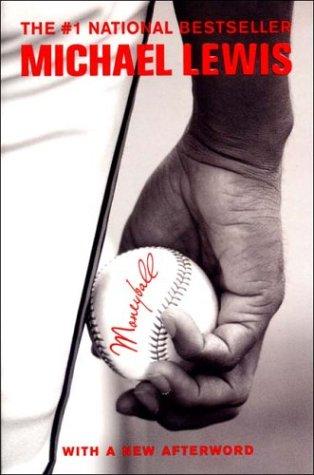
Moneyball is Michael Lewis's account of how Billy Beane, general manager of the Oakland Athletics, used statistical analysis to compete against teams with payrolls three times larger.
Michael Lewis · 2003 · 5h 45m
Full summary and key takeaways →The 12 questions
- 1.
Lewis argues the scouts were operating on bad feedback loops rather than being irrational. Does that distinction matter? Where in your own professional life do you rely on criteria you've never actually tested?
- 2.
The A's advantage depended on other teams not yet understanding on-base percentage. Once they understood it, the edge vanished. What does that say about the shelf life of any analytical insight?
- 3.
Bill James wrote his Baseball Abstracts for years before anyone in professional baseball paid serious attention. What ideas in your field are circulating outside the mainstream right now that might prove correct in a decade?
- 4.
The scouts in the book aren't portrayed as fools. They're portrayed as people whose incentives didn't punish them for being wrong. How much of expert consensus in any field is maintained by similar insulation from consequences?
- 5.
Lewis shows the A's success was partly a story about a general manager with the organizational power to override the scouts. What conditions have to be in place for data to beat institutional habit in your own organization?
- 6.
Billy Beane famously refused to watch A's games, believing his emotional reaction to in-game events would distort his judgment. What decisions in your life would benefit from the same kind of deliberate distance?
- 7.
The book was published in 2003. By 2010, every major league team had a sabermetrics department. What does that trajectory tell you about how long competitive advantages based on information asymmetry actually last?
- 8.
Kevin Youkilis, nicknamed 'The Greek God of Walks,' was one of DePodesta's finds: ugly mechanics, terrible scout reviews, excellent on-base percentage. What talent in your field looks wrong by conventional metrics but gets results?
- 9.
Lewis draws a line between what scouts could see and what they couldn't easily measure. What important things in your field are underweighted simply because they're hard to observe or quantify?
- 10.
The book implies that willingness to look foolish in the short term is a prerequisite for unconventional success. What unconventional view about your work would you act on if you weren't worried about how it looked?
- 11.
Beane traded popular players the team loved in order to stay rational about roster construction. What's an equivalent decision in your own life — something that would make sense analytically but feel wrong socially?
- 12.
Moneyball made sabermetrics famous outside baseball. Do you think increased data availability in any domain eventually leads back to a new kind of conventional wisdom, just made of different metrics?
How to run the discussion
- Pick six to eight, not all of them. An hour of real discussion covers fewer questions than anyone expects, and racing the list is what makes a book club feel like homework.
- Open with what people noticed, not what they concluded. Asking for a verdict first hardens opinions before anyone has heard each other.
- Let the disagreement run. The questions below that split a room are the ones worth the time; the ones everyone answers the same way can be skipped.
- Ask the quiet person a specific question. A direct, narrow question is far easier to answer than an open invitation to contribute.
Themes worth steering toward
If the conversation stalls, these are the threads that usually restart it.
Common questions
What are good book club questions for Moneyball: The Art of Winning an Unfair Game?
Here are 12 book club questions for Moneyball: The Art of Winning an Unfair Game by Michael Lewis, ordered to open easily and end somewhere worth arguing about. The strongest openers ask what each reader noticed rather than what they concluded, and the discussion usually turns on data-driven decisions, competitive advantage, talent evaluation.
How long should a book club discussion of Moneyball: The Art of Winning an Unfair Game last?
Most groups run 60 to 90 minutes of actual discussion. That is roughly six to eight questions, not all of them, so pick the ones that suit your group rather than working down the list in order.
What are the main themes in Moneyball: The Art of Winning an Unfair Game?
Data-driven decisions, Competitive advantage, Talent evaluation, Market inefficiency, Baseball. Those are the threads most likely to divide a room, which makes them the useful places to steer a discussion that has gone quiet.
Picking the next one? See books like Moneyball: The Art of Winning an Unfair Game or questions for other book club picks.
