Night Watch by Terry Pratchett is a 2002 fantasy book about justice versus law, revolution and its costs, memory and identity. The difference between law and justice is not academic — it's the question a cop has to answer every day, and Pratchett takes it as seriously as any political philosopher.
Summary
Night Watch is the twenty-ninth Discworld novel and the one many readers consider Pratchett's masterpiece. Commander Sam Vimes of the Ankh-Morpork City Watch is thrown back in time to the days of his own youth, during a bloody revolution he barely survived the first time. He has to impersonate a dead mentor, train his younger self, and somehow keep a group of ordinary watchmen alive while history grinds forward.
What the book is actually about is the difference between law and justice — a distinction Pratchett treats with genuine seriousness under the jokes. The revolution here is not glorious. It's messy, opportunistic, and quickly captured by people worse than the ones it overthrew. Vimes, who is both participant and observer, has to decide what a decent person owes to institutions that fail, to systems that grind down the people they're supposed to protect, and to the small rituals that hold a community together when everything else collapses. The lilac and the hardboiled egg become totems of something almost sacred.
The novel is formally tighter than most Discworld entries. The time-travel mechanics are used to compress two versions of the same character into one narrative, letting Pratchett examine what experience does to idealism without being sentimental about either. The humor is still present but quieter than in the comic Discworld novels; the darkness is allowed to stay dark. Pratchett draws clearly on Les Misérables — the barricades, the idealist students, the compromised authority — while making the analysis more cynical and more compassionate simultaneously.
Readers who come to Night Watch from earlier, funnier Discworld books sometimes bounce off the tone. It rewards readers who've followed Vimes across several books, because the emotional weight depends on knowing who he became. But it also works as a standalone for readers comfortable with grimdark fantasy who want something with more intellectual substance than most of the genre provides. It is, at bottom, a novel about what it costs to be the kind of person who tries to do the right thing when the institutions around them have stopped.
Talk to Night Watch like its author wrote you back.
Get the ideas that fit your life — not generic summaries.
- Chat with the book
- Audiobook-style main ideas
- Adapts to your life and goals
- Helps you take action
Key takeaways
- 1.
The difference between law and justice is not academic — it's the question a cop has to answer every day, and Pratchett takes it as seriously as any political philosopher.
- 2.
Revolutions tend to be captured by people worse than the ones they displaced. The novel is deeply skeptical of idealism that ignores this pattern.
- 3.
Vimes's mentor Carcer is his dark mirror: same background, same city, radically different choices. The novel refuses to explain the difference as destiny.
- 4.
Ritual and memory — the lilac, the hardboiled egg — are how communities hold onto what they owe the dead without being paralyzed by grief.
- 5.
Good institutions can be built by ordinary people who show up and do the minimum necessary right thing, consistently. This is both more and less heroic than it sounds.
- 6.
The past is not available for revision. Vimes knows what's coming and can only soften the edges; the major events unfold anyway. Pratchett is honest about historical determinism.
- 7.
Pratchett's moral vision is fundamentally about competence and integrity in unglamorous roles: the watchman, the nurse, the teacher. Not the hero.
- 8.
Grief for people who died doing ordinary jobs well is treated as the most serious grief in the book. Not war heroes. Street cops who kept the peace.
Discussion questions
Use these on your own, with a book club, or as chat starters in Superbook. Book club version, ready to copy or print →
- 1.
Vimes knows the revolution is coming and roughly how it ends. Does knowing the outcome change his moral obligations to the people around him?
- 2.
The book argues that most revolutions produce something worse than what they replace. Is Pratchett right, or is he too cynical about political change?
- 3.
Young Vimes is shown as having the same core character as older Vimes. Do you think people's fundamental nature is set early, or does the novel actually earn that claim?
- 4.
Carcer is essentially Vimes with different choices. The novel doesn't explain what made the difference. Is that honest or a cop-out?
- 5.
The lilac ritual — who it honors and why — lands hard at the end. Do rituals of remembrance change anything, or do they just make the survivors feel better?
- 6.
Vimes is not an idealist but he's not a cynic either. The novel seems to suggest there's a third position. What would you call it?
- 7.
The book's structure depends on knowing who Vimes is from previous Discworld novels. Does Night Watch work if you've never read Discworld, or does it require that investment?
- 8.
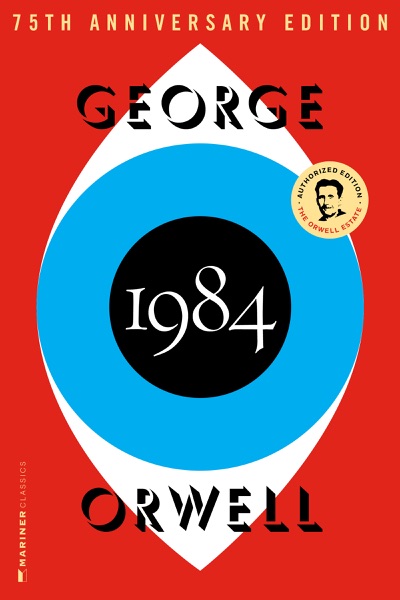
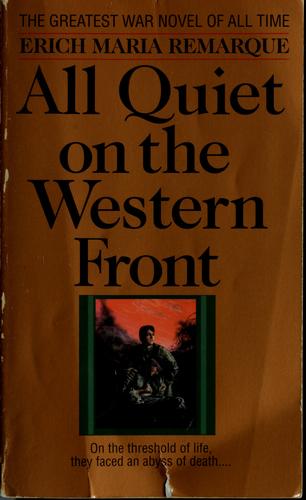
How does Night Watch's portrayal of revolution compare to other books you've read on the subject — 1984, All Quiet on the Western Front, or Les Misérables itself?
- 9.
The students at the barricades are shown as brave but naive, and most of them die for it. Is Pratchett being unfair to idealism, or is that the honest assessment?
- 10.
Vimes is a functioning alcoholic, a class-conscious former street kid who became a leader through competence not birth. How does his class background shape what he values?
- 11.
The novel is very specifically about urban policing — not armies or spies but beat cops. Why does that setting let Pratchett say things that epic fantasy usually can't?
- 12.
By the end, Vimes has preserved the outcome but changed almost nothing. Is that a tragedy, a comedy, or something else?
Themes
Frequently asked questions
-
Do I need to read other Discworld books before Night Watch?
Technically no, but the emotional payoff is much larger if you've read the earlier City Watch novels — Guards! Guards!, Men at Arms, and Feet of Clay especially. The book works as a standalone thriller but the gut-punch of seeing who Vimes has become requires knowing who he was.
-
Is Night Watch the best Discworld book?
Many longtime readers say yes. It's among the darkest and most serious entries in the series. If you want something funnier and lighter, start with Mort, Guards! Guards!, or Small Gods. Night Watch is a mature Pratchett who has largely set aside the pure comedy of the early books.
-
Is this a book about time travel?
Time travel is the mechanism, not the subject. The book is about revolution, institutional decay, and the obligations of decent people inside corrupt systems. The time-travel setup is used to create a moral pressure cooker, not to generate paradox puzzles.
-
Who shouldn't read Night Watch?
Readers who want fast-paced heroic fantasy with clear good-versus-evil stakes will find it slow and uncomfortable. Readers who bounce off British comic prose should try the audiobooks, where the humor lands better. And if you're looking for the Pratchett who wrote The Colour of Magic, this is a different author.
-
Is there a movie adaptation?
No film version of Night Watch exists. There have been several Discworld TV adaptations by Sky, covering other books, but Night Watch has not been adapted.