Self-help · Book club
Nonviolent Communication book club questions
Here are 11 book club questions for Nonviolent Communication by Marshall B. Rosenberg, ordered to open easily and end somewhere worth arguing about. Copy them, print them, or bring them up one at a time.
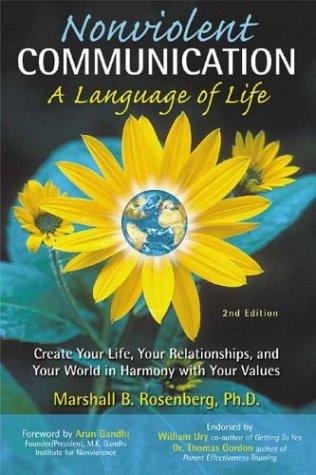
Nonviolent Communication is Marshall Rosenberg's framework for communicating in ways that preserve connection and address needs rather than triggering defensiveness.
Marshall B. Rosenberg · 1999 · 4h 0m
Full summary and key takeaways →The 11 questions
- 1.
Think about a recent conflict. What was the feeling underneath the message you communicated? Did you communicate the feeling, or did you communicate it as a criticism?
- 2.
Rosenberg says 'I feel criticized' is an interpretation, not a feeling. Practice: turn three recent communications that start with 'I feel [judgment about someone]' into genuine feelings.
- 3.
What's the underlying need behind your most common source of irritation at work? Is there a way to address that need directly rather than reacting to the behavior that frustrates it?
- 4.
Have you ever made a request that the other person experienced as a demand? What signaled to them that it was non-negotiable?
- 5.
The distinction between observation and evaluation is at the core of NVC. Try describing a specific behavior of a colleague without any evaluation. How hard is it?
- 6.
Empathy in NVC means presence to another person's experience without advice, agreement, or solution. When did someone last offer you that kind of presence? What was the effect?
- 7.
NVC was developed partly in conflict zone mediation contexts. Does its application to workplace communication feel appropriate, or does it require too much adaptation?
- 8.
What's a need you regularly have at work that you never express directly? How do you currently express it, and how does that work?
- 9.
Rosenberg distinguishes between needs and strategies. Can you identify a current conflict where the parties are fighting over strategy while actually sharing the same underlying need?
- 10.
Self-empathy before empathy toward others: when are you least capable of empathy for someone else's feelings, and what's usually happening for you in those moments?
- 11.
How would communication in your team change if people consistently named feelings and needs rather than judgments and demands?
How to run the discussion
- Pick six to eight, not all of them. An hour of real discussion covers fewer questions than anyone expects, and racing the list is what makes a book club feel like homework.
- Open with what people noticed, not what they concluded. Asking for a verdict first hardens opinions before anyone has heard each other.
- Let the disagreement run. The questions below that split a room are the ones worth the time; the ones everyone answers the same way can be skipped.
- Ask the quiet person a specific question. A direct, narrow question is far easier to answer than an open invitation to contribute.
Themes worth steering toward
If the conversation stalls, these are the threads that usually restart it.
Common questions
What are good book club questions for Nonviolent Communication?
Here are 11 book club questions for Nonviolent Communication by Marshall B. Rosenberg, ordered to open easily and end somewhere worth arguing about. The strongest openers ask what each reader noticed rather than what they concluded, and the discussion usually turns on communication, empathy, conflict resolution.
How long should a book club discussion of Nonviolent Communication last?
Most groups run 60 to 90 minutes of actual discussion. That is roughly six to eight questions, not all of them, so pick the ones that suit your group rather than working down the list in order.
What are the main themes in Nonviolent Communication?
Communication, Empathy, Conflict resolution, Relationships, Self-awareness. Those are the threads most likely to divide a room, which makes them the useful places to steer a discussion that has gone quiet.
Picking the next one? See books like Nonviolent Communication or questions for other book club picks.
