Nonviolent Communication by Marshall B. Rosenberg is a 1999 self-help book about communication, empathy, conflict resolution. Most communication that escalates conflict does so because feelings and needs are expressed as criticism or judgment, which produces defensiveness rather than understanding.
Summary
Nonviolent Communication is Marshall Rosenberg's framework for communicating in ways that preserve connection and address needs rather than triggering defensiveness. The NVC model distinguishes between language that creates genuine understanding and language that escalates conflict — often without the speaker realizing the difference. Rosenberg, a clinical psychologist who spent decades mediating in conflict zones and organizations, argues that most conflict escalates because people express feelings and needs in ways that sound like criticism, and criticism produces defensiveness rather than response.
The four components of NVC are: observation (describing what you see without evaluation), feeling (naming the emotion you're experiencing rather than describing the behavior of the other person), need (identifying the underlying need connected to the feeling), and request (making a specific, positive, doable request rather than a demand). The framework sounds simple and is genuinely difficult to practice, because most people's default communication patterns mix observation with judgment, feeling with accusation, and request with demand.
The distinction between feelings and interpretations is central. "I feel criticized" is not a feeling — it's an interpretation of behavior. "I feel hurt" is a feeling. "You always do X" is a criticism; "when I see X, I feel Y" is an observation followed by a feeling. The discipline of staying in observation and feeling, without slipping into evaluation and judgment, requires significant practice and produces significantly different conversations.
The book is most used in therapeutic and conflict resolution contexts, but its applications to organizational communication are real. Leaders who learn to express their feelings and needs directly, without criticism, and to listen for the feelings and needs behind others' communication, find that they can defuse conflicts before they escalate and build relationships where honest communication happens more naturally.

Talk to Nonviolent Communication like its author wrote you back.
Get the ideas that fit your life — not generic summaries.
- Chat with the book
- Audiobook-style main ideas
- Adapts to your life and goals
- Helps you take action
Key takeaways
- 1.
Most communication that escalates conflict does so because feelings and needs are expressed as criticism or judgment, which produces defensiveness rather than understanding.
- 2.
The four NVC components: observation (without evaluation), feeling (without interpretation), need (underlying the feeling), and request (specific and positive, not a demand).
- 3.
'I feel criticized' is an interpretation; 'I feel hurt' is a feeling. The distinction matters because interpretations assign blame while feelings invite empathy.
- 4.
Empathy in NVC means guessing at the other person's feelings and needs, not agreeing with their position or solving their problem. Full presence to what's alive in them.
- 5.
Requests differ from demands by what happens when the other person says no. A demand produces punishment; a request allows the other person to decline without consequences to the relationship.
- 6.
Needs are universal — everyone has them. The strategies for meeting needs differ and can conflict. Separating need from strategy opens more options than defending a specific approach.
- 7.
Life-alienating communication includes moralistic judgments, making comparisons, denying responsibility, and using language that rewards and punishes. All are common; all escalate conflict.
- 8.
Self-empathy — applying NVC to your own feelings and needs before engaging with others — is the precondition for genuine empathy toward others.
Discussion questions
Use these on your own, with a book club, or as chat starters in Superbook. Book club version, ready to copy or print →
- 1.
Think about a recent conflict. What was the feeling underneath the message you communicated? Did you communicate the feeling, or did you communicate it as a criticism?
- 2.
Rosenberg says 'I feel criticized' is an interpretation, not a feeling. Practice: turn three recent communications that start with 'I feel [judgment about someone]' into genuine feelings.
- 3.
What's the underlying need behind your most common source of irritation at work? Is there a way to address that need directly rather than reacting to the behavior that frustrates it?
- 4.
Have you ever made a request that the other person experienced as a demand? What signaled to them that it was non-negotiable?
- 5.
The distinction between observation and evaluation is at the core of NVC. Try describing a specific behavior of a colleague without any evaluation. How hard is it?
- 6.
Empathy in NVC means presence to another person's experience without advice, agreement, or solution. When did someone last offer you that kind of presence? What was the effect?
- 7.
NVC was developed partly in conflict zone mediation contexts. Does its application to workplace communication feel appropriate, or does it require too much adaptation?
- 8.
What's a need you regularly have at work that you never express directly? How do you currently express it, and how does that work?
- 9.
Rosenberg distinguishes between needs and strategies. Can you identify a current conflict where the parties are fighting over strategy while actually sharing the same underlying need?
- 10.
Self-empathy before empathy toward others: when are you least capable of empathy for someone else's feelings, and what's usually happening for you in those moments?
- 11.
How would communication in your team change if people consistently named feelings and needs rather than judgments and demands?
Themes
Frequently asked questions
-
Is Nonviolent Communication worth reading for business and management?
Yes, though the examples skew toward personal and therapeutic contexts. The underlying model is highly applicable to organizational communication — particularly the observation-versus-evaluation distinction and the needs-versus-strategies distinction. The workplace applications require some translation but the concepts transfer well.
-
How long does it take to read Nonviolent Communication?
Around three to four hours for the 220-page book. It's clear and not particularly dense, though the framework requires practice to internalize.
-
Is NVC just being nice? Does it work in adversarial situations?
No and yes. NVC is not about being conciliatory or soft — Rosenberg applied it in genocide mediation. It's about expressing your own needs honestly and hearing the other person's needs clearly, which is different from agreeing with them or accommodating them. It's often most powerful in adversarial situations precisely because it changes the frame.
-
Who should read Nonviolent Communication?
Leaders who want to understand why their communication sometimes escalates conflict, managers dealing with persistent interpersonal tension on their teams, and anyone who wants to become a more precise and effective communicator in high-stakes relationships.
-
What's the most actionable idea in the book?
The observation-feeling-need-request sequence. Even an imperfect attempt to structure a hard conversation around these four elements usually produces a better outcome than the default. Start by describing what you observed without evaluation, name what you actually felt, identify the need underneath the feeling, and make a specific request. Three of the four steps are things most people skip entirely.
Similar books
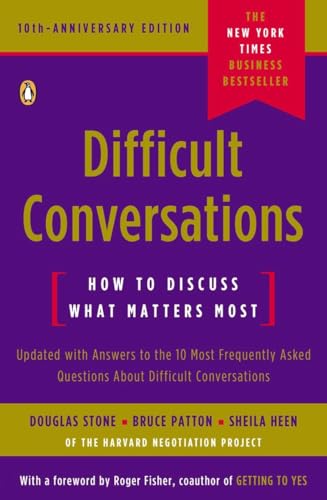
Difficult Conversations
Douglas Stone, Bruce Patton, and Sheila Heen

Thanks for the Feedback
Douglas Stone and Sheila Heen
Humble Inquiry
Edgar H. Schein
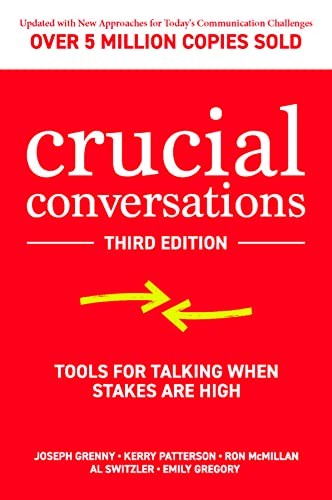
Crucial Conversations: Tools for Talking When Stakes Are High
Kerry Patterson, Joseph Grenny, Ron McMillan, and Al Switzler
